

Rethinking the familiar, one industry at a time
These Emerging Enterprise Award finalists are using technology, sharper execution and fresh ideas to reshape established markets


SOME of the strongest business ideas begin with a simple question: can an old problem be solved in a better way?
That instinct runs through this group of five Emerging Enterprise Award finalists, whose businesses span road safety, industrial operations, gaming, diagnostics and family-focused beauty.
Each is taking a different route, whether through technology, new operating models or a sharper understanding of what customers need.
The Emerging Enterprise Award, jointly organised by The Business Times and OCBC, was created to recognise that kind of entrepreneurial drive. Now in its 19th year, the programme celebrates young businesses across Asia that pair innovation with sustainable growth and the ability to scale.
The 2026 awards are supported by preferred payment solutions partner Mastercard, official auditor RSM Singapore, A*Star, Enterprise Singapore and Paia Consulting.
Taking traffic marshalling off the beaten track
A+ Officers Security is bringing digital tools, stronger career pathways and robotics into traffic marshalling
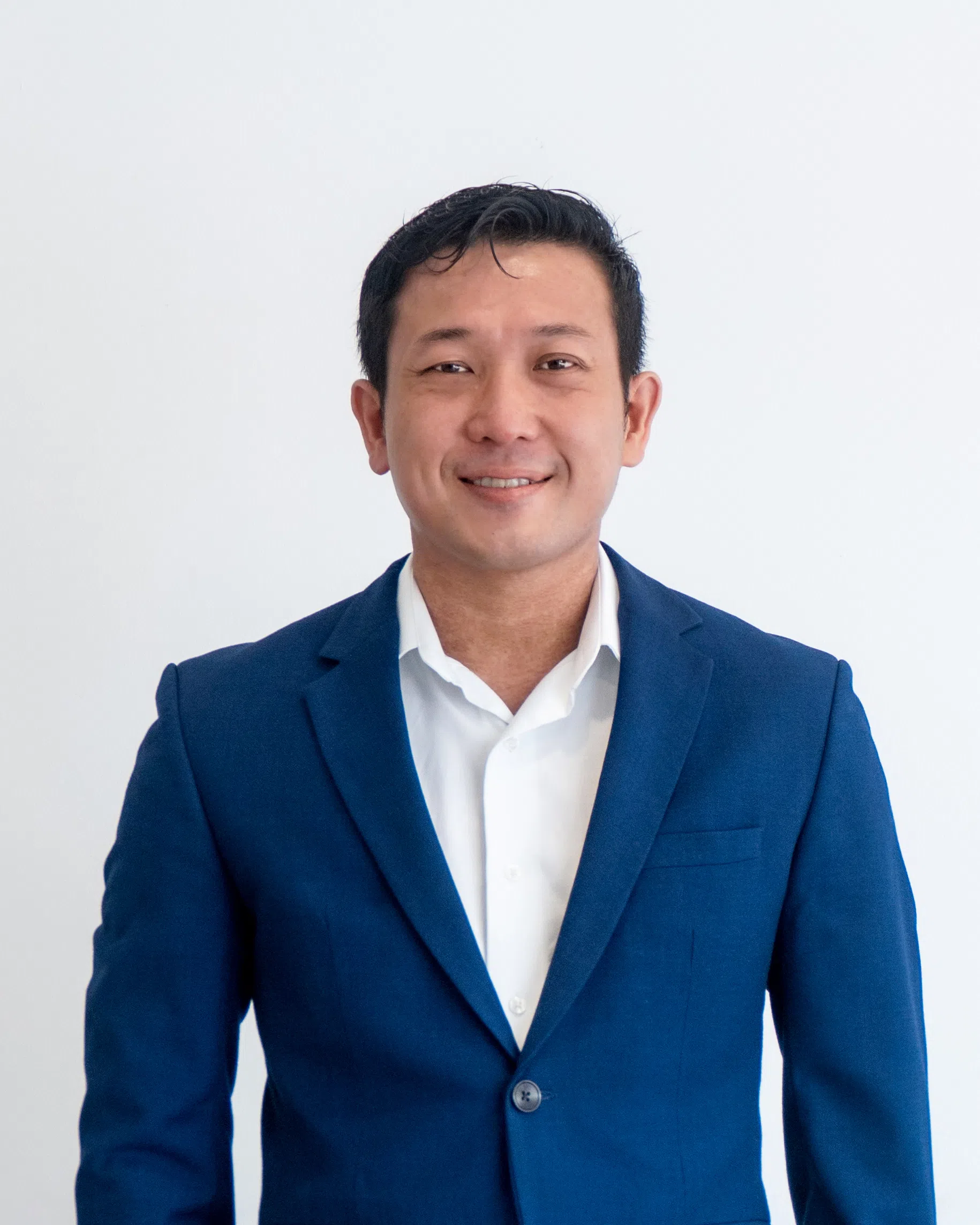
A+ Officers Security began with a problem I knew well. As managing director of a civil engineering firm, I was constantly struggling to find reliable traffic controllers for our road works.
Instead of treating it as a recurring shortage, I set up a standalone company.
A+ was incorporated in November 2019 and licensed a month later. Today, around 180 of our officers are deployed daily across some 50 construction and roadwork sites in Singapore, managing lane closures, pedestrian safety and traffic flow.

Once we entered the sector, I saw a bigger opportunity. Demand was growing, but much of the work was still managed with pen and paper. We wanted to bring the discipline of construction into traffic marshalling and make the sector more professional.
Technology has been central to that effort. In 2025, we launched A+ Connect, which manages everything from quotations and contracts to deployment, billing and payment. Officers can now be paid the next day, while billing is 40 per cent faster.
We had to rethink how we built our workforce.
I initially insisted on hiring only full-time officers, believing that was the best way to guarantee quality. It limited our growth. Moving to a hybrid model, with every team anchored by a full-timer and supported by vetted part-timers, allowed us to scale without compromising oversight.
The next challenge is more fundamental. Traffic marshals often work close to moving vehicles, while the workforce is ageing and younger workers are less willing to take on such roles.
We are now exploring humanoid robots that could take the most exposed position at a lane closure while a licensed officer supervises from a safer location. For me, that is where the industry should be heading: keeping people in control, without requiring them to stand directly in harm’s way.
Helping operators see problems before they happen
Aleph Technologies uses physics-based AI to help complex facilities run more efficiently
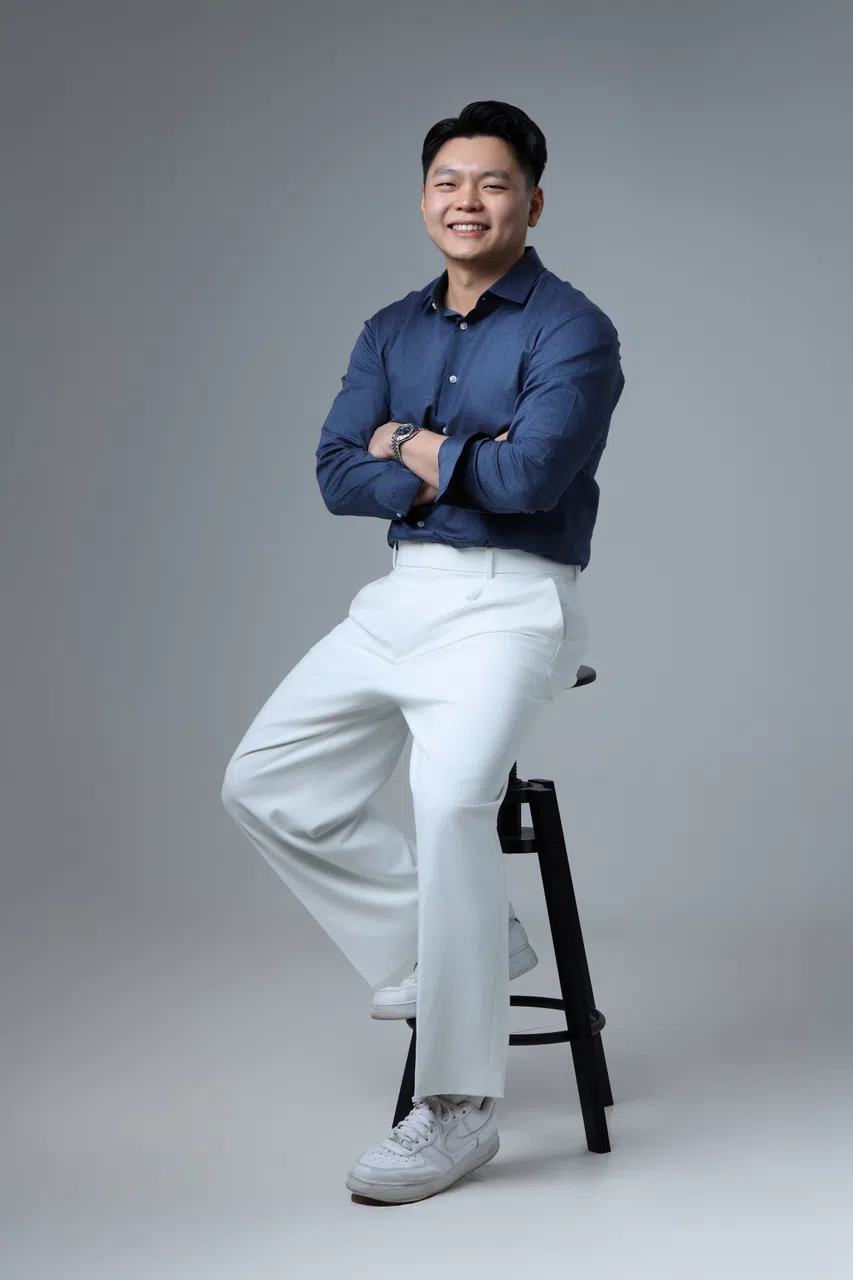
When we started Aleph Technologies in Singapore in 2022, we had a technology but not yet a product.
What we did have was a clear goal: to help engineers and operators understand what was happening inside complex facilities so they could make better decisions.
That eventually became a physics-based artificial intelligence (AI) platform for asset intensive industries. Today, we work across chemicals, pharmaceuticals and utility plants, as well as airport operations control centres, with customers in Asia-Pacific, the Middle East and Europe.
Our approach differs from systems that primarily learn from historical operating data. We build physics-based models that mimic how an operation behaves, simulate the most efficient operating conditions, and recommend how operators can get there.
For customers, that has translated into energy cost savings of 15 to 21 per cent, downtime reductions of 35 per cent, and operational efficiency improvements of 15 to 18 per cent across different projects.
Winning adoption, however, has not been easy. Many of the industries we serve still rely on systems that have changed little in decades. Operators want better performance, but they also need proof that new technology works with infrastructure they cannot simply switch off.
We learnt to work with what customers already have. By integrating with existing systems and replaying historical periods using a customer’s own operating data, we can show how different decisions might have improved performance before deployment.
We are now deepening our presence in our existing markets while expanding further into aviation and building partnerships with system integrators and established technology providers.
Success over the next three to five years would mean seeing engineers and operators work differently because of our technology, spending less time assembling information and more time making decisions.
Levelling up beyond the PC cafe
Elixir Esports is building a regional platform for players to connect, compete and grow
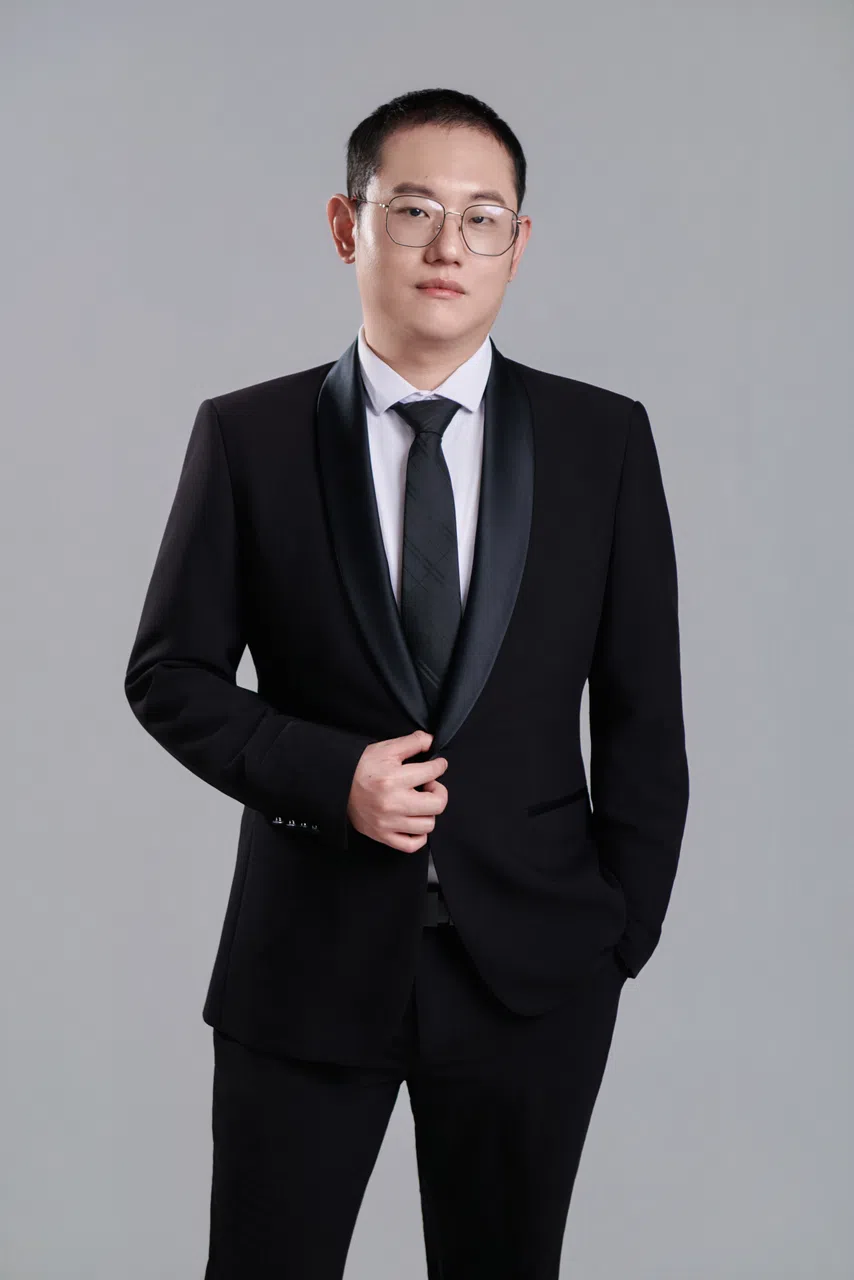
Elixir Esports began in 2015 with a simple idea: give players a better place to play.
What began as a trial of the PC cafe model has since grown into something much broader. Today, Elixir Esports combines physical gaming spaces, professional equipment, events, training and technology to create an e-sports platform centred on community.
We formally established our chain and management company in 2022, and began building our own digital systems, including the Elixir Esports app, billing and top-up system, and PC management system.
That marked an important shift for us – we were no longer thinking simply about running outlets, but about building a business that could scale.
We learnt along the way that good equipment is only the starting point. Players also want places where they can meet like-minded people, find teammates, form teams and compete together. That sense of community is what keeps people engaged.
Our taxable turnover has since crossed Singapore’s S$1 million consumption tax registration threshold, reflecting how far we have come from operating a single PC cafe.
The next step is to deepen our presence in Singapore while expanding gradually across South-east Asia.
But growth for us is not just about opening more outlets. We want to connect players across Singapore, Malaysia, Thailand, Indonesia and other markets through one ecosystem, supported by events, training and digital technology.
Over the next few years, we will continue building a standardised operating model that can travel across markets while investing in the experiences that bring players together.
Ultimately, success would mean seeing someone start their journey with Elixir, find a team, develop through training and competition, and perhaps one day represent their country on the international stage.
That is what “Dare to Dream, Dare to Play” means to us.
Taking the stigma out of rapid testing
Genesprint International is making diagnostics faster, more private and less invasive
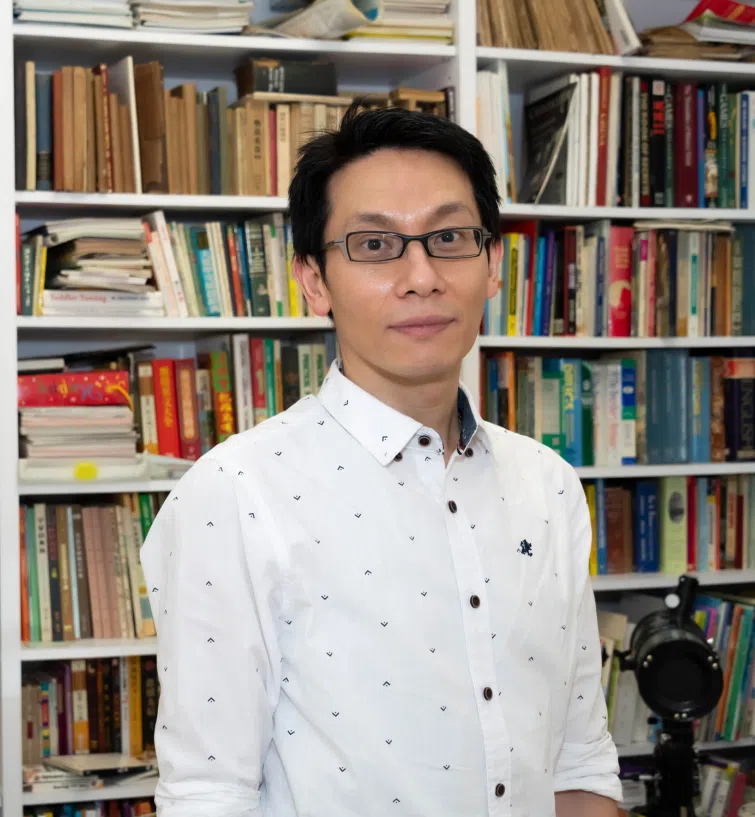
When we founded Genesprint International in Hong Kong in 2021, we saw a gap in the rapid-testing market: Diagnostics could be made faster and easier without sacrificing privacy or accuracy.
Our initial focus was sexually transmitted disease (STD) testing. We wanted to reduce the stigma and embarrassment that can discourage people from getting tested, and develop private, non-invasive solutions that can deliver results within three minutes at home or in clinics.
One result is our five-in-one multiplex STD rapid test, alongside individual diagnostic kits. Our technology can work with saliva, urine and other body fluids, while our patented non-cotton swab is designed to make testing more convenient.
The five-in-one test has met European Union regulatory requirements and can deliver results in three minutes with 99 per cent accuracy.
We reach customers through clinics, pharmacies and nightlife venues, alongside direct-to-consumer platforms, giving people more options to access testing privately and conveniently.
Our ambitions have since expanded beyond human health. We are developing non-invasive veterinary diagnostics, including urine tests that can offer pet owners an alternative to stressful blood draws.
Getting here has required patience. Meeting those European regulatory requirements for multi-fluid testing took more than 12 months and showed us that rigorous compliance can become a competitive advantage.
Moving quickly matters, but so does earning the trust of medical professionals.
Hong Kong remains our base, but our next phase is about taking these products further. We are expanding across mainland China and Asia, with longer-term plans for Europe, the United States and Africa, while broadening both our STD and veterinary diagnostic ranges.
Our ambition is to make rapid diagnostics more accessible across both human and animal health, giving people and pet owners a way to detect problems earlier with less discomfort, inconvenience and stigma.
Growing up with the family
Jeong Family blends beauty, play and family experiences for children and teenagers

Before founding Jeong Family, I spent years in luxury hospitality, learning what young families valued when they travelled and how thoughtful details could shape an experience.
One gap kept standing out. Even in luxury hotels, children were often given adult amenities, while parents packed their own products from home. That inspired me to create products parents could trust and children would enjoy choosing for themselves.
I founded Jeong Family in Malaysia in 2021, starting with ILY, our beauty and skincare brand for school-age children.
Today, our products are available in more than 250 retail locations across Malaysia and Singapore. We are now preparing MYBESTIE, an affordable beauty line for teenagers developed with halal-conscious considerations.
Our hospitality roots still shape how we think about beauty. A good product matters, but so does how someone discovers it, feels using it and remembers the experience.
That is why we also created PLAYLAB, where children and parents can explore products, take part in creative activities and spend time together.
These interactions give us direct insight into what children enjoy and what parents want to understand, while our characters and stories make ideas such as ingredients and self-care easier for children to relate to.
Our next phase is about growing with these families.
MYBESTIE already has retail commitments covering 300 stores across South-east Asia, while we are exploring further expansion into markets including Indonesia and Vietnam. We are also looking at ways to take PLAYLAB into more retail and hospitality settings.
Over the next few years, I want Jeong Family to show that a brand born in South-east Asia can take its own understanding of family care to the international beauty market, staying relevant as children grow while creating experiences families remember together.
Decoding Asia newsletter: your guide to navigating Asia in a new global order. Sign up here to get Decoding Asia newsletter. Delivered to your inbox. Free.
Copyright SPH Media. All rights reserved.
TRENDING NOW
8 public officers referred to police over property buys near unannounced MRT stations: Chan Chun Sing

Grab CEO’s wife Chloe Tong on life with Anthony Tan and finding her purpose
Retrenched PMETs who return on lower pay see median 25% wage cut
Hao Mart owner resisting OG’s mortgage foreclosure on his Tanglin GCB

