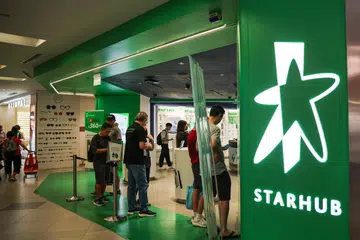
How Sats CEO Kerry Mok turned the group’s lowest ebb into sky-high results on a global stage
He explains why good leaders need to own everything, recruit people smarter than them and ‘over-communicate’
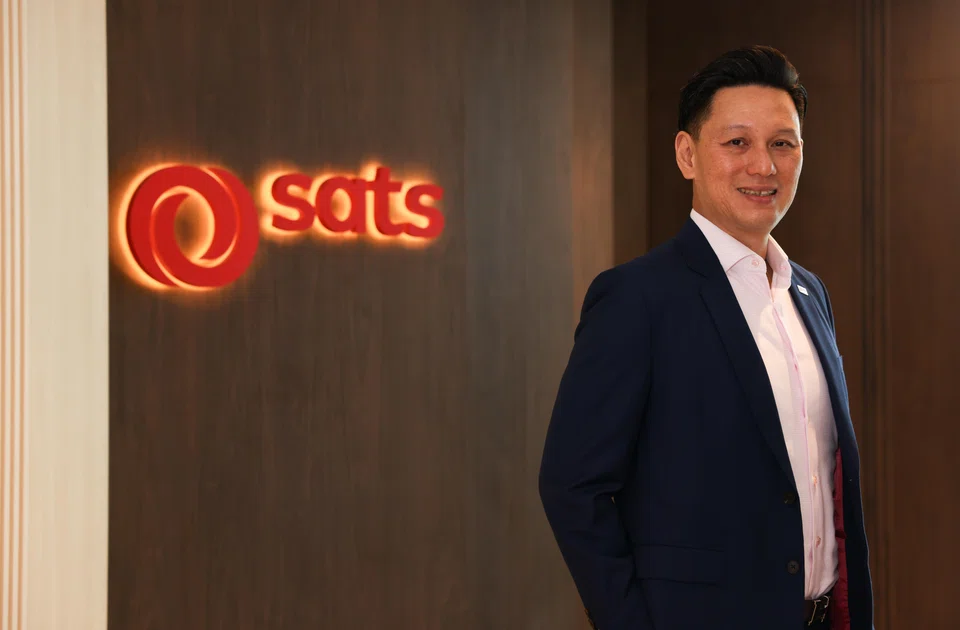
[SINGAPORE] Sats is flying high right now.
But its current success was fuelled by a billion-dollar strategic move taken at what some thought was the worst possible time. During the Covid-19 pandemic, many aviation companies went into survival mode – but Sats did not.
Its president and CEO Kerry Mok saw a chance to transform the company from a Singapore-centric player into a diversified and far more resilient entity. At that point, he was the man behind the eight ball.
After working in senior roles at various multinationals, including DHL, he joined Sats in 2018 as CEO of its food-solutions division. He took on his current role in 2021.
He had been in the head role for less than 12 months and needed to convince stakeholders that a multibillion-dollar acquisition following losses driven by Covid-19 was the right move for an aviation company.
“When we announced the deal, obviously the market sentiment was terrible,” he recounted to The Business Times. “The share price dropped… and there were a lot of questions asked, like, ‘Why are you doing this?’”
Mok, who won the Outstanding Chief Executive of the Year award at the Singapore Business Awards 2026, has been proven right, with Sats now a globally-diversified business and a market leader.
Big lesson learnt in crisis
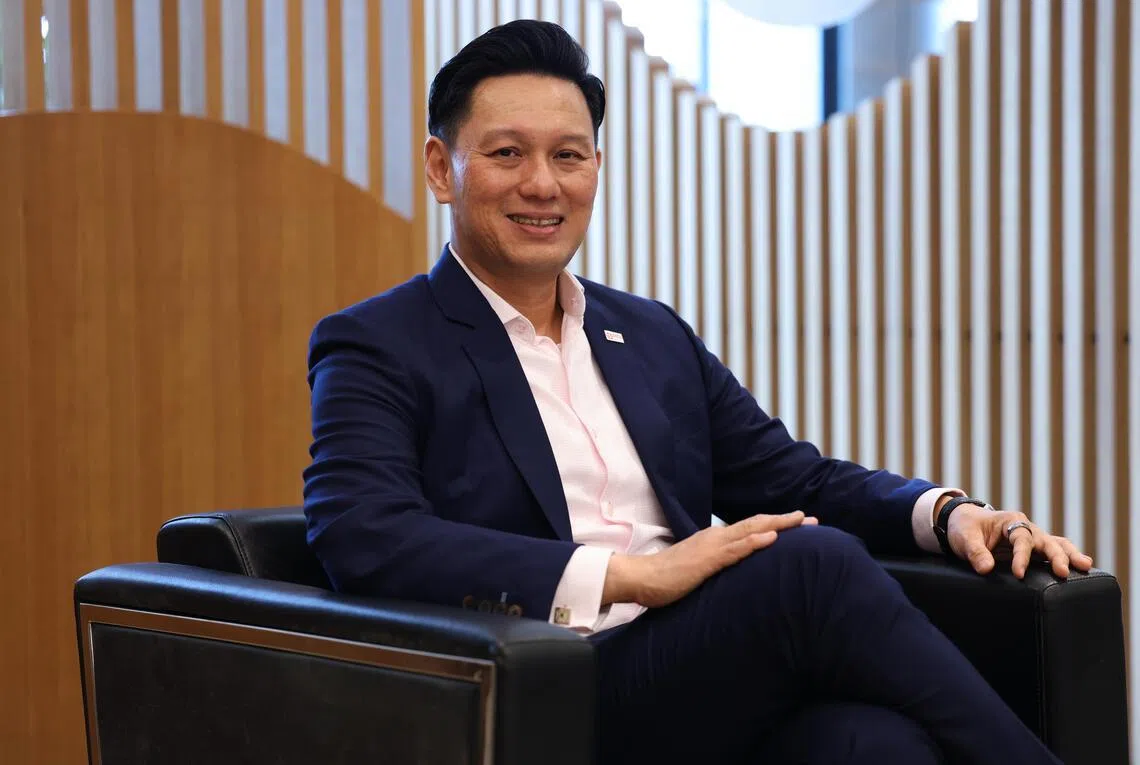
The mainboard-listed company handles air cargo, ground services and in-flight catering.
As air travel came to a halt because of Covid-19, Sats posted some of the worst results in its history before the deal. For the financial year ended Mar 31, 2021, the company plunged to a loss of S$79 million, from a profit of S$168.4 million year on year – and revenue halved.
SEE ALSO

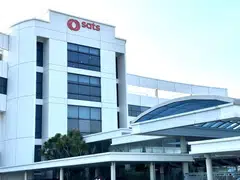
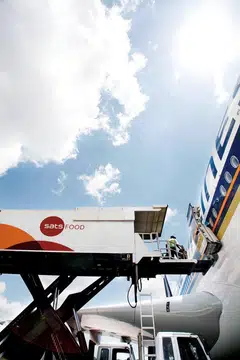

In 2022, it announced the acquisition of Worldwide Flight Services (WFS), a major global air-cargo handling company, for 1.2 billion euros (S$1.8 billion).
To Mok, the crisis clearly showed that the group needed to strengthen through diversification. “We told ourselves as a management team, ‘If this thing ever happens again, we cannot be in the same position. We must be more resilient’,” he said.
Sats already had a presence in the Asia-Pacific and Middle East, but 80 per cent of the business was based in Singapore. With a mature network in the US, UK and Europe, WFS was a good fit.
But the big task was selling all stakeholders on a multibillion-dollar acquisition during a global crisis. To do that, he used one of his hard-learnt lessons in leadership: “over-communicating”.
“What I thought was that within your own company, you might not need to share so much,” he said. “But because of the (CEO) position, the sector you’re in – you have to over-communicate. How to bring stakeholders along, how to over-communicate is a very important aspect of my job.”
The good, the bad and the ugly
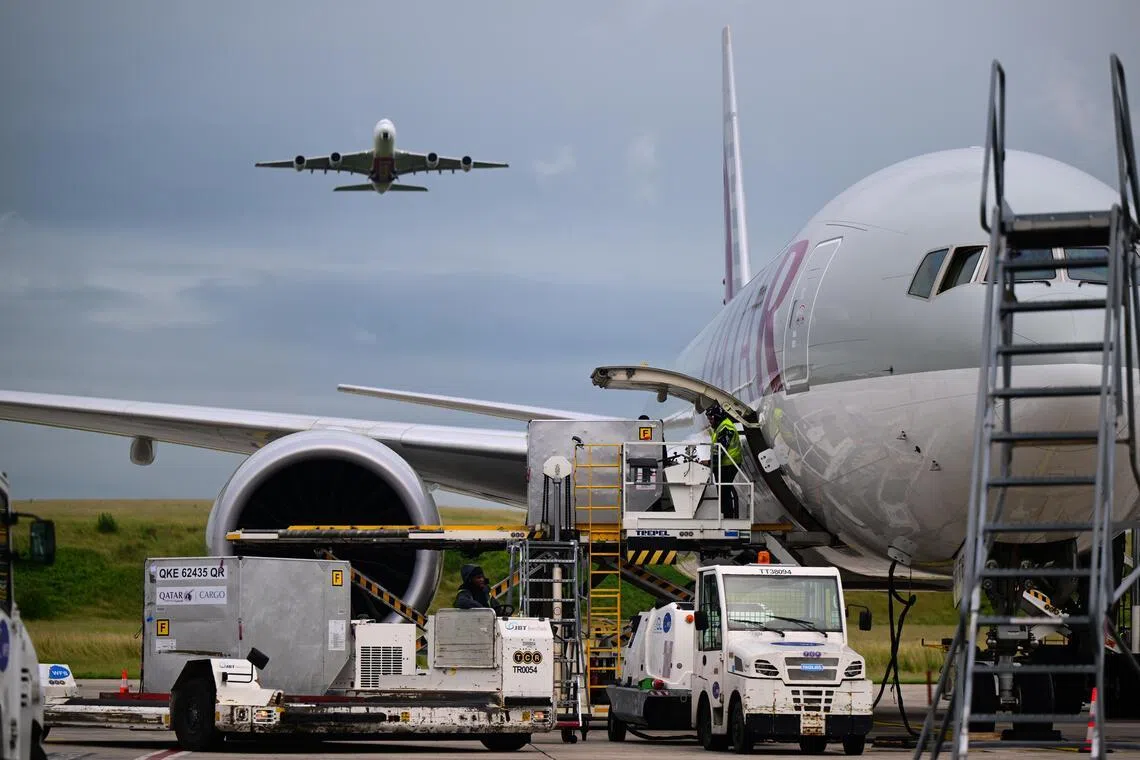
The market did not see the upside at first. After the announcement, Sats’ share price dropped as much as 20.7 per cent – and continued to drop for more than a month after. “There were naysayers as well, plus Singaporean companies typically don’t succeed with overseas acquisitions,” said Mok. “All those negative things were coming hard and fast at the time.”
He and Sats’ group chief financial officer Manfred Seah decided that the best way forward was to work with the Securities Investors Association (Singapore), or Sias, and address the shareholders directly.
Sias helped to organise two dialogues between retail investors and Sats. During the sessions, Mok and Seah explained why the deal was sound in many ways, including in terms of borrowing, interest rates and rights issues.
“As CEO, you’ve got to be able to handle the good, bad and the ugly,” Mok shared.
“It was not easy to explain the strategic moves… when the share price was not doing well, and we were not paying dividends. But we had to remind shareholders that strategically, (this) is the best thing for us to do, and it will set us up better for the future.” He recounted that the acquisition and integration of WFS – in parallel with the regular work – was no small task, but his cosmopolitan experience was key.
“I’ve run global businesses before, and that really helped,” he said. “I’ve always run teams outside of Singapore, and I think this global experience allowed me to look at this in a very different manner.”
He also took the time to understand WFS as a company – visiting its various sites and getting to know the people there – and avoided top-down decision making.
“When you acquire a company that’s bigger than you, you need to have the humility to know that actually, not everything in Singapore can be translated overseas.”
Strength in diversity
Three years after closing the deal, Mok described the journey as “one good ride so far”, adding that Sats is now “more global” in its outlook.
In FY2024 – the first year of WFS’ full integration – group revenue more than doubled to S$5.2 billion from S$1.8 billion.
WFS has since been a key contributor to the group’s run of positive results. For the quarter ended Dec 31, 2025, Sats posted net profit of S$84.7 million, some 20.4 per cent higher than a year earlier, with higher revenue and profit margins. It also handled a record 2.6 million tonnes of cargo.
The company has enjoyed nine consecutive quarters of cargo volume growth, outperforming industry benchmarks.
Around 70 per cent of Sats’ revenue comes from outside Singapore. The group enjoys a position as one of the largest air-cargo handling businesses in the world.
DBS analysts projected that the group is set for a 14 per cent compound annual growth rate in its earnings per share over FY2026 to FY2028.
Sats now has around 55,000 employees in 27 countries, up from around 11,000 in 14 countries previously.
Own it all
While Sats is now a market leader, the group has always operated with a leading perspective, Mok said, adding: “Being (market leader) means you have to drive growth, drive disruption and continue to lead the way.” Part of his drive to improve comes because he sees Sats as part of Singapore’s world-class regional air hub.
“I’m always looking for people smarter than me, more capable than me to join the team. You need to do that, because it gives you the ability to grow.”
Kerry Mok, president and CEO, Sats
“We operate in the best airport in the world. So we must be the best in the world,” he stated. That is an outlook supported by one of his leadership principles, or what he called “extreme ownership”.
“The one thing that I will say that changed my career is owning everything. No victim mentality. Even for things where you don’t have a direct impact, you need to ask yourself, ‘What can I do differently?’”
He explained that such a mentality ensures one can make active decisions, and it helps to influence outcomes. It also enables the avoidance of a victim mindset and negativity, which is especially important for a leader wishing to foster positive change. “There are many tough challenges, but there is never one I feel is going to get me,” he said. “Because you’re the leader of the group, people look up to you; you have to show up even at the most difficult times to continue to lead the way.”
He credited sports – he is involved in track and field, football and rugby – and Officer Cadet School in national service as experiences that helped him build this mindset and taught him to be a true team player.
Team sports, for example, helped him realise that he could influence things beyond his direct control by recruiting talent greater than his own.
“I’m always looking for people smarter than me, more capable than me to join the team,” he added. “You need to do that, because it gives you the ability to grow.”
In fact, the WFS move has made that part of his job easier, as it now attracts more applicants than before. “We’re a very different organisation now. In the Singapore context, we are one of the rare few that has global operations; we can send you to France, India, China (and) the US,” he said.
As an “extreme owner”, Mok sees this global position as more than just improving the group’s own lot, as he hopes it can help foster more Singapore multinationals in future. “Having a global presence itself is not enough. It also has to be the culture, the know-how and the way of working that really defines a multinational,” he said.
“We want to apply a bit of our Singapore magic overseas as well… and inspire other Singapore companies to take the plunge.”
Decoding Asia newsletter: your guide to navigating Asia in a new global order. Sign up here to get Decoding Asia newsletter. Delivered to your inbox. Free.
Copyright SPH Media. All rights reserved.