

Asean’s energy transition must move from ambition to delivery
The region needs a practical stocktake that reflects today’s demand, energy security risks and investment bottlenecks

[SINGAPORE] Asean’s renewable energy ambitions were written for a different moment. Since then, geopolitical shocks, higher fuel prices and new sources of electricity demand, from data centres to electrification, have changed the region’s energy equation. The transition matters as much as ever. The question now is whether Asean can build the systems needed to deliver it at the pace demand requires.
Three shifts now stand out.
First, energy security has moved back to the centre of policy. Coal and gas remain in use because governments need reliable power today.
Second, the enabling system has lagged. Grid access, permitting, tariff structures and cross-border trade rules have not kept up with renewable project pipelines.
Third, artificial intelligence and data centres are adding large new power demand that barely featured when many targets were set.
None of this means the transition is failing. It means Asean needs a stocktake grounded in today’s realities, not a scoreboard of targets set under older assumptions.
The common thread is demand. Asean’s energy demand is growing faster than its grids, markets and institutions can adapt. A useful stocktake starts there, then asks what is working and what still needs to change.
Progress is real where markets make it investable
Progress is visible where the economics work and rules are clear. Distributed solar is scaling across the region, especially where governments have created bankable conditions.
Malaysia is a clear example, with more than 5.7 gigawatts (GW) approved under its large-scale solar programme and corporate renewable procurement frameworks opening the market further.
SEE ALSO








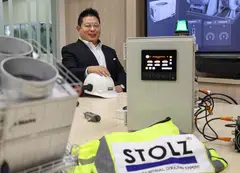



Battery storage is also becoming more viable as costs fall and manufacturing scale improves. This matters because storage helps make renewable power more dependable, especially as solar and wind grow.

On the demand side, electric vehicles are starting to reduce regional reliance on oil imports, helped by more affordable China-made models. The International Energy Agency expects one in four cars sold in South-east Asia to be electric by 2030.
The lesson is straightforward: clean-energy progress accelerates when economics, policy and financing line up. But progress is not yet enough to cover the region’s rising demand. That is where the next challenge begins.
Renewables can deliver security as well as decarbonisation
Recent geopolitical shocks have shown how exposed Asean can be when power systems depend heavily on imported fuels.
While these fuels remain important for reliability in many markets, import dependence can leave economies vulnerable to price swings, supply competition and external disruptions.
This is why renewables are not only a climate solution. They are also an energy security solution.
Domestic and regional clean power can improve supply diversity, reduce exposure to imported fuel markets and make energy costs more predictable.
The economics are also improving. Solar and other renewables are increasingly competitive, and once built, remove exposure to imported fuel-price swings. But cheap generation alone does not create a secure power system.
The opportunity is real, but it needs three practical unlocks: expanded and upgraded grids, faster execution and deeper regional cooperation.
The first unlock is grid infrastructure. Renewable resources are not always near cities, industrial zones or data centres.
Vietnam’s rapid solar build-out showed how generation can move faster than the grid, leaving clean power unable to reach demand centres.
Asean needs networks that can move and manage clean power, not just more projects that generate it.
The second unlock is faster project delivery. Malaysia’s large-scale solar programme and corporate renewable procurement frameworks show how clearer routes to market can attract investment.
The broader challenge is to turn more of the regional pipeline into actual supply, by shortening timelines for approvals, grid connection and commercial operation.
The third unlock is regional cooperation. Asean’s power systems remain largely national, while demand and renewable resources are spread unevenly across the region.
The Lao PDR-Thailand-Malaysia-Singapore power trade pilot shows that cross-border electricity trade is possible, but it also highlights the work needed to scale it.
The Asean Power Grid will require bankable projects, compatible market rules, investable transmission corridors and clear arrangements for sharing costs and benefits.
Data centres will test whether the system can move fast enough
Those unlocks are becoming urgent because new demand is arriving quickly. Hyperscale data centres are the clearest example.
Wood Mackenzie expects data-centre power demand in South-east Asia to rise from 2.6 GW in 2025 to 10.7 GW by 2035, contributing up to 10 per cent of regional power demand growth.
Malaysia and Singapore show why this matters. By 2035, data centres could account for more than a tenth of total electricity demand in both markets. These are city-scale loads that need reliable power around the clock, often in systems already under pressure. If unmanaged, this demand will be met by whatever power is available, which in much of Asean still means fossil fuel-based generation.
The opportunity is to turn data-centre growth into a market signal for new clean power. Hyperscalers are already major buyers of renewable electricity globally.
Better procurement frameworks, grid access and more bankable contracts could allow that demand to bring forward new renewables, storage and transmission investment.
Reliability still has to be managed during the transition
Even if large buyers help accelerate renewable supply, Asean still has to keep the lights on while demand grows. Industry, services, cooling, households and digital infrastructure all need reliable power, and clean supply will take time to scale.
Fossil fuels are therefore likely to remain part of Asean’s energy mix for some time, even as their role should decline. This reflects the age of the region’s coal fleet, the pace of demand growth and the limited transition finance available for early retirement. The challenge is to manage reliability while reducing dependence over time.
The practical answer is to run the transition in sequence. Asean needs to keep today’s system reliable, expand renewables as quickly as the system can absorb them, and create credible pathways to retire coal over time.
In the near term, Asean will need a more diversified and flexible energy system to manage reliability while clean power scales.
Any continued use of fossil fuels should be treated as a transition measure, not the destination. The goal is to reduce dependence deliberately, while demand continues to grow.
A stocktake should lead to action
Asean’s energy transition is moving forward, but under more pressure than many earlier plans assumed.
Demand is rising, fossil fuels remain part of the system and clean power is scaling unevenly. That does not weaken the case for transition. It raises the bar for practical delivery.
A realistic stocktake should recognise both sides of the story: a region still running today’s energy system, while building the foundations of tomorrow’s. The task is not to choose between security, affordability and decarbonisation. It is to make them work together.
Progress should therefore be judged not only by whether old targets are met, but by whether Asean is building a power system that can support growth, strengthen resilience and lower emissions. The window is open. The priority now is to use it well.
The writer is head of sustainable business at UOB
Decoding Asia newsletter: your guide to navigating Asia in a new global order. Sign up here to get Decoding Asia newsletter. Delivered to your inbox. Free.
Share with us your feedback on BT's products and services
TRENDING NOW

Malaysian king buys stake in Singapore-listed mining firm expanding into rare earths

Grab CEO’s wife Chloe Tong on life with Anthony Tan and finding her purpose

Once staunchly pro-China, Malaysian Chinese businesses are now distancing themselves from Beijing
Longer wait times expected as S’pore healthcare institutions report system disruptions

