Rotimatic kneads more focus on economic viability, says new owner

Singapore
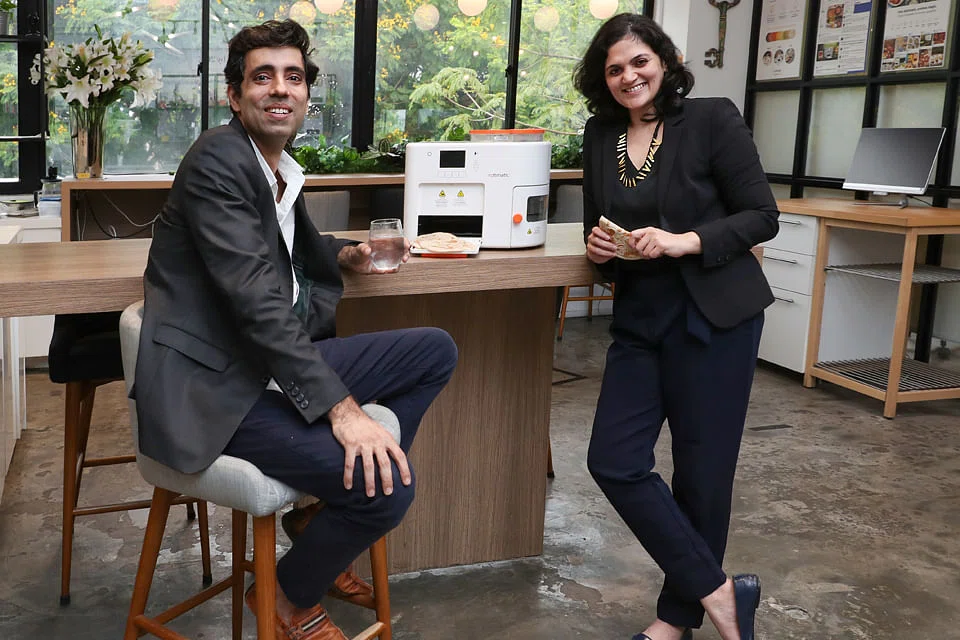
MADHUJEET Chimni, the investor who last year led the purchase of the struggling company behind Indian flatbread-maker Rotimatic, is determined to turn things around. ( see Amendment note)
Since Zimplistic changed hands last October for an undisclosed sum, the company has doubled down on refining logistics, customer support and marketing. It is also working on improving its kitchen appliance.
"We are changing direction to be an economically viable company, rather than a company that is looking to just capture the market at whatever cost and burn tons and tons of cash," Mr Chimni told The Business Times.
He stressed that the management and operational teams of Zimplistic remain intact after the acquisition by Light Ray Holdings. "Light Ray's role is to equip and support the team with the tools, capital and operational support as needed."
Light Ray is an investment vehicle owned by Helix Capital, which was set up in 2015 by Mr Chimni and long-time partner Bharadwaj Chivukula to invest their own capital.
Mr Chimni has himself founded several companies. His tech consulting firm Stone Apple was acquired by Hitachi Consulting in 2014. He has since co-founded corporate services provider In.Corp through the merger of four companies, and has also founded a Singapore-based waste management startup called Blue Planet.
Helix Capital bought Zimplistic in what appears to have been a distressed sale. DealStreetAsia reported that Zimplistic's previous investors had booked significant losses on the deal.
The Singapore-based company had previously raised US$50.7 million in equity funding from backers including government-linked EDBI, Openspace Ventures and Koh Boon Hwee's Credence Partners, according to data platform VentureCap Insights.
Excluding US$5.5 million of intangible assets, the company's total assets as at Dec 31, 2019 stood at US$6.3 million, against total liabilities of US$8.1 million, financial statements filed this month showed.
Mr Chimni declined to comment on the nature of the acquisition. He believes Rotimatic is a unique product that solves a problem faced by urban populations for whom flatbread is a staple.
"The need is clear, the market size is large, the technology is proven and the competition is near to zero. This had all the elements of a successful product and it made the buying decision easy for us," he said.
Rotimatic spent eight years in development, and now retails at a starting price of US$950. Users feed flour, water and oil into the appliance, which automatically dispenses the ingredients, kneads the dough and presses out one roti every 90 seconds.
The machine is protected by 37 patents, and allows customisation of flour type, thickness, roast level and oil content.
Zimplistic said Rotimatic has delivered over 111 million flatbreads already, based on data from the WiFi-connected machines.
On the more important figures, it has fallen short. In FY2019 revenue fell 34.9 per cent to US$13.8 million, and the company booked a net loss of US$10.5 million.
The business also took a hit last year from the pandemic as supply chains got disrupted and suppliers faced capacity issues, although Zimplistic's co-founder Pranoti Nagarkar said production levels have since recovered.
A bright spot is that the company's economics appeared to be improving. In FY2019 its operating loss margin narrowed as operating expenses fell 48.6 per cent to US$13 million.
The team has plans to improve unit economics further. Mr Chimni said Zimplistic is evaluating ways to "realign costs between different centres and see how much more we can innovate . . . and hence, drive the overall cost lower".
One way to do this could be setting up local service centres for the Rotimatic in the US, its largest market. Currently, machines that need repair are shipped back to Singapore, leading to higher transport costs and long wait times.
Marketing efforts will also be more targeted - focusing more on US-based expatriates with families and less on other geographies.
Customer support is another area the company is doubling down on. Ms Nagarkar acknowledged that service levels have suffered over the past year.
Zimplistic is revamping its training for customer support agents and recently switched vendors to a young founder-led company. "They have their heart in the right place and they want to do well," Ms Nagarkar said.
Customers might soon be able to fix issues themselves, too. An in-development troubleshooting function on the Rotimatic app will help identify the problem, after which a software patch can be sent to the WiFi-connected appliance.
As Zimplistic embarks on its next phase, it intends to expand its team of about 45 employees to include more engineering roles.
"After being in the market for some time, we realised key improvements that we could make (to Rotimatic) - both from the needs of the business and needs of the consumer," said Rishi Israni, who is Ms Nagarkar's husband and also the co-founder of Zimplistic.
Meanwhile, the team is exploring other revenue streams, including getting into consumables such as healthy flour additives.
Mr Chimni reckons 2021 will be a good year for the company. "This is a case of a good blend of talent, technology, need and unmet demand. Seems to me to be a good recipe for success."
Amendment note: This article's headline was edited to better reflect the company's new direction.
READ MORE: At a loss? There's always the 'path to profitability'
- Garage is BT's startup vertical. Read more news, analyses and opinions at bt.sg/garage