

Tech expansion in Singapore fans tussle for talent

Singapore
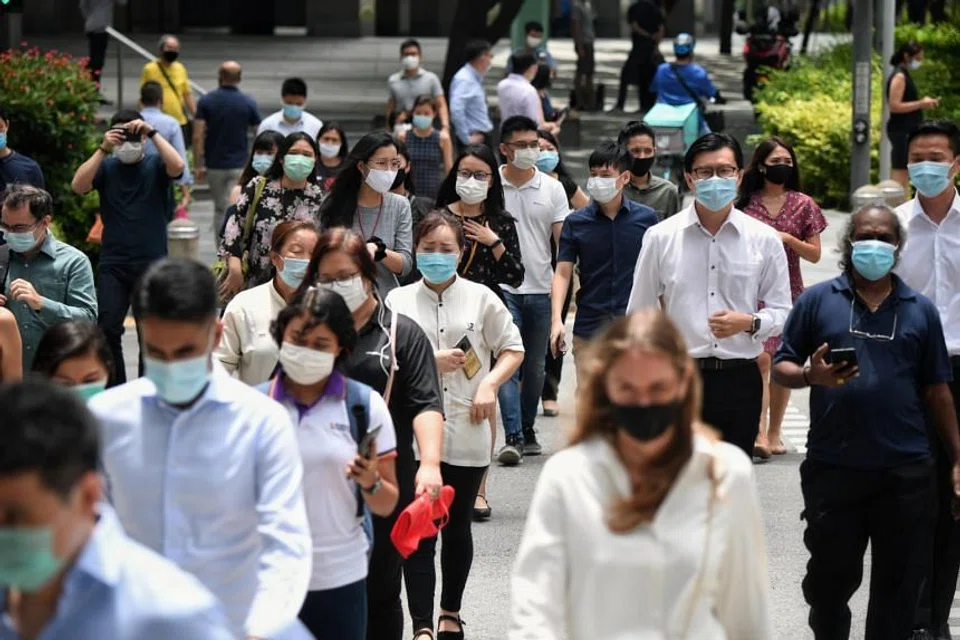
THE tussle for talent is intensifying among tech firms, with several announcing big hiring plans just two months into the new year.
Job creation to the tune of more than 1,500 positions in Singapore have collectively been announced by Grab, Razer, Dell Technologies and TransferWise (which recently rebranded to Wise).
Grab, for instance, said on Thursday that it expects to create around 350 new jobs in Singapore this year. This includes the 200 roles announced in December for an upcoming digital bank, which will be managed by a Grab-Singtel consortium.
But these firms might face an uphill battle in filling these roles. While Singapore's tech talent pool has increased steadily in recent years, the booming demand created by tech companies setting up shop in the city-state could mean that supply might continue to outstrip demand for a number of years, industry observers said.
More focus might have to be dedicated to training and reskilling mature workers, seeing as it would be a few years before students - many of whom have entered tech-related courses to reap the benefits of the digital economy - graduate into the workforce, the observers added.
The tussle for talent comes as Singapore's tech ecosystem enters a growth spurt. Tech giants such as Bytedance, Amazon, Tencent and Zoom have flocked to the country to tap its favourable business environment, developed infrastructure, as well as stable economy and political landscape.
Amazon, for instance, currently has 322 full-time job openings in Singapore. The US-based e-commerce major is taking over three floors of Citigroup's Singapore office, according to news reports.
Meanwhile, an influx of venture capital has generated a community of high-growth startups that contribute to the demand for tech expertise.
"With the influx of technology hiring, we won't be able to keep up with the supply-demand gap for the next few years," said Sheralynn Tjioe, who heads up cybersecurity recruitment at Hays Singapore.
She said companies need to be flexible in hiring as it will be tough to find talent that fits the role to a tee. Instead of focusing only on technical skills, firms should consider other aspects such as attitude and the candidate's understanding of the underlying tech - even if they hail from a traditional sector.
Employers should also pay attention to current employees with a good track record and are a good cultural fit.
"The recruitment process for tech giants usually span five stages, with the interview for cultural fit being the last. You can have people who ace the technical part but still fail at cultural fit. So if you have an employee that knows the organisation inside-out, you can give them a chance and train them," Ms Tjioe said.
The Singapore government is also rolling out initiatives to upskill workers. Grab on Thursday said it will work with the Infocomm Media Development Authority (IMDA) and Digital Industry Singapore (DISG) to grow its core product and engineering teams through talent development programmes such as the TechSkills Accelerator.
Minister for Communications and Information S Iswaran, who witnessed the signing of a memorandum of intent, said the initiative bodes well for research and development in Singapore.
"This partnership between the government and private sector will help to create more solutions and application possibilities, which can be used not just by the companies themselves, but also be available to the broader base of enterprises in Singapore," he said.
The government has been emphasising a "Singaporean core" for companies amid the economic downturn sparked by the pandemic. Yale-NUS economics professor Xing Xia believes it is unfortunate if, in the long run, multinational and local tech firms are overly hindered by the barriers to hiring foreign talent.
"I think the real opportunity for Singapore is in the economics of agglomeration, which means that if more tech companies come into Singapore and offer important positions here, there might be more companies in the same sector that come into Singapore in the future," she said.
If current tech firms are allowed to hire quickly and do well, the Republic is likely to see more companies add more positions in the next five to ten years, said Prof Xia.
"So I think the focus right now is to allow these companies to grow as fast as they can."
READ MORE:
TRENDING NOW

Could stablecoins be the future of money?

Once staunchly pro-China, Malaysian Chinese businesses are now distancing themselves from Beijing
Vietnam’s data-centre investment rush faces reality check on power and site constraints

‘My grandfather’s legacy’: Sherman Kwek lays out three-year plan for CDL to drive returns

