Uncertainty over COE prices may lead SMEs to put the brakes on fleet expansion plans
Firms may turn to rental market if COE price for commercial vehicles stays high; industry players expect general uptrend, but outlook hazy due to pandemic, supply chain issues

Singapore
SMALL and medium-sized enterprises (SMEs) mulling fleet renewal or expansion are prepared for uncertainty in how Certificate of Entitlement (COE) prices move forward, with the wild card being how the Covid-19 pandemic plays out.
In Wednesday's bidding, COE prices fell slightly across most categories from last month's surge. The premiums for Category A and B vehicles fell 3.3 per cent and 2 per cent respectively, closing at S$48,002 and S$60,001.
Meanwhile, the premium for Category C vehicles - which covers buses and goods vehicles - fell 2.3 per cent to S$43,001, bucking a general rise (see chart). This was even though the average monthly quota for commercial vehicles shrank to 314 a month from May to July, compared to 511 a month from February to April
The only categories that saw a rise were motorbikes, where the premium rose marginally to S$8,011, and the open Category E, where the premium inched up 1.5 per cent to cross the S$63,000 mark.
The latest results mark a correction after April's spike, when premiums in Categories B and C surged by more than 15 per cent each.
Companies that The Business Times (BT) spoke to say that they are now treading cautiously on any fleet expansion plans. If the COE price for commercial vehicles stays high, they may turn to the rental market instead.
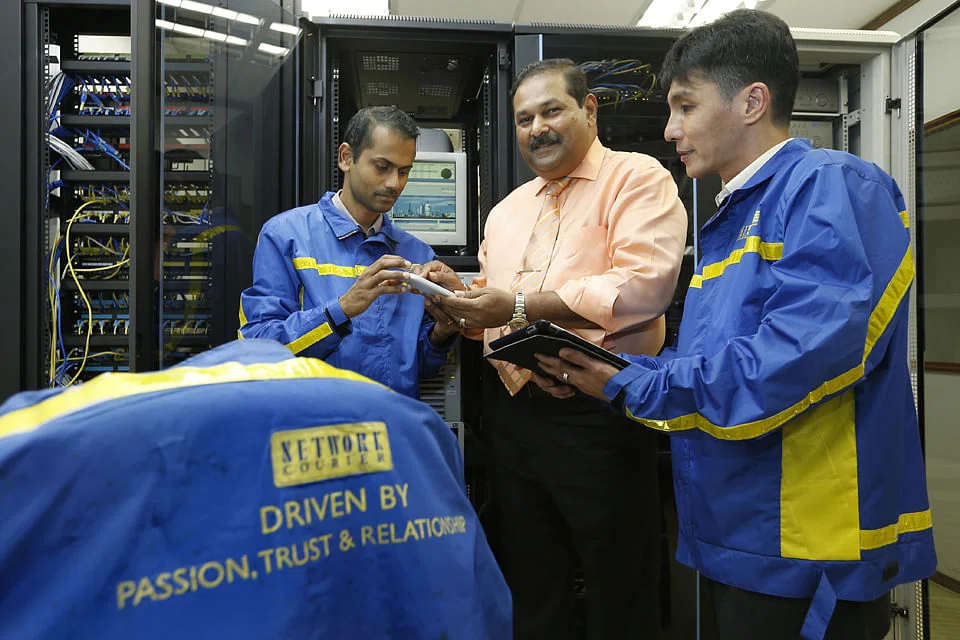
VS Kumar, founder and managing director of Network Courier, has plans to add 10 vehicles to renew his fleet. He might opt for electric vehicles, once a suitable model is available in Singapore. But how the COE moves will also weigh heavily on his decision, he said, noting that Wednesday's decrease in Category C premium is still mild.
"If the COE price gets higher, then maybe I will rent until the price is more stable," said Mr Kumar, who recently ordered a 10-foot Toyota Dyna lorry.
Karen Wong, owner of last-mile delivery company Swift Wheels, is similarly cautious. She noted that the uncertainty with COE comes amid the "painful" rise in other costs, such as manpower, fuel and rental rates.
Swift Wheels, a vendor for logistics service Qxpress, owns three delivery vehicles, and rents about 10 others. Ms Wong is watching how e-commerce demand is set to move this year, in deciding whether to add to her fleet.
"E-commerce may surge again, but I will also need to look at our costs and our clients' needs... We may need to increase our manpower and fleet, but maybe I will have to rent more than purchase. If we purchase a vehicle, we must ensure that the demand (for delivery) can sustain," she said.
Sam Too, director at e-commerce firm Qoo10, added that he is "duly concerned" about the ability of small delivery companies to cope with rising costs, particularly for those lacking economies of scale.
The macro uncertainty may cause vehicle owners to hold on longer rather than de-registering, which would further constrain the quota, reckoned Adrian Lee, co-founder of vehicle-sharing platform Tribecar.
Beyond Covid-19, many automobile makers have been facing microchip shortages, leading to supply chain uncertainties. Mr Lee thinks that COE might trend upwards and possibly peak around 2022.
"We don't believe that the microchip shortage or the Covid-19 situation is going to improve much in the next six months. We expect this knock-on effect to continue into 2022; the moment people don't deregister their cars, COE is going to continue going up," he said.
Tribecar does not own vehicles, but works closely with its partner car rental firms on purchasing decisions. The company is closely monitoring all COE categories and hopes to keep its membership pricing stable regardless of the volatility.
Some businesses are leaning more closely towards an asset-light model. For instance, logistics startup Pickupp is looking to expand its network of despatch points and on-foot delivery persons, which mitigates vehicle-related costs like COE, said its co-chief operating officer Lee Chee Meng.
Other industry players BT spoke to expect a general uptrend in COE, albeit with the caveat that the outlook can change quickly if the pandemic worsens.
Michael Lim, owner of Motorway Group, said that Wednesday's drop in COE premiums was "surprising", considering that the supply of COE quotas had shrunk. He reckons that Tuesday's reversion to stricter Covid-19 measures may have caused some bidders to hold out for the next round.
Jake Ler, chief marketing officer of Motorist.sg, thinks that Wednesday's result marked a "healthy pullback" from last month's frenzy. All things remaining constant, he thinks that COE will generally continue to rise.
But he adds that it is difficult to make a forecast with the recent rise in Covid-19 cases. Mr Ler noted: "These are very uncertain times. If there is another circuit breaker, it's very scary for business."
Desmond Chan, deputy editor of sgCarMart, thinks that COE will continue to trend upwards, because of the lower COE supply for this quarter. The premiums have been going up for the past year, and show no signs of shifting, he said.
"The slight decrease today is probably just a little bit of market correction, considering the significant spike in the previous bidding round," he said.
Sanjay Shivkumar, category director for autos, property and services at Carousell, similarly thinks that COE might be on the upcycle after the previous peak in 2013. Demand has been visible with commercial vehicles.
"We've seen dealers on the ground sharing that commercial vehicles are going out of stock, possibly due to businesses attempting to buy new commercial vehicles before the COE price goes higher," Mr Shivkumar said.
But Neo Nam Heng, chairman of diversified motor group Prime, thinks that COE could hold steady till July, and subsequently ease, bringing relief to buyers. "In Q3, we could see enough COEs being recycled back. But we can't say by how much it would decrease the COE price."
Ultimately, businesses will still make their vehicle purchases based on needs rather than wants, noted Hong Chun Mun, chief executive of online car marketplace UCars. In the near term, he reckons that companies might wait out high COE prices.
"It's likely that businesses will replace their vehicles if their time has come, so to speak. If they have any discretionary room in their decision-making, it might be that some put off their fleet renewal - unless they think COEs will be even more expensive later in the year," he said.
In any case, trying to predict COE may ultimately be a smoke-and-mirrors game. As Mr Lee of Tribecar mused: "No one has a crystal ball."