

Economic headwinds undermining Trump’s political capital
A growing class divide, among others, creates a partly difficult dynamic for a president who appeals to working-class voters
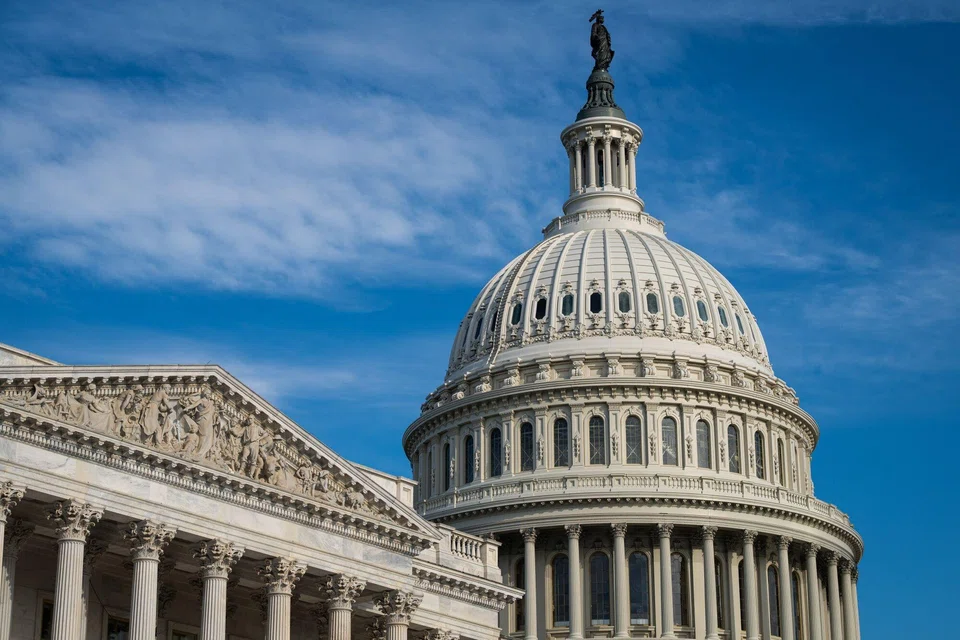
NEARLY one year after his electoral victory, US President Donald Trump faces a striking political reversal – driven by deteriorating economic conditions that threaten both his agenda and his party’s prospects in the 2026 midterm elections.
The approval rating collapse
Trump’s approval rating has fallen to 41 per cent, with 49 per cent disapproving, marking his lowest point in his second term. This represents a complete inversion from his inauguration, when he enjoyed 49 per cent approval.
More troubling for the administration, Republican voters’ approval has decreased 12 points from 91 per cent to 79 per cent, while disapproval among independents intensified from 44 per cent to 51 per cent.
The political implications are stark. Recent elections across Virginia, New Jersey and New York City saw Democrats make sweeping gains, with voters citing economic concerns as their primary motivation.
Roughly half of Virginia voters said the economy was the top issue, and about six in 10 of these voters backed the Democratic gubernatorial candidate.
Broken economic promises
The irony is particularly acute given that Trump campaigned heavily on economic competence.
He won the 2024 election partly by promising to quickly reduce inflation and lower the cost of everyday goods such as eggs and groceries. Instead, the opposite has occurred.
The Treasury Department stated that inflation remained above the target of 2 per cent in the third quarter, even as Trump continued to insist there is “no inflation”.
“Companies cannot plan investments or hiring when tariff rates and trade terms change from week to week based on presidential phone calls. This uncertainty alone is costing the US economy an estimated 100,000 jobs a month.”
More specifically, annual inflation spiked back up to 2.9 per cent in August after dropping to 2.4 per cent in March – moving in the wrong direction at precisely the moment when the administration claimed victory over price increases.
The job market tells an equally concerning story.
US job growth has slowed from an average of 150,000 a month at the start of 2025 to just 25,000 in August, with economists attributing this to slower immigration, reduced government hiring and funding, as well as elevated economic uncertainty.
The unemployment rate has ticked up to 4.2 per cent, and long-term unemployment has soared.
The tariff gamble backfires
At the heart of Trump’s economic difficulties lies his aggressive tariff policy. What was supposed to restore American manufacturing and create jobs has instead created chaos and dampened growth.
Goldman Sachs now forecasts core inflation hitting 3.5 per cent in 2025, with gross domestic product growth of just 1 per cent and unemployment reaching 4.5 per cent. This raises the probability of recession to 35 per cent.
The tariff regime has proven both costly and unpredictable. Trump’s on-again, off-again approach to trade policy has created paralysing uncertainty for businesses.
Companies cannot plan investments or hiring when tariff rates and trade terms change from week to week based on presidential phone calls. This uncertainty alone is costing the US economy an estimated 100,000 jobs a month.
Compounding these challenges is the government shutdown that has reached near-record length.
It has halted federal data collection, frozen payments for farms and economic development programmes, and furloughed tens of thousands of federal workers.
“The fundamental question now is whether Trump will acknowledge these economic realities and adjust course, or if he will continue to insist – against mounting evidence – that his policies are succeeding. ”
Employment in the agriculture industry fell by 155,000 between March and July 2025, while it rose 49,000 during the same period in 2024.
The political cost is severe. Forty-three per cent of voters said their midterm vote will be to express opposition to Trump, compared to just 29 per cent who will vote to support him.
Democrats hold a four-point advantage on the generic congressional ballot and report being significantly more motivated to vote in 2026.
A growing class divide
Perhaps most concerning for the administration is the diverging economic experience across income levels.
While high-income households continue spending freely, buoyed by a surging stock market and artificial intelligence investments, lower-income Americans are struggling badly.
Major corporations have noted that traffic from lower-income consumers is down double digits, a warning sign that the benefits of any economic growth are flowing overwhelmingly to those at the top.
This creates a particularly difficult political dynamic for a president who won in 2024 partly by appealing to working-class voters frustrated with their economic prospects.
The road ahead
Trump shows little sign of adapting his approach. He continues to deny that inflation exists and dismisses unfavourable polling as “fake news”.
His administration has even moved to gut economic security schemes such as the Supplemental Nutrition Assistance Program, and threatened retirement savings at the very moment when economic headwinds suggest more Americans may need such support.
The Federal Reserve has begun cutting interest rates despite inflation remaining above target, a clear signal of concern about where the economy is headed.
Bond markets are pricing in both slower growth and persistent inflation, the dreaded stagflation scenario not seen since the late 1970s.
For Republicans facing voters in 2026, the president’s economic record presents a serious liability. Trump’s political standing has become intertwined with economic conditions that appear to be deteriorating rather than improving.
Unless the administration can reverse these trends quickly, the economic promises that helped win the White House may become the very issues that cost Republicans control of Congress.
The fundamental question now is whether Trump will acknowledge these economic realities and adjust course, or if he will continue to insist – against mounting evidence – that his policies are succeeding.
The answer may determine not just his political future, but the economic well-being of millions of Americans caught in the crossfire of his trade wars and policy uncertainty.
TRENDING NOW

Two Singapore-listed palm oil firms named in Greenpeace report on Indonesian plantation fires

Singapore Airlines flight returns to San Francisco after ‘unruly’ passenger incident

Singapore looking into which companies responsible for haze-causing fires: PM Wong

Deluge IPO 3.86 times subscribed ahead of SGX debut

