More Asians eye US housing real estate: Blackstone

Fiona Lam
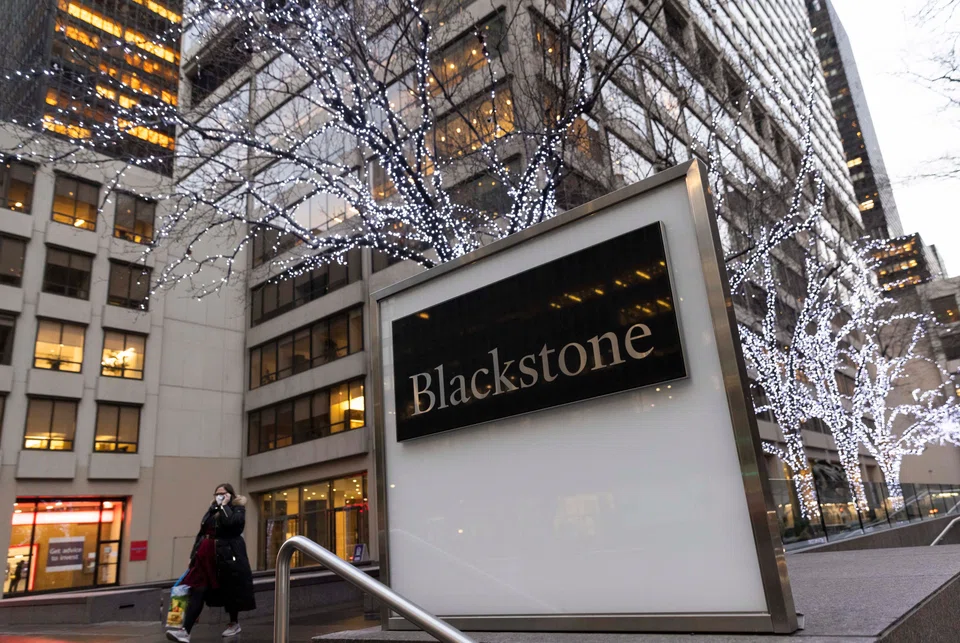
RESIDENTIAL real estate in the US is capturing the attention of more individuals in Asia, as these investors are drawn to the country’s broad and deep property market and the potential inflation hedges.
Herbert Suen, senior managing director and head of Asia-Pacific at Blackstone’s private wealth solutions group, has observed Asian individual investors increasingly investing in alternative asset classes, particularly in private markets or private assets, as a way to diversify their portfolios.
This is occurring against the current backdrop of higher uncertainty in the public markets, coupled with continued inflation and rising interest rates, said Singapore-based Suen in an interview with The Business Times (BT).
In Singapore, the firm predominantly works with accredited investors, in accordance with its regulatory permissions. Accredited investors are wealthy individuals who meet certain criteria set out by the Monetary Authority of Singapore (MAS), and can typically access a wider suite of financial products not available to retail investors.
Suen said: “Our research has shown that private market investing or assets tend to demonstrate lower volatilities compared to public markets, and certain underlying asset types such as real estate and credit are also less correlated to traditional equities and bonds.”
For instance, private real estate and private credit strategies, which are also designed with the goal of distributing regular income to investors, have been “much more stable” than the public markets in the year to date, he added.
Recent study findings similarly indicate that Asian and Singaporean investors have been boosting their allocations to alternative assets such as real estate. An annual survey by MAS found that in 2020, real estate investments managed by asset managers based in the city-state climbed 56 per cent to S$221 billion, from S$142 billion in the previous year.
Suen noted that while many Asian investors already have “decent” exposure to property, there tends to be a significant home bias.
Previously, US real estate also seldom formed a meaningful part of these individuals’ portfolios because there was a lack of access to that market – other than via listed real estate investment trusts (Reits), which may carry a fair amount of equity risks.
SEE ALSO






But since Blackstone launched its income-oriented real estate strategy in the US, investors globally including in Singapore have been increasing their allocation in such types of strategies, off from “a very low base”, Suen said.
In developing its Core+ (core-plus) real estate strategy, the private equity giant aimed to address the rising demand from eligible individual investors to access the same quality of investment capabilities that were traditionally only available to institutional investors. The strategy combines private assets with a structure that offers some liquidity and regular income for individuals.
In 2021, rental housing demand in the US came roaring back, reducing vacancy rates and driving up rents. The Joint Center for Housing Studies of Harvard University wrote in a report earlier this year that the rebound partly reflected the lack of inventory in the for-sale market, which kept many higher-income renters from buying homes.
Specifically, in the professionally managed apartment market, the number of renter households in Q3 2021 increased by a record 4.8 per cent year on year and vacancy rates declined, the research centre said. Asking rents for all professionally managed apartments thus spiked in that quarter.
In the US, Blackstone Real Estate focuses on suburban-style, multifamily housing communities, in growth markets concentrated in the western and southern regions of the country. These markets are said to be supported by US millennials’ increasing demand for suburban living.
The outsized population growth in these areas has contributed to stable occupancies, with the multifamily sector’s occupancy rate now at its highest level since June 1997, Suen noted.
He described the overall US real estate market as well established, with both breadth and depth; real estate is the third-largest asset class in the country, after equities and fixed income.
Real estate can also potentially be an effective inflation hedge, he said. Residential assets in particular tend to carry shorter-term leases, as compared with other property sectors such as offices. That means housing rents can be adjusted to market rates sooner and thus possibly hedge against inflation.
“At Blackstone, we continue to have a strong conviction in the residential sector, and continue to find opportunities to invest in high-quality housing communities, especially in select locations where we see demand outpacing supply,” Suen told BT.
He highlighted strong rental growth in the real estate portfolio due to such demand-supply dynamics, with some rents growing at double or even triple the pace of inflation in the US.
“Our investors generally like the strong fundamentals in US commercial real estate assets, particularly the ancillary benefits of providing stability and generating positive cash flow,” Suen added.
Blackstone has US$222 billion of retail assets under management (AUM), which made up almost 25 per cent of the firm’s total AUM as at Q1 2022.
Its Core+ strategy is underpinned by the scale of Blackstone Real Estate, which has US$298 billion of investor capital under management globally as at Q1 2022.
Suen said that the Blackstone scale allows the real estate team to execute large and complex transactions. In 2021, the Core+ strategy closed or committed to 11 transactions amounting to more than US$1 billion.
Investment activity in US multifamily housing spiked in Q3 2021 to a quarterly record of almost US$79 billion in property sales, according to a report by the government-sponsored Federal Home Loan Mortgage Corporation, commonly known as Freddie Mac.
Coming off a record-breaking year in 2021, Freddie Mac expects the country’s multifamily markets to continue their growth, albeit at a more moderate pace. It forecasts “universally positive” rental growth in 2022, with rents likely to rise in all the 74 markets it covers.
Markets with the highest projected rental increases for 2022 include Phoenix at 8.2 per cent, Tampa at 7.7 per cent, Las Vegas at 7.4 per cent and Tucson at 7.1 per cent, Freddie Mac said. Meanwhile, the weakest rental growth is expected in the suburbs of New York City and in Milwaukee, but even then, these metro areas could still see a modest rise of 2 to 2.5 per cent.
Freddie Mac forecast the national vacancy rate for multifamily housing to remain flat at 4.8 per cent this year.
However, with demand bouncing back, prices of US rental properties in general have also resumed their steep climb since last year. The Harvard Joint Center for Housing Studies noted that the capitalisation rate for rental buildings in Q3 2021 fell to the lowest reading on record.
The US National Association of Realtors (NAR) said in an economists’ outlook report in April 2022 that cap rates this year are “likely to continue to compress or hold steady for the apartment market”, given that rising mortgage rates tend to encourage renters, who would have been able to afford a home purchase, to remain renters.
“With strong apartment demand, cap rates are likely to hover at 4.5 per cent from the Q1 2021 level of 4.4 per cent. At the height of the pandemic in Q2 2020, cap rates were at 5.2 per cent,” NAR added.
Decoding Asia newsletter: your guide to navigating Asia in a new global order. Sign up here to get Decoding Asia newsletter. Delivered to your inbox. Free.
Copyright SPH Media. All rights reserved.