

China readies for G-20 meeting in Hangzhou
Beijing
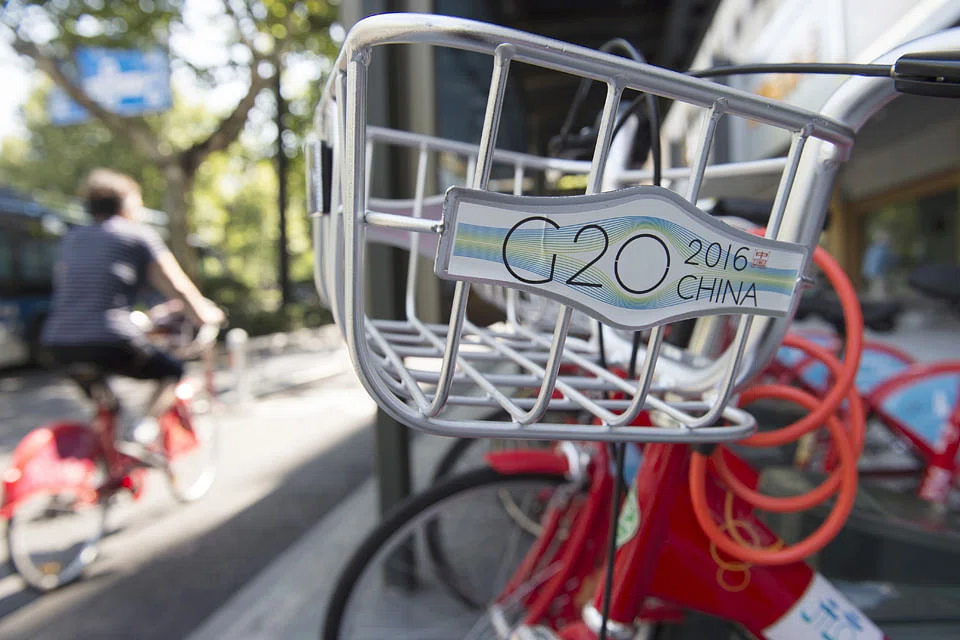
ON Sept 4 and 5, China will host the Group of 20 (G-20) meeting in the southern city of Hangzhou. It will be the first time the world's second largest economy will host this event, which brings together the heads of state of the world's 20 leading economies.
Beijing has left nothing to chance. Hangzhou's skies have been cleared up; a force of 760 000 volunteers has been marshalled to assist and orientate participants, and all civil servants have been given a week's holiday.
The local press has unanimously praised the organisation of the event, hailed as being of utmost importance to the global economy.
People's Daily said in a commentary last week: "Let's make cooperation ever higher."
A senior European diplomat who attended the preliminary meetings said: "China wants a consensual G-20. It has taken into account other countries' agenda. Overall, they have been very professional."
The event will also accommodate independent bilateral meetings between participating countries. US President Barack Obama is set to meet his Turkish counterpart, and Chinese President Xi Jinping; French President Francois Hollande and German Chancellor Angela Merkel will meet Russian President Vladimir Putin to discuss Ukraine. The spotlight will also shine on potential two-way meetings between Mr Xi and his Japanese and South Korean counterparts.
The G-20 meetings were started as an annual event after the 2008 financial crisis with the aim of promoting global growth. Issues discussed range from fighting corruption and fiscal harmonisation to green funding. A joint communique setting growth priorities for the next few years is published at the end of each edition of the meeting.
As the host country, China has set the agenda. This year, the focus will be on the Special Drawing Rights basket, which will include the renminbi from October; also on the agenda are green finance, global fiscal policies, overcapacity (especially in the steel sector), and transfer of technology to developing countries. Some diplomats say that ratification of the COP 21 climate-change treaty by some countries can be expected, and senators in the US have urged Mr Obama to address the issue of cyber security.
China will also push its own agenda and advocate initiatives for infrastructure investments such as its "One Belt One Road" initiative. It has made clear that the focus will be on development and growth, and publicly stated that South China Sea issues will not be discussed.
Qu Hongbin, chief economist with HSBC, said: "With fewer near-term worries on the radar, we think China's policymakers will seek to advocate a more medium-term agenda for the global economy, one that features reforms to the global monetary system, greater use of green finance and a more prominent role for infrastructure investment.
"Chinese policymakers may also try to push for more progress on the bilateral trade deal with the US, given that President Obama's term is drawing to an end."
But beyond the official meetings, the G-20 will be a way for China to showcase itself as a global superpower that has influence on the world stage. This will be the first time that nations such as Thailand or Kazakhstan - which don't belong to the G-20 - will be present; the event aims to offer representation to the lesser-developed countries as well.
Former vice-president of the Bank of China Zhang Yanling, who has been working on the Chinese G-20 agenda, said: "China is a big country and it now wants to contribute its share to global governance. The agenda items come from concerted efforts from many consultations."
READ MORE: G-20 summit: China to focus on positives
TRENDING NOW

He built the Vingroup empire. Now South-east Asia’s richest man is handing some key roles to his sons
China’s Pinglu Canal likely to benefit Singapore, other South-east Asia ports in the long term
Suntec Reit to increase Singapore focus, sell three Australia properties
Despite the de-dollarisation debate, demand for dollar liquidity in Asia is growing

