CNY breathes life into Chinatown, but businesses fear what comes next
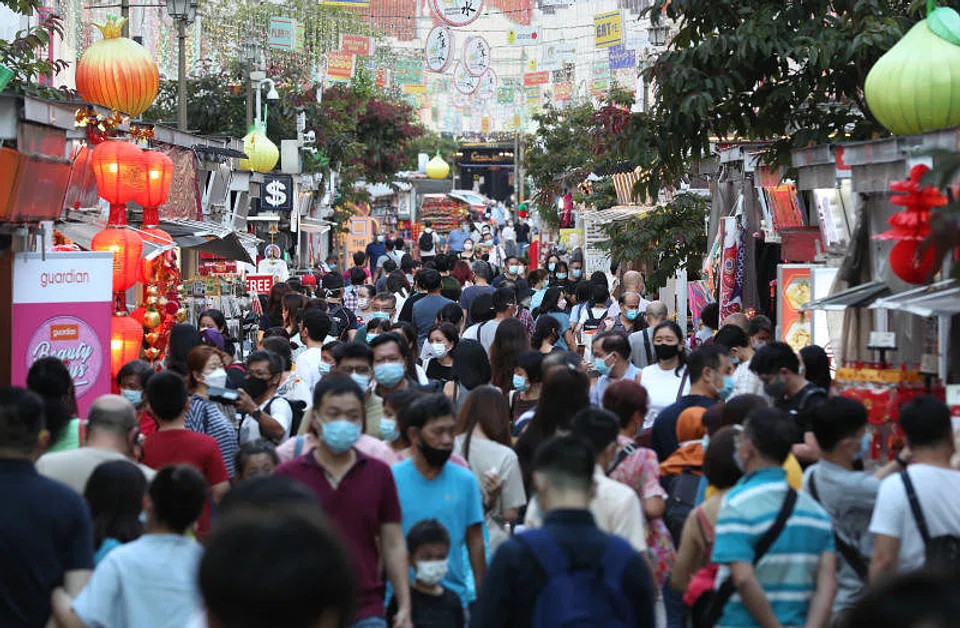
CHINATOWN has been bustling with crowds over the past month to usher in the Year of the Tiger, but businesses are fearful of the business outlook after the festivities die down.
Many shops are reporting better performance compared to last year's Chinese New Year (CNY), thanks to greater consumer confidence that is partly due to higher vaccination rates.
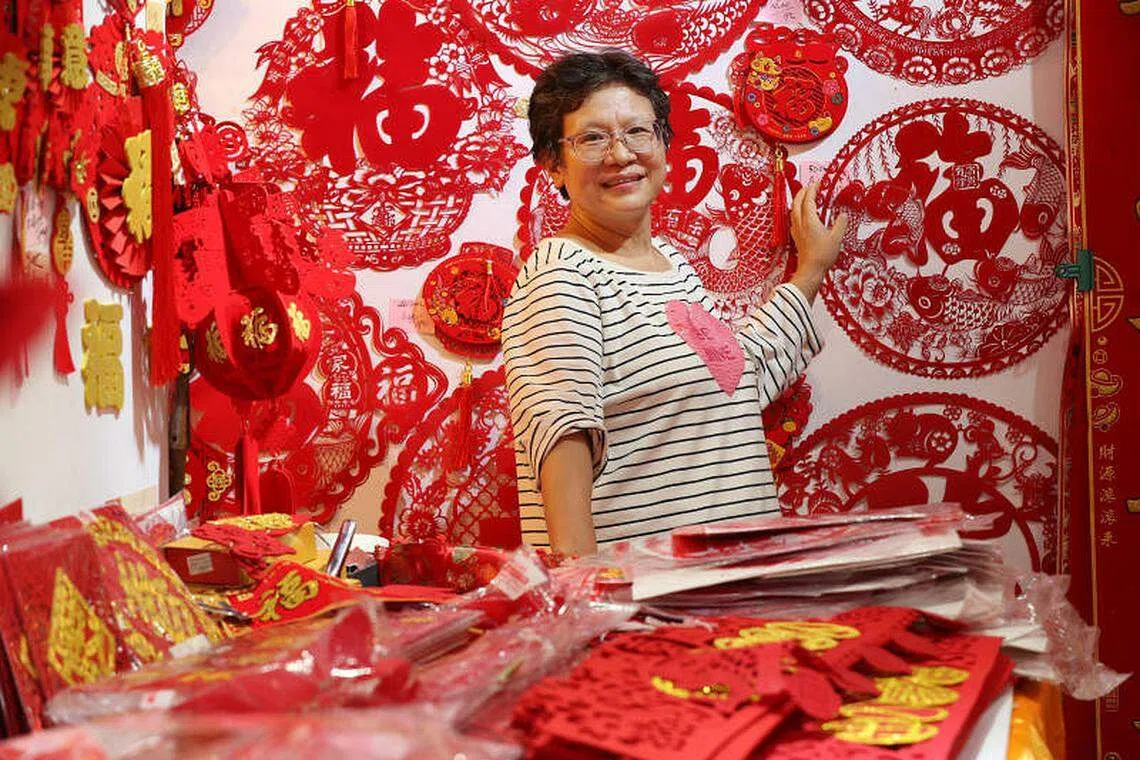
Cindy Zhao, who runs Orchid Chopsticks - a brand that has 2 shops in Chinatown selling CNY decorations - noted that sales have been about 10 per cent better than last year.
"People are not as scared as before, especially the elderly. Many are fully vaccinated and have taken their booster jabs. Most people realise that the pandemic is not stopping - they have to celebrate despite ongoing restrictions," said the 52-year-old.
After vaccinated travel lanes were introduced from October last year, there was a slight pickup in business from tourists in December, added Zhao.
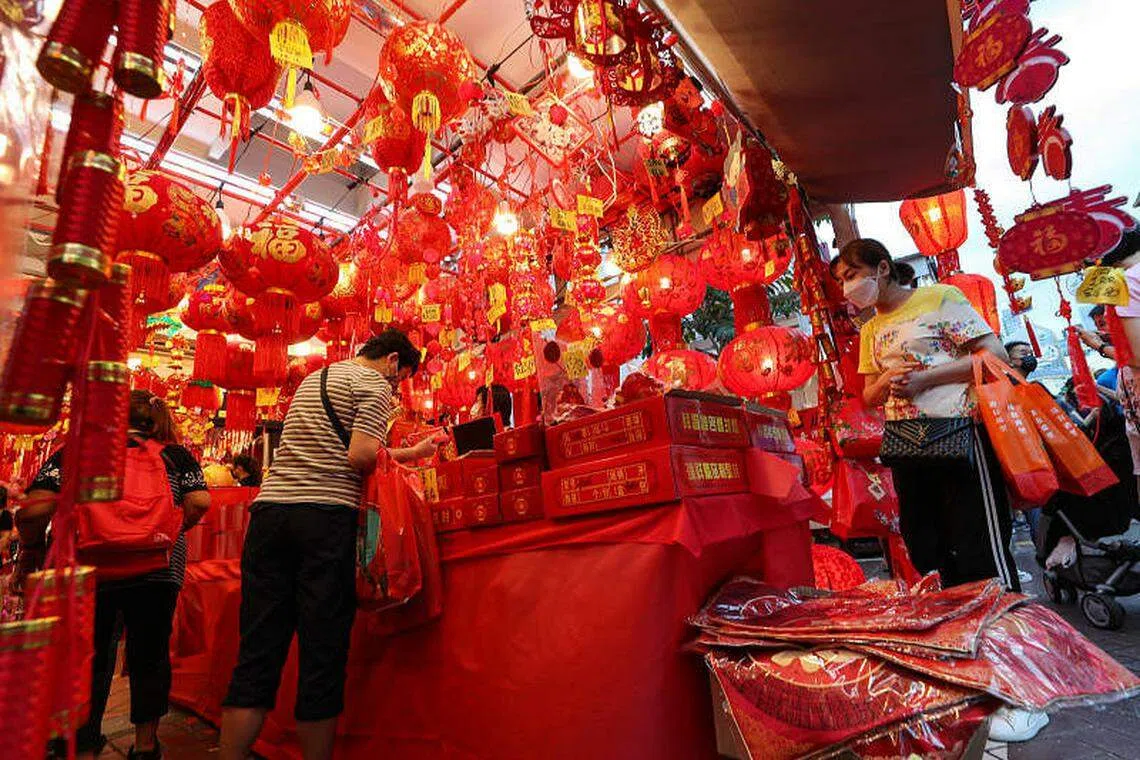
Nonetheless, with a massive drop in tourist footfall during these 2 pandemic years, many Chinatown shops said that local and regular customers remain at the heart of their business.
Leung Sang Hong Kong Pastries, which has been in Singapore for about 30 years, relies on high quality ingredients in its pastries to keep customers coming back, said staff member Shirley Chong.
"We can't depend on tourists anymore and have to attract the local crowd, especially our regular customers. Our handmade cookies and tarts are well sought after here," said Chong.
"Crowds are increasing towards CNY. We see our baked goods like pineapple tarts, almond cookies and kuih bangkits, moving fast off the counter," said the 52-year-old.
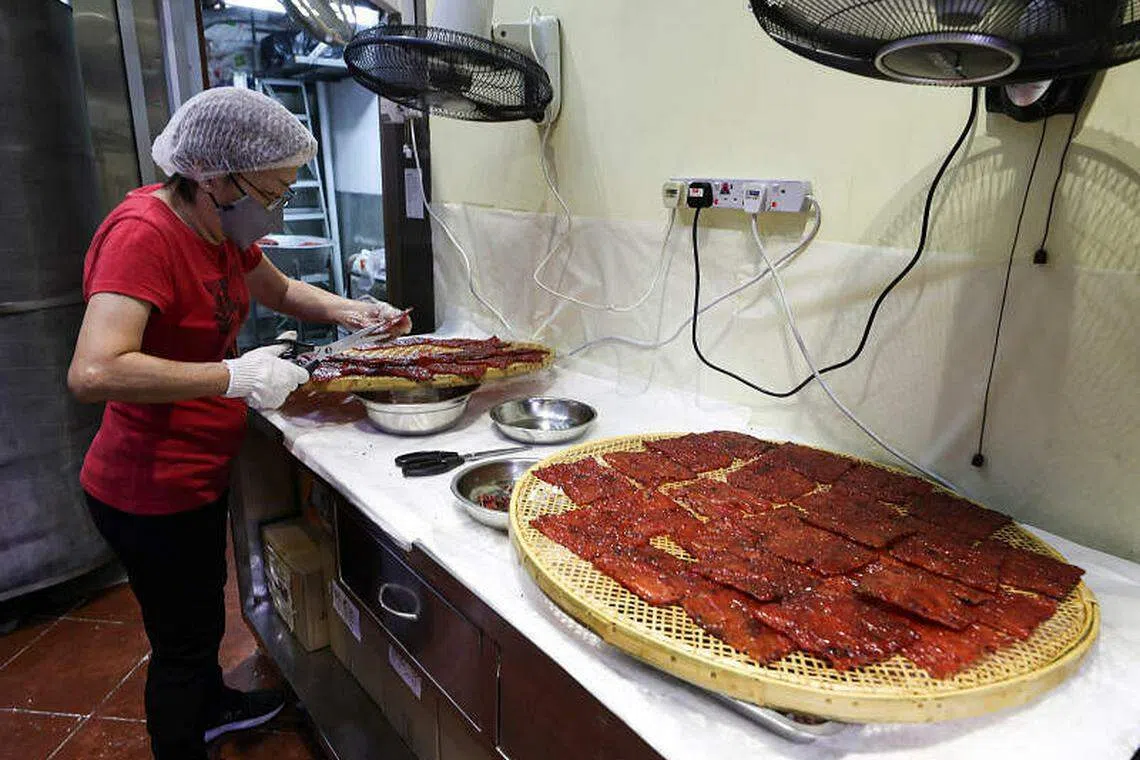
Roy Aw, owner of Hu Zhen Long, a family-run bak kwa (pork jerky) business operating since 1946, said more customers are coming earlier this year to satisfy their CNY shopping needs.
"Last year shops did not expect much demand, so stock levels were low in shops. On the days nearing CNY, people couldn't get their hands on bak kwa. This year, we have stocked up plentifully, and more people are also coming to buy earlier as well," said Aw.
Pre-orders for CNY items have increased across the board. Ye Wei Qiang, owner of Lan Zhou La Mian, a 36-year-old noodle business in Chinatown, sells special sausages during the CNY period. He reports an estimated 25 per cent increase in orders compared to last year.
"We feel that we are much better prepared this year to respond to any changes because we have experience from the past year. We know how to better manage the crowd, and to enforce strict measures such as wearing masks and restricting the number of people in the shop," said Ye, 59.
But the sun is not shining equally on everyone. During last year's CNY, groups of 8 people could gather and dine in at eateries, compared to 5 this year. Restaurants are seeing fewer bookings and customers as a result.
Xie Lao Song, a restaurant owner in Chinatown for the past 10 years, said: "Reservations of tables are much fewer than before. We definitely miss the CNY celebrations last year where more people could dine-in and where there was a more festive atmosphere."
The Omicron variant has also prompted more people to stay at home and order food through takeaways, added 38-year-old Xie.
Talen Cui, owner of Fortune Garden, a restaurant which opened its doors on Pagoda Street in December 2021, said that although his business started off better than expected, an increase in diner numbers is necessary for the long run.
For both dining establishments and retailers, there is also the question of what happens after CNY crowds die down. For 23-year-old Chinese clothes business Matsuzaki, located at Chinatown Complex, CNY business has traditionally been its main source of income for any given year.
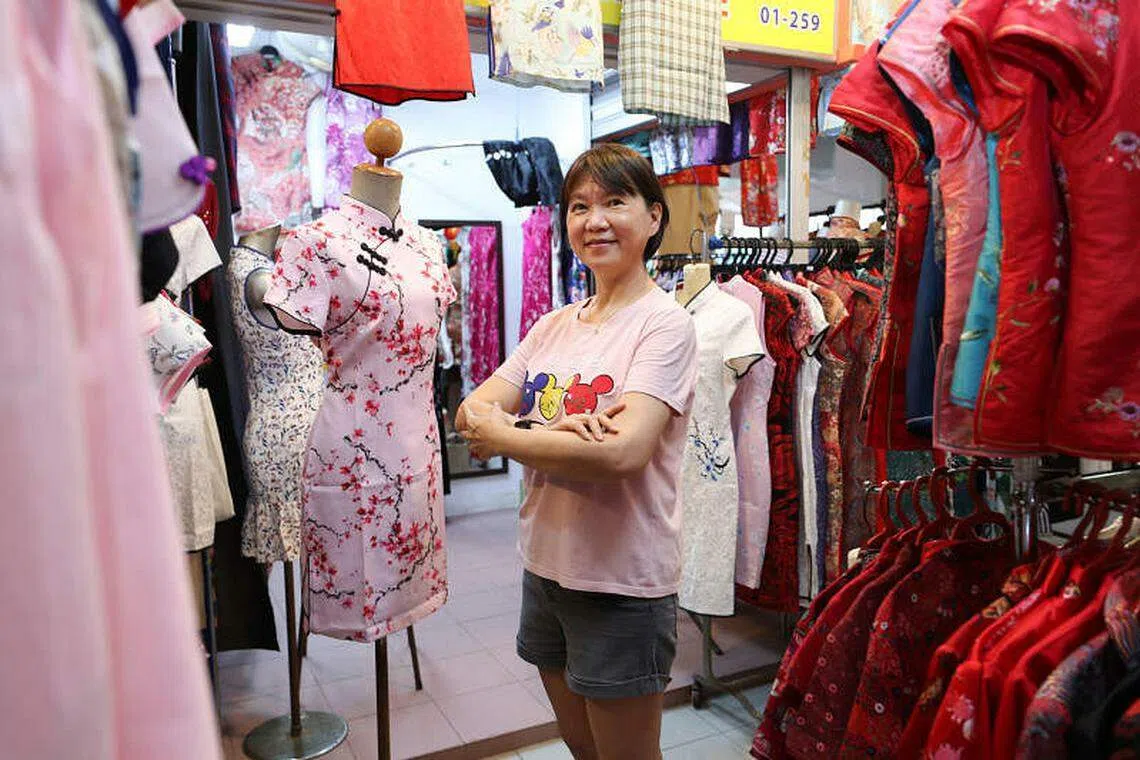
Petrova Ang, owner of Matsuzaki, said her business dulls for the 4 months after CNY and only picks up again during Racial Harmony Day in July where students buy traditional costumes; the Mid-Autumn Festival in September; and the year-end season, when there are weddings and higher tourist arrivals.
"More youngsters are shopping online, so we depend a lot on the older generation and tourists. Business is better this CNY, but it is nowhere near pre-pandemic levels," said the 60-year-old.
Cost pressures are getting harder to bear, especially as the pandemic keeps tourist numbers low.
Ang pointed out that the cost of imported goods has gone up as a result of supply chain disruptions, with shipping costs rising about 20 to 40 per cent. However she has kept the price range of her items affordable to meet consumer expectations. For instance, her cheongsams range from S$28 to S$88.
"We have had to increase prices slightly to make some profit. CNY business has been positive this year, but on the whole things are not looking good," Ang said.
Meanwhile, Zhao's 16-year-old arts-and-crafts business is 23 months into a 3-year tenancy contract. With rental costs amounting to half of revenue earned on most months and an 80 per cent decline in sales since the pandemic started, Zhao is considering closing down Orchid Chopsticks if the situation persists.
Commenting on the business outlook after CNY, Zhao said: "We cannot imagine it. Every time restrictions are made, we are the first on the chopping board.
"I am still running my business because I cannot only think about myself. My staff that depend on this income. We are part of the culture and society at Chinatown as well."
Amid these tough times, the Chinatown Business Association has extended rental relief packages for its street market tenants, offering a 40 per cent discount on rental rates from Jan 9 to Jul 8 this year.
There was also a special 2-month short-term rental package introduced this year for tenants who took up stalls specifically selling CNY-related products at the Chinatown Street Market.
But for the second year running, there are no bazaars, lion dances or live events at Chinatown to attract crowds. Instead, to evoke the festive spirit, the association has organised weekend workshops with CNY themes, such as pottery, handcrafted resin art accessories, and Chinese couplet writing.
In response to queries from The Business Times, executive director of Chinatown Business Association Lim Yick Suan said the take-up rate for the workshops has been "quite good" and the response from participants has been positive.
"We have endeavoured to promote our tenants' and stakeholders' products and services through Chinatown Singapore's social media channels and website," added Lim.
Separately, for last-minute shoppers, Chinatown's street market stalls along Smith Street, Pagoda Street, Trengganu Street and Sago Street will be open as usual right up to the wee hours of the lunar new year.
Read more: