

Singapore will adjust corporate tax system in due time

Singapore
SINGAPORE will adjust its corporate tax system when a global consensus is reached on such matters; but, it will do so in consultation with businesses here, while protecting its sovereign rights on taxes and keeping the compliance burden on businesses down.
The changes, when they come, will hurt Singapore's tax revenues and competitive standing; so, the city-state will also double down on non-tax measures to play up its other competitive strengths.
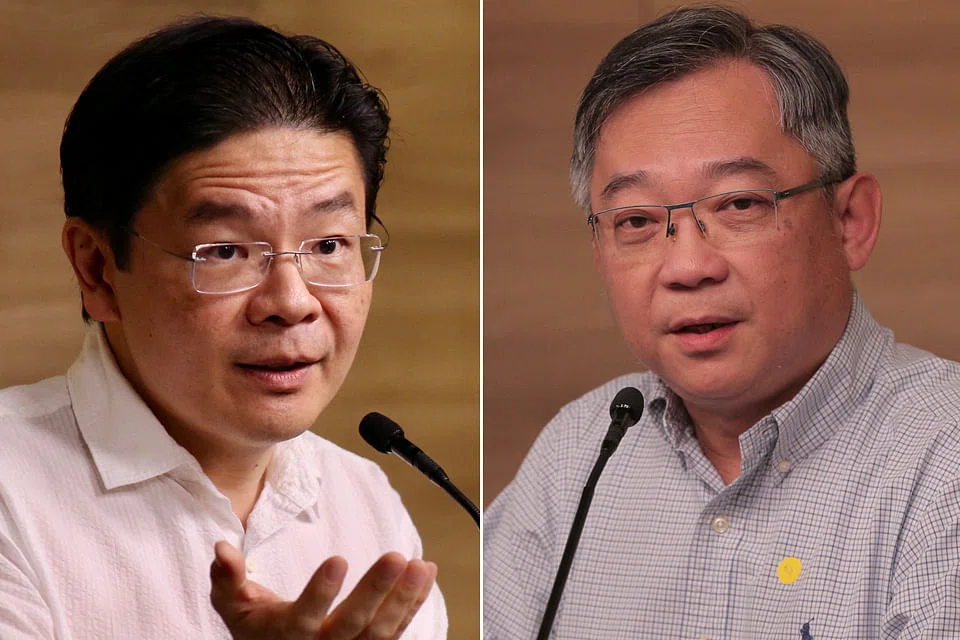
These were among the measures outlined by Minister for Finance Lawrence Wong and Minister for Trade and Industry Gan Kim Yong in Parliament on Monday, in response to questions on how the recent Group of Seven (G-7) agreement on a global minimum tax rate would affect the country.
G-7 finance ministers had agreed last month on a global minimum tax rate of at least 15 per cent - a move that would affect countries such as Singapore, in which the effective corporate income tax rate, after factoring in eligible tax incentives, can sometimes amount to less than 15 per cent for a significant number of companies.
The Group of Twenty (G-20) is set to debate this matter more deeply in its upcoming summit at the end of this week (July 9-10); the Organisation for Economic Co-operation and Development (OECD) will be hosting these talks for its Inclusive Framework (IF) on base erosion and profit shifting (BEPS), which comprises over 130 jurisdictions, including Singapore.
The IF collaborates on the implementation of measures to tackle tax avoidance, improve the coherence of international tax rules and ensure a more transparent tax environment.
"Singapore has been actively involved in these international discussions as part of the Inclusive Framework or the IF," Mr Wong said on Monday.
He said the measures being considered by the IF - which fall under two pillars, that is, Pillar One and Pillar Two - would eventually affect Singapore's corporate income tax revenues, and limit the effectiveness of its tax incentives, respectively.
Pillar One seeks solutions for determining the allocation of taxing rights. Pillar Two intends to ensure a minimum level of tax on profits earned by multinational enterprises (MNEs) - with the current proposal targeting MNEs with global revenues in excess of 750 million euros (S$1.2 billion).
"There are about 1,800 such MNE groups in Singapore that will meet this revenue criteria. We expect that the majority of these MNE groups will have group effective tax rates below 15 per cent in Singapore," Mr Wong said.
"However, at this stage, it is still too early to work out the exact impact of these tax proposals. The final number of affected MNEs, as well as the extent of the impact, depends on the design of the specific rules, which are still being actively discussed at the IF.
"As some of these tax changes can only be effected through a multilateral instrument, there will be a need for an international consensus to be reached before the changes can be implemented."
He said, therefore, that Singapore will only be able to determine the impact of such measures - including knowing which industries would be affected and which would be excluded - when the IF has worked through and agreed on the detailed design elements of both pillars, and when it can observe how companies and other governments respond to these international developments.
"What we can say for certain is that, when a consensus is fully reached, Singapore will adjust our corporate tax system as needed in consultation with the industry.
"Any adjustments to our tax system will be guided by three key principles: first, we will abide by internationally agreed standards; second, we will safeguard our taxing rights; and third, we will seek to minimise the compliance burden for businesses.
"Ultimately, the best response to these tax changes is to continue to strengthen our overall competitiveness," he added.
And he did not downplay the impact that such changes would have. "I think we should also be mindful and clear that, with these tax changes, going forward, as a small city state with no natural resources, with limited land, it will be that much harder for Singapore to attract investments. And that means we will have to work even harder to attract and retain investments based on non-tax competitive factors."
Picking up on this point was Mr Gan, who also stressed that Singapore's competitiveness goes beyond taxation. "Our key fundamentals such as our strategic location and international connectivity, excellent infrastructure, rule of law and skilled workforce remain strong.
"We are redoubling our efforts to enhance our competitiveness and improve our business environment, for example through updating our Industry Transformation Maps (ITMs)."
He added that Singapore will continue to invest in its infrastructure to allow companies here to operate in a very cost-effective manner, and that it would extend the nation's connectivity through more Free Trade Agreements (FTAs), while looking for new opportunities for other types of trade agreements, such as those involving renewable energy, the green economy and the digital economy.
"Over the last few weeks since I took on the job, I've been talking to our counterparts in other countries almost on a daily basis, to develop new connections to allow our companies to expand beyond the confines and the limitations of our physical size.
"We will also want to encourage companies to invest in productivity and upgrading so that they can continue to be cost effective," Mr Gan said, pointing to the numerous support and incentive schemes available in Singapore.
Both ministers agreed that such tax changes would not be the only threat to Singapore's competitiveness and the nation would need to remain agile and nimble, to respond innovatively to the key global trends affecting its economy.
"Our objective is to continue to remain attractive and competitive, attractive to substantial investments and substantial economic activities, to be based here," Mr Wong said.
"We want to anchor substantial activities here, with the aim of creating good jobs for Singaporeans. That must be the objective of our economic policy; it has always been so, and we will continue to work hard on this front."
As for how a global minimum tax rate would affect Singapore's status as a financial centre, in general, and on emerging fields such as fintech and green finance, in particular, Monetary Authority of Singapore (MAS) chairman and Senior Minister Tharman Shanmugaratnam said, in a written response: "When there is full international agreement on a global minimum tax rate, the expectation is that a financial institution that is subjected to the global tax rules will be taxed at the same minimum rate regardless of where its activities are located."
But Mr Tharman added that a conducive tax environment in Singapore is not the only decisive factor behind the growth of its financial sector and that non-tax factors "will play an even more significant role in ensuring our financial centre stays competitive".
He pointed out that Singapore: has a conducive regulatory environment for businesses, especially new and innovative activities, to grow; has a good infrastructure and ecosystem that enables new activities to scale; and works closely with the industry to build up skills and capabilities.
"Ultimately, the continued growth of Singapore's financial centre depends on how well we connect global markets, support Asia's development, and serve Singapore's economy. We also need to stay innovative and agile, in the face of key structural trends like digitalisation and sustainability that are transforming the landscape," he said.
READ MORE:
- S$1.2b in extra Covid-19 support partly funded by reallocation under SINGA
- SME bridging loans extended till March 2022
- Revised estimates, same final position
- Proposal for 15% global minimum tax wins support from 130 countries
- Digital services taxes - consensus approach from all nations needed
- G-7 tax deal - not quite the perfect storm for Singapore just yet
- G-7 corporate tax plan could net Singapore more revenue in short run
- G-7's global minimum tax deal may nullify any tax advantage Singapore offers
TRENDING NOW

Fed hike throws Singapore banks a margin lifeline; UOB most likely to feel impact

He built the Vingroup empire. Now South-east Asia’s richest man is handing some key roles to his sons

Real-estate veteran Desmond Sim quits from CEO roles at Realion, ETC

Chagee, Mixue and Luckin won the market. Sustaining their edge is the harder part

