

Super-sized Fed rate hikes look set to push US into recession
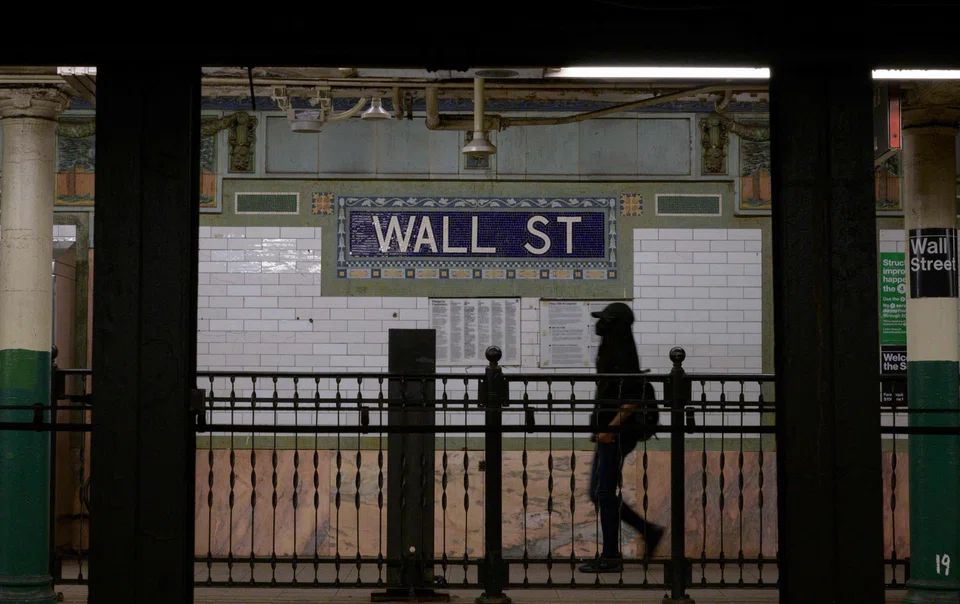
THE US Federal Reserve is continuing its all-out war on inflation, reacting to the highest consumer price increases in 4 decades with the biggest interest-rate hike in 28 years.
It now seems unlikely that the US economy, caught in the crossfire of this battle, can avoid a bruising recession. And that could mean more collateral damage on the beleaguered stock market.
On Wednesday (Jun 15) at the end of the central bank’s 2-day policy meeting, Fed chairman Jerome Powell’s rate-setting committee boosted interest rates by three-quarters of a percentage point, the largest hike since 1994. The drastic move demonstrated the central bank’s determination to stop inflation spiralling out of control.
It was a direct response to the US Labor Department’s report last week that consumer prices in the world’s largest economy rose by 8.6 per cent from a year earlier in May, the starkest increase since 1981.
Inflation and its fallout is everywhere now. The price of a gallon of oil has breached the US$5 mark, there are long lines of protesting workers outside casinos, and many major employers are retrenching employees.
Less than a year ago, the Fed was scoffing at the alarming inflation data, dismissing it as a “transitory” effect of the post-pandemic economic reopening. Now, critics say, the central bank may be overcompensating by continually upping the ante in the fight.
In his press conference, Powell reiterated his vow that the central bank would do everything in its power to defeat inflation. He also acknowledged that many of the causes of inflation were beyond the Fed’s control, a reference to another literal war, Russian President Vladimir Putin’s campaign in Ukraine.
Russia is deliberately driving up the price of energy for European supporters of Ukraine, most recently reducing supplies to Italy. A global spike in the price of grains and other agricultural products is a direct result of the war and blockades on Ukraine’s Black Sea ports.
Some strategists warn that the economic expansion cannot survive the shock of the Fed’s rate hikes, which have caused jarring increases in home-loan and other borrowing rates. On Wednesday, Powell said three-quarter-of-a-percentage point moves would not be a regular occurrence, but warned that at least one more could follow in July.
To bring inflation down to its target around 2 per cent, the Fed would have to drive unemployment significantly higher than current levels, warned analysts at brokerage Bank of America Global Research. Another brokerage, Jefferies, feels that there is a greater than 50 per cent chance of the US entering a recession.
Reports earlier this week that a super-sized rate hike was in the pipeline sank the US stock market into bear-market territory amid worries that the Fed was acting out of desperation.
Many market watchers say it was the Fed’s ultra-loose policy, which made it practically free to borrow investment capital, that caused the wild speculation of the last 2 years. The reversal of the easy-money policy has hit high-risk tech stocks and other leaders of the short-lived bull market the hardest.
“It’s very difficult to value assets in a zero interest rate environment,” said Eric Marshall, president of Dallas mutual fund firm Hodges Capital, arguing that it distorts traditional measures of like comparing bond rates to earnings.
“That’s why, all of a sudden bitcoin had all this value, and companies that had real dynamic growth prospects all of a sudden traded at ridiculous multiples.”
The Fed’s latest escalation levelled cryptocurrency markets, as what appeared to be a gradual hiss of air out of the speculative bubble became something closer to a whoopee cushion explosion.
Bitcoin has plummeted to less than one third of its 2021 peak. On the stock market, mega cap tech stocks such as Facebook parent Meta, Amazon.com and Apple have lost more than a trillion dollars of market capitalisation between them.
Many American households have taken a hit from the stock-market and crypto selloffs, but strategists warn rising interest rates would cause far more widespread pain by triggering a housing-market correction.
Even before the latest rate hike, the average 30-year mortgage was around 6 per cent, more than double the level at the start of the year. That’s sure to give buyers pause and to cause home prices in many US cities to retreat from their dizzying heights.
Why would the Fed risk a recession and lay waste to household wealth? The central bank has been forced to choose the lesser of two evils. Home and stock prices can gyrate rapidly year-to-year, even month-to-month.
If inflation sets in, the damage to consumer confidence and behaviour is longer lasting. Nothing eats up lifetime savings as fast as runaway inflation. Nations prone to bouts of inflation like Argentina and Russia often take decades to rebuild purchasing power.
“What’s probably worse than the stock market pulling back is inflation getting out of control,” said Marshall. “That’s probably the most regressive tax of all.”
TRENDING NOW

Government to bring forward raising of retirement age, give employers more financial support to create flexi-load jobs

If Europe goes to war, the fallout will be felt in East Asia
Indonesia stocks suffer worst plunge in nearly 30 years as MSCI proposes standalone status

Vietnam’s northern provinces, not Hanoi or Ho Chi Minh City, are powering near 10% GDP growth

