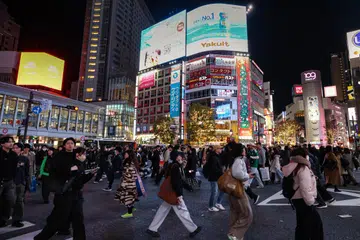
They came, they saw, but didn't shop much in Sept

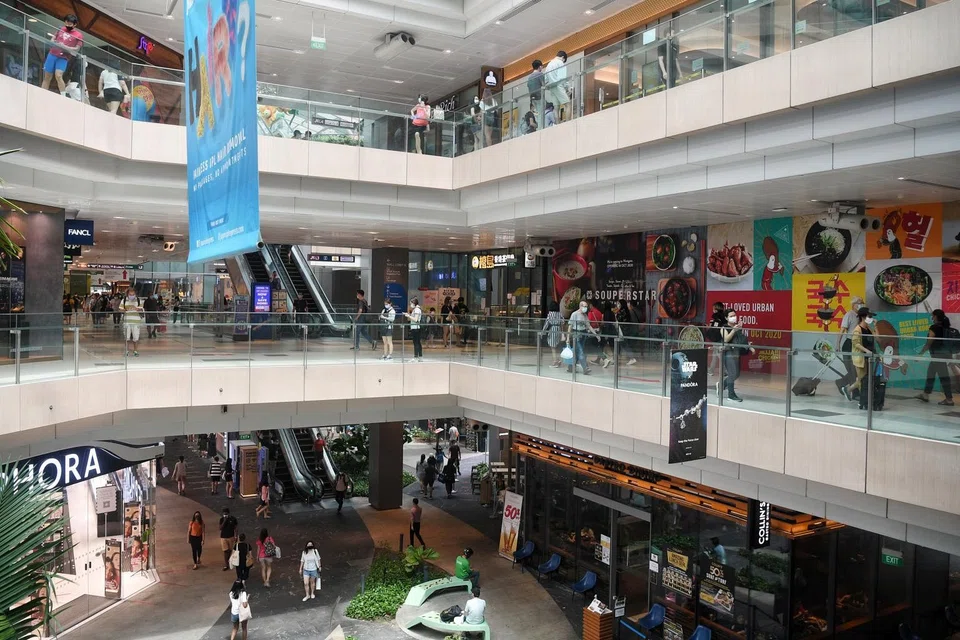
Singapore
SINGAPORE retail sales fell 10.8 per cent year on year in September, underperforming expectations and reversing the previous two months' trend of lessening declines, according to the Singapore Department of Statistics (Singstat) on Thursday.
But economists expect declines to lessen further in the last quarter, as a modest recovery takes shape.
The September figure marked a deepening from August's 5.4 per cent drop, and was worse than economists' expectations of a 3.9 per cent fall.
The total retail sales value was S$3.2 billion, with online sales accounting for 11.2 per cent. Excluding motor vehicles, retail sales fell 12.7 per cent.
On a seasonally-adjusted month-on-month basis, retail sales fell 4.5 per cent, or 4.2 per cent excluding motor vehicles.
Year-on-year, the poorer showing was due mainly to the computer and telecommunications equipment industry, which saw lower sales of mobile phones compared to the high base a year ago when there were new phone launches, said Singstat.
But most other industries, too, continued to see year-on-year declines.
"Importantly, September's retail sales data reinforced our call that the initial domestic pent-up demand since the start of Phase Two has dissipated," said UOB economist Barnabas Gan, referring to the reopening phase that began in late June.
Declines on both a year-on-year and monthly basis suggest "possible consumer fatigue", he added. The softening labour market may also mean a fall in disposable income and "dissuade any meaningful increase in retail sales in the coming months".
Nonetheless, he expects smaller declines in Q4. Tourism is set to pick up slowly, with the in-principle agreement for an air travel bubble with Hong Kong, while Phase Three of reopening might give a boost.
"Hopefully September was an anomaly, and the declines will moderate from here," agreed OCBC head of treasury research and strategy Selena Ling, who expects contractions of about -0.8 per cent year on year in Q4.
But Citi economists Kit Wei Zheng and Ang Kai Wei note that mobility indices flattened in October, suggesting that any meaningful sequential rise in consumer spending is unlikely.
In September, the largest falls in sales were for food and alcohol, department stores, and cosmetics, toiletries and medical goods.
This already reflects a hit to discretionary spending by domestic consumers, "in an environment where the labour market conditions are still softening", said Ms Ling.
Supermarkets and hypermarkets continued to see the strongest sales growth, at 17.9 per cent year on year.
Sales also rose for furniture and household equipment and recreational goods, and edged up a marginal 0.2 per cent for motor vehicles. Mini-marts and convenience stores had unchanged sales from a year ago.
OCBC's full-year retail sales forecast is for a 14.4 per cent fall, extending the declines of 2018 and 2019.
"This implies that the festive season will give a bit of a lift in coming months, but will not be sufficient to turn the tide yet," said Ms Ling.
In food and beverage services, takings fell 29.9 per cent year on year in September - worsening from August's 28.1 per cent fall - or 1.2 per cent on a seasonally-adjusted month-on-month basis. The total sales value was S$629 million.
All industries in the sector saw declines, with food caterers remaining the hardest hit (-78.2 per cent) as demand for event catering stayed low.
Year-on-year declines also deepened for restaurants (-33.1 per cent), cafes, food courts, and other eating places (-17.6 per cent), and fast-food outlets (-13.9 per cent).