

Ukraine crisis clouds Singapore's outlook, sanctions on Russia planned
Measures include export controls on items that can be used directly as weapons in Ukraine to inflict harm, blocking certain Russian banks

Sharon See
Singapore
RUSSIA's invasion into Ukraine has "clouded" the economic outlook for Singapore, which on Monday (Feb 28) joined a growing number of "like-minded" countries to impose sanctions against the nuclear superpower.
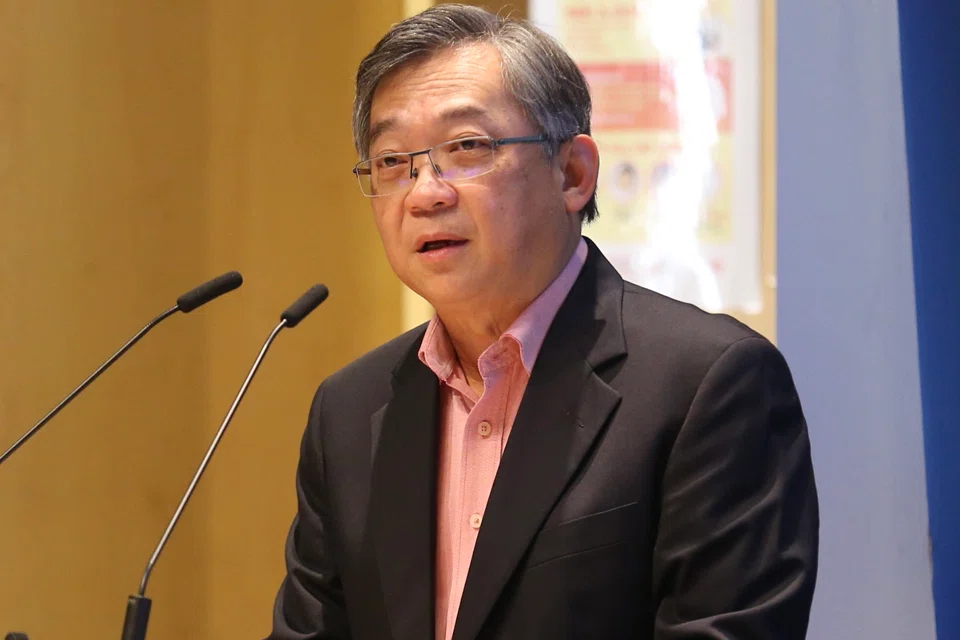
"The actual impact on Singapore's GDP growth and inflation is difficult to estimate at this stage given the uncertainties," Trade and Industry Minister Gan Kim Yong told Parliament while speaking at the Budget debate.
"However, what is clear is that inflationary pressures are likely to rise further in the near term, especially through an increase in the prices of oil-related items in the first instance. The downside risks to our economy have also increased significantly," said Gan.
Already, inflation in January had hit its highest level in nearly 10 years, with both officials and economists warning of even higher rates in the second quarter. The economy was expected to moderate to 3-5 per cent after a surprisingly good performance in 2021.
Gan said a lot will depend on how the conflict unfolds, the global response to the situation, and the longer-term impact on the global economy.
"Some may ask, can we shield Singapore from the impact of these external factors? As an open economy, we will not be able to totally insulate Singapore from the impact of higher global costs," Gan told the House. For now, the immediate and direct impact on Singapore's economy has been "manageable" due to its limited presence in Ukraine and the fact it does not import many essential supplies from the region, Gan said.
However, he warned that the conflict is evolving and the situation could change very quickly.
"Make no mistake, that while Ukraine may seem far away from Singapore, the conflict there will have real and significant impact on all of us," said Gan.
One key aspect is the higher energy costs, since Singapore imports most of its energy needs. This would mean higher pump prices for petrol and diesel as well as electricity rates for businesses and households, which would further raise the cost of living.
Nonetheless, Foreign Affairs Minister Vivian Balakrishnan said Singapore will impose sanctions against Russia, even if these measures are expected to come at some cost to Singapore's businesses, citizens and the country on the whole.
"Unless we as a country stand up for principles that are the very foundation for the independence and sovereignty of smaller nations, our own right to exist and prosper as a nation may similarly be called into question," he said in a ministerial statement.
The sanctions include export controls on items that can be used directly as weapons in Ukraine to inflict harm or to subjugate the Ukrainians, Dr Balakrishnan said in a ministerial statement earlier. The Republic will also block certain Russian banks and financial transactions connected to Russia.
The specific measures are being worked out and will be announced shortly, he said.
Dr Balakrishnan noted that this comes even though Singapore rarely imposes sanctions in the absence of binding United Nations (UN) Security Council decisions.
In a Facebook post, Prime Minister Lee Hsien Loong said Singapore strongly condemns Russia's invasion of Ukraine and affirms that the sovereignty, independence and territorial integrity of Ukraine must be respected.
Noting that what is happening in Ukraine now is important to Singapore, Lee said: "If international relations are based on 'might is right', the world will be a dangerous place for small countries like Singapore."
Separately, flag carrier Singapore Airlines (SIA) said it has suspended all flights between Changi Airport and Moscow's Sheremetyevo International Airport with immediate effect, citing "operational reasons".
All affected customers on flights SQ362 and SQ361 will be offered a full refund of the unused portion of their ticket, the airline said.
Meanwhile, Bank of China's Singapore operation has stopped financing deals involving Russian oil and Russian companies, according to a Reuters report. Singapore's three homegrown banks - DBS Group, Oversea-Chinese Banking Corp and United Overseas Bank - are said to have pulled the plug on letters of credit for trades involving Russian energy products, according to a Bloomberg article.
These moves are the latest among a growing international movement to slap economic costs on and isolate Russia, days after President Vladimir Putin ordered a "special military operation" on its East European neighbour last Thursday.
READ MORE:
Ceasefire talks get underway in Belarus as Ukraine demands Russia withdraw troops
EU must deploy financial shock and awe against Putin's aggression
Russia bonds, now junk, set to reel from fresh sanctions on central bank
TRENDING NOW

Philippine power giant First Gen rebuffs foreign offers, plans up to US$2.6 billion in expansion
Vietnam’s data-centre investment rush faces reality check on power and site constraints
Singapore should prepare for prolonged haze until November, says Grace Fu
Is stagflation returning? That mostly depends on the Iran war

