

Upcoming GST hike seen as key to improving fiscal sustainability
Such an increase will provide a more 'stable' source of revenue than a lift in other taxes: KPMG's tax partner

Singapore
AT least 3 forms of taxes could come under focus at Singapore's upcoming Budget 2022, as the government is likely to make fiscal sustainability a top priority after it spent the last 2 years containing the economic fallout from Covid-19, watchers said.
"With a budget deficit of S$64.9 billion or 13.9 per cent of GDP (gross domestic product) for FY2020 and rising recurrent spending needs on healthcare and social support, increasing revenue to balance the budget is inevitably the top of the government's priority list," said Low Hwee Chua, tax and legal leader at Deloitte Singapore.
Beyond rebuilding public finance, the bigger focus of Budget 2022 is ensuring the "long-term robustness" of Singapore's fiscal system to cope with challenges such as ageing, future-proofing its human capital and the climate crisis, said DBS senior economist Irvin Seah.
Among the taxes under consideration, a hike in the Goods and Services Tax (GST) is one that will provide a more "stable" source of revenue than an increase in other taxes, said Gan Hwee Leng, indirect tax partner at KPMG Singapore.
"More importantly, GST is paid only on consumption within the country and a rate hike may in fact encourage more savings which is one of the rationales when GST was introduced back in 1994. It is also less dependent on the economy as compared to other taxes and thus provides a stable revenue," she added.
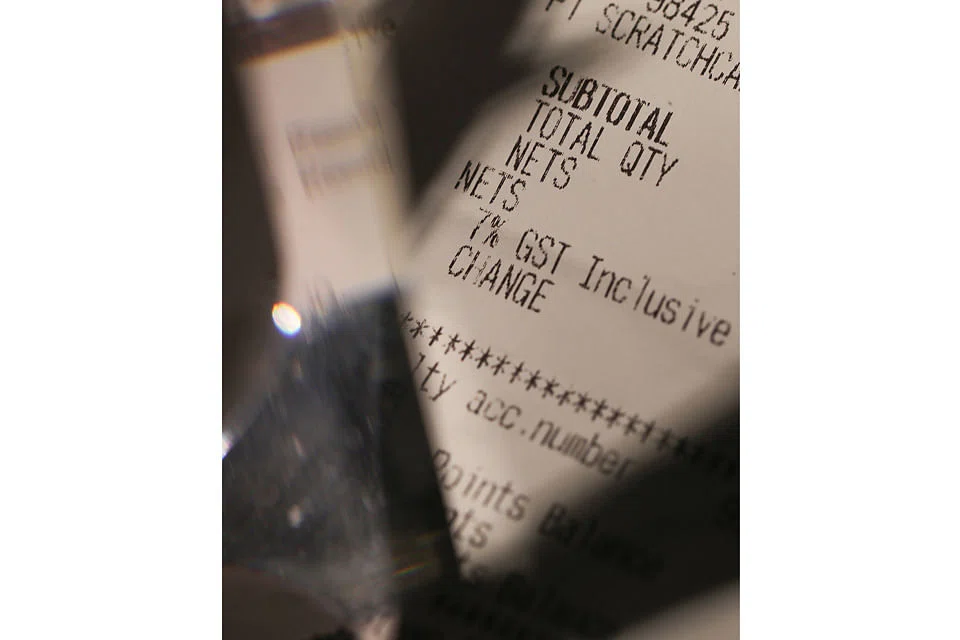
Seah estimated that a 2-percentage point hike in the GST, from the current 7 per cent, could bring in additional revenue of at least S$3.2 billion per year.
In comparison, the other 2 taxes also carry other policy objectives: the carbon tax is aimed at nudging firms to shift to greener alternatives, whereas a wealth tax is meant to address rising wealth inequality. The carbon tax, at a rate of S$5 per tonne of carbon dioxide equivalent greenhouse gases, is expected to net S$1 billion in revenue for the first 5 years.
The GST hike was first announced during Budget 2018 for implementation some time from 2021 to 2025, but this was later deferred by a year in acknowledgement of the economic hardship brought by Covid-19.
As Singapore welcomed 2022, Prime Minister Lee Hsien Loong signalled in his New Year Message that Singapore is now ready to "start moving on this", especially with flash data showing that the economy in 2021 had performed better than expected at 7.2 per cent.
"Whether the implementation of a GST hike will take place this year or the next will largely depend on the economic conditions, how the Covid-19 situation further develops, level of preparedness of businesses as well as how pressing it is for Singapore to increase its tax revenue to fund social spending," said Gan.
With the economy now on fairly strong footing, economists from DBS, OCBC and UOB now believe the hike could take place by July this year, taking reference from Budget 2007 when the new rate took effect the same year it was announced.
Barclays regional economist Brian Tan believes it could come even sooner in April. "Positive drivers", such as solid external demand and a pick-up in international travel, should provide the economy with "sufficient growth momentum to ride out any turbulence arising" from the GST hike this year, he said.
Richard Mackender, indirect tax leader at Deloitte Singapore, believes the increase could happen in mid-2023 as the government would want to give businesses some time to get ready.
This is particularly because a tax hike can be inflationary and it would also affect consumer sentiment and how much time businesses need to prepare. "The government does need to ensure that the tax base is stable and sustainable, so waiting too long is a risk because we do not know what could happen at a macro-level," he added.
Regardless of when the GST hike takes place, the government has committed a S$6 billion Assurance Package, which will effectively delay the impact of the increase by at least 5 years for most households.
Stay updated on Budget 2022 and sign up for our special newsletter here: bt.sg/budget22
READ MORE:
- Carbon tax likely to be raised, but 'rate needs to be higher to drive change'
- Will Singapore levy a property-related 'wealth tax' at Budget 2022?
- GST hike cannot be put off forever but impact can be delayed: Indranee
- A GST hike in 2022 would imply hope, more than fear
- GST hike could feature in Budget 2022, kick in as soon as July: economists
TRENDING NOW

Two Singapore-listed palm oil firms named in Greenpeace report on Indonesian plantation fires
Singapore Airlines flight returns to San Francisco after ‘unruly’ passenger incident

Singapore looking into which companies responsible for haze-causing fires: PM Wong
Deluge IPO 3.86 times subscribed ahead of SGX debut

