



Airfares show Asia carriers can weather Iran war chaos
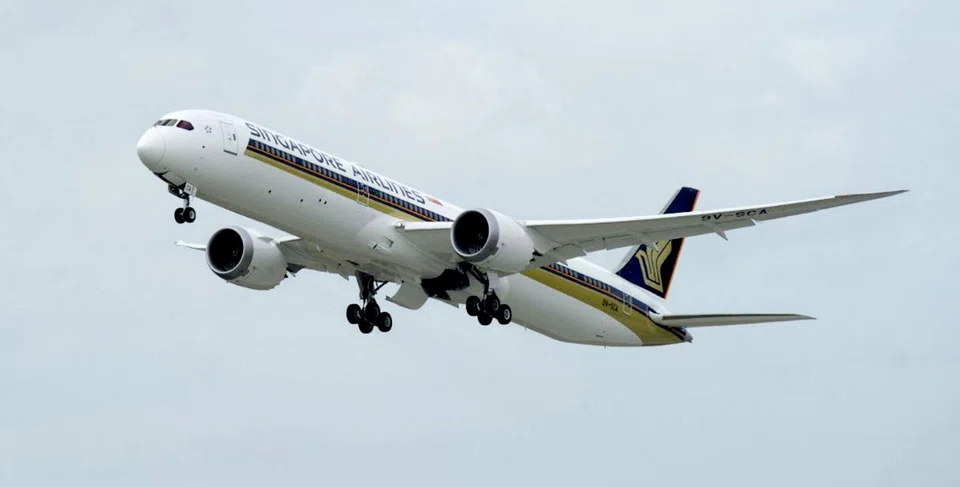
[SINGAPORE] Asian carriers are among the best-positioned airlines to weather the war in the Middle East as travellers scramble for flights – and pay premiums – to escape the conflict.
Asian airlines have emerged as one of the go-to choices for people leaving the Middle East in the wake of US and Israeli strikes on Iran. Extensive airspace closures mean carriers such as Emirates and Qatar Airways have essentially ground to a halt, creating opportunities for rivals that can fly non-stop between Europe and Asia.
Passengers in European hubs are scrambling to secure seats to Asia on flights that bypass the Middle East.
A round-trip ticket between Hong Kong and London cost US$1,975 and a Singapore-London flight cost US$2,255 on Mar 4, with both prices being about triple the price from the previous week, according to Google Flights data compiled by Bloomberg Intelligence.
But it’s unclear how long such high fares, which are also helping absorb the surge in oil prices resulting from the war, will last.
While prolonged disruptions would underpin higher fares for longer, a resolution to the conflict likely comes with a swift resumption of operations for the region’s carriers, given the Middle East’s critical importance to global travel and trade flows.
“Asian airlines may see a short-term combination of higher fares, stronger cargo yields and modest market share gains,” said Linus Benjamin Bauer, founder of aviation advisory firm BAA & Partners. “But this is fundamentally a redistribution of traffic, not a structural rebalancing of global aviation networks.”
The suspension of regular services by dominant Gulf carriers Emirates, Qatar Airways and Etihad since Feb 28 has removed over 10 per cent of daily international flight capacity, as measured in available seat kilometres, according to consultancy OAG Aviation.
More than 23,000 flights have been cancelled through Mar 5, according to Cirium. While a limited number of evacuation flights from the United Arab Emirates have been allowed, airspace across the Gulf including Qatar, Iran and Iraq remains closed to regular air traffic.
Middle Eastern hubs such as Dubai, Abu Dhabi and Doha are key stopover points for long-haul travel. The Gulf’s biggest airports handle about a third of the 125 million people who travel between Europe and Asia each year, according to Roland Berger data.
That has hammered global aviation stocks, though hopes of a fast resolution to the war offered some recent relief.
The major Middle Eastern carriers are not publicly listed, but British Airways’ owner IAG is down almost 9 per cent this week, Deutsche Lufthansa fell 7.7 per cent, and Air France-KLM tumbled 15 per cent. Meanwhile, Singapore Airlines has lost less than 7 per cent and Cathay Pacific Airways is down about 5.5 per cent.
Mainland Chinese carriers may also be well positioned to increase passenger numbers in the absence of the Middle Eastern airlines.
The likes of Air China and China Eastern Airlines have already been increasing flights to Europe by using Russian airspace – a route that many rivals have suspended since the invasion of Ukraine, choosing instead to fly between Asia and Europe via Azerbaijan and Georgia.
Asia stopovers
For some travellers, the sudden attacks will kick-start a longer-term rethink of which routes they take.
Aiden McAleenan, a 28-year-old registered nurse, had his plans to relocate to Melbourne from the UK thrown into disarray when Qatar Airways cancelled his flight on Mar 3.
He was able to rebook with a stopover in Kuala Lumpur the next day and said he was reluctant to fly via the Middle East. “The stopovers in Asia do look more interesting,” he said. “In future, I would look at the big hubs in Asia for peace of mind or not being stranded at the airport.”
Association of Asia-Pacific Airlines director-general Subhas Menon said the security situation “counts for a lot”.
“Clearly, the Middle East airlines are under pressure. They definitely will be quite badly affected if this situation is prolonged, while Asian carriers don’t have a security situation, so their hubs are in a good place.”
Overall, though, industry watchers say consumers are likely to return to the Middle Eastern carriers when safe travel is ensured. The connectivity of airlines’ home airports will continue to be a major selling point, as will their competitive pricing and high-quality service offerings.
“Drawing on recent incidents, airspace closures following previous attacks did not meaningfully translate to a shift away from the affected country once operations normalised,” said DBS Bank analysts Tabitha Foo and Jason Sum.
“While the scale of the current closures is broader and potentially more disruptive, history suggests that traffic flows tend to revert once airspace reopens.” BLOOMBERG
Decoding Asia newsletter: your guide to navigating Asia in a new global order. Sign up here to get Decoding Asia newsletter. Delivered to your inbox. Free.
Share with us your feedback on BT's products and services
TRENDING NOW

Government to bring forward raising of retirement age, give employers more financial support to create flexi-load jobs

If Europe goes to war, the fallout will be felt in East Asia

Indonesia stocks suffer worst plunge in nearly 30 years as MSCI proposes standalone status

Vietnam’s northern provinces, not Hanoi or Ho Chi Minh City, are powering near 10% GDP growth

