

From affordability to AI, the issues driving the US midterms
An unpopular war with Iran and cost of living issues are top of voters’ concerns
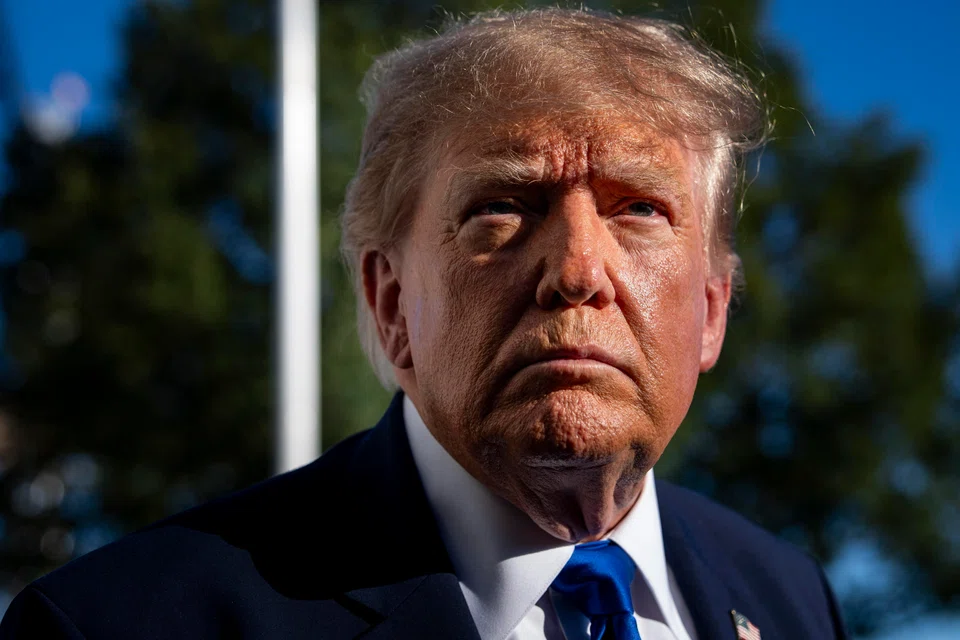
AHEAD of the US midterm elections on Nov. 3, national polls show that most Americans are deeply dissatisfied with the direction of the country.
Economic anxiety is at the fore of voters’ frustration. Many Americans say they’re struggling to afford basic living expenses. Also weighing on voters is an unpopular war with Iran that has disrupted global oil supplies and driven up the cost of petrol, home heating and diesel. Other top concerns include healthcare costs, data centres, immigration and government corruption.
The midterms, held halfway through a president’s four-year term, determine control of Congress. All 435 seats in the House of Representatives and about a third of Senate seats are up for election. Republicans currently hold narrow majorities in both chambers.
With President Donald Trump in the White House, his party has unified control of the federal government, which means it is likely to bear the brunt of voter anger.
This election cycle, spending on political advertising is projected to reach a record US$11.6 billion, surpassing even the 2024 presidential election. Republicans are outspending Democrats. Still, polls suggest Democrats are favoured to win control of the House and have a meaningful shot at the Senate.
Here’s a look at some of the top issues that are animating the elections.
Economy and cost of living
The economy is almost always the dominant issue in US elections. About 84 per cent of registered voters say the economy is “very important” to their midterm election vote, according to a Pew Research Centre survey conducted on Sep 28 to Oct 4.
By a 51 to 45 per cent margin, voters say they trust Democrats more than Republicans to do a good job handling the economy, according to a New York Times/Siena poll conducted in mid-September.


“Affordability” is a major buzzword of the 2026 election, and voters overwhelmingly view the national economy through the prism of household expenses.
Average petrol prices were US$4.29 a gallon on Oct 24, up from about US$3.06 a year earlier; mortgage rates in September crossed 7 per cent for the first time in almost two years and have largely continued to climb higher. Those costs are increasingly straining people’s budgets.
Democratic candidates blame Trump’s tariffs and the Iran war for rising prices and are campaigning to end both. Republican candidates tout Trump’s 2025 tax-cut law, which granted tax breaks for tipped employees, overtime work and Social Security retirement income.
Iran war
About 65 per cent of Americans disapprove of Trump’s handling of US military action in Iran, compared with 33 per cent who approve, according to Pew, and Democratic candidates have blasted the war as unpopular, costly and open-ended. The war has also created fissures within the Republican Party.
Some Republican candidates have privately or publicly broken with Trump, who disappointed some supporters after campaigning for president on an “America First” platform and promising to avoid new military conflicts.
Texas Attorney General Ken Paxton, the Republican nominee in one of the most consequential Senate races, said in a leaked audio recording that the war and high prices were a drag on his campaign. Other Republican candidates have called for the war to be brought to an immediate end.
“I have been one of the leading and deciding votes against the continuation of the war in Iran because I take that seriously,” Representative Tom Barrett of Michigan, who’s in one of the most competitive House elections in the nation, said in a campaign debate on Oct 6.
Government corruption
A deep distrust of government courses through the electorate. A record-high 89 per cent of US adults view government corruption as widespread, according to a Gallup poll released in early September.
The surge was particularly pronounced among Democratic voters: 91 per cent said government corruption was widespread in 2026, up from 57 per cent in 2024, when Trump’s predecessor Joe Biden, a Democrat, was in the White House.
Democratic candidates and some Republicans have linked government corruption to high costs, arguing that federal lawmakers and officials are elites enriching themselves at the expense of ordinary Americans struggling to make ends meet. There are growing bipartisan calls to ban stock trading by members of Congress.
Other government accountability proposals offered by candidates include term limits for members of Congress and Supreme Court justices and limitations on members of Congress becoming lobbyists when they leave office.
Democrats have pointed to Trump’s stock trading and earnings from cryptocurrency-related ventures while in office as examples of the president using his position for personal financial gain.
Democrats and some Republicans condemned his Justice Department’s now-abandoned plan to create a US$1.8 billion “anti-weaponisation” fund to compensate victims who claim they were targeted by the Biden administration for political or personal reasons.
The Justice Department’s handling of files related to the late sex offender and financier Jeffrey Epstein angered victim advocates and sparked allegations that the Trump administration is protecting powerful individuals.
Democracy in the US
In a Pew survey conducted Sep 28 to Oct 4, 85 per cent of Democratic voters and 69 per cent of Republican voters said the future of democracy was very important to their vote in the midterms.
Democratic leaders have repeatedly characterised Trump as an existential threat to democracy. They’ve pointed to his repeated false claims that his 2020 presidential election loss to Biden was “rigged” and that voting by mail is riddled with fraud.
Party leaders accuse Trump of employing authoritarian-like tactics in intimidating political opponents and minority groups with hostile language on social media and at political events. Individuals who leak government information to the media “should be shot,” Trump said on Oct 14 at a campaign rally in Arizona.
“Our president is shredding our democracy” and “Republicans in Congress simply sit idly by, and don’t stop the chaos,” California Democratic State Senator Mike McGuire, who’s favoured to win a House seat on Nov 3, said at a campaign debate on Oct 6.
However, Democratic candidates in the most competitive elections have publicly downplayed a potential third impeachment of Trump and centred their campaign platforms on lowering costs.
“Any sort of corruption has to be rooted out,” Representative Chris Pappas, a New Hampshire Democrat running for the Senate, said on CBS’s Face the Nation programme on Oct. 11. “But we have to focus like a laser on the economic challenges that people are living right now.”
Healthcare
About six in ten voters are worried about healthcare costs, and about half say it is “extremely important” for candidates in the midterm elections to talk about that issue, according to a KFF Health Tracking Poll released Oct 6.
That survey also found that voters, by a 42 per cent to 22 per cent margin, trust the Democratic Party to do a better job handling healthcare costs than the Republican Party. That 20-point advantage for Democrats is a wider gap for the party than in a survey from KFF released in April.
Many progressive Democratic candidates have campaigned for a government-run, universal health insurance system that would replace private health insurance. Some Democratic centrists seeking politically competitive seats, such as Representative Marie Gluesenkamp Perez of Washington state and former Representative Elaine Luria of Virginia, say that sweeping proposal is unrealistic.
They say the party should focus instead on incremental improvements to the Affordable Care Act, Democrats’ healthcare overhaul signed into law by then-President Barack Obama in 2010.
Democrats have campaigned against the Republican-led 2025 tax law’s reductions in spending on Medicaid, a joint federal and state programme that serves low-income and disabled Americans.
Republican candidates have focused more on targeting healthcare fraud. They describe a universal government-run system as tantamount to a government takeover of healthcare that would hike taxes.
Immigration and border security
A surge in migrant crossings into the US from Mexico during Biden’s presidency helped power Trump’s 2024 election victory over Biden’s vice president, Kamala Harris.
But a sweeping federal immigration crackdown, including ramped-up deportations, in Trump’s second term triggered a public backlash and calls to abolish or scale back the US Immigration and Customs Enforcement agency — including in states and districts that favored Trump in 2024.
In some of those districts, Hispanic voters, who shifted sharply toward Trump in 2024 but have since moved back toward Democrats, can swing election outcomes. They overwhelmingly disapprove of Trump’s handling of immigration (by 69 per cent to 30 per cent) and border security (by 58 per cent to 39 per cent), according to an NBC News/Telemundo poll conducted from Sep 21 to 28.
Most Republican candidates have defended Trump’s immigration policies and warned voters that Democrats would return to Biden-era “open borders.”
Some Democratic candidates running in Republican-leaning districts have charted a moderate path on the issue, mixing support for strict limits on illegal entry with proposals to expand legal pathways for undocumented immigrants to achieve citizenship.
Adam Hamilton, a Kansas Democratic pastor vying to unseat Republican Senator Roger Marshall in an agricultural state that relies heavily on immigrant labour, called Biden’s border-security policies a “disaster.”
Representative Don Davis, a North Carolina Democrat seeking reelection in a district that favoured Trump by 12 percentage points in 2024, praised the president’s border enforcement policy but said the government needs to do more to increase screenings at ports of entry to detect fentanyl and other contraband.
Data centres and artificial intelligence
AI data centres, the warehouse-like computing facilities that support artificial intelligence systems, have aroused intense opposition and become a bipartisan flashpoint in the 2026 election.
Many Americans express concerns about data centres’ energy, water and land consumption impacts. Additionally, the broader public unease and pushback against artificial intelligence often manifests as opposition to data centres.
Democrats are more likely than Republicans to be concerned about the role of AI in daily life and its potential to take jobs, according to Pew. Trump supports the expansion of data centers and AI, arguing that the US needs to outpace China in an emerging technology that is reshaping society.
Many candidates for Congress from both major parties have emphasised their opposition to the construction of new data centres in campaign advertising. They include former Senator Sherrod Brown of Ohio, the Democratic nominee in a Senate election that could sway control of the chamber. Brown attacked incumbent Republican Jon Husted for helping lure data centers to the state with tax incentives when he was Ohio’s lieutenant governor.
Transgender rights
Transgender rights is a prominent wedge issue in the 2026 campaign, just as it was in 2024, when Trump’s presidential campaign benefited from targeting Harris’s support for transgender inmates having access to gender reassignment surgery.
“Kamala is for they/them. President Trump is for you,” was the tagline in a Trump TV ad that Democratic and Republican campaign officials said was effective.
Republican ads in the midterm elections emphasise opposition to transgender athletes’ participation in women and girls’ sports.
According to a Sep 18 to 24 survey from The 19th/YouGov, 45 per cent of US adults are more likely to vote for a candidate who supports banning transgender athletes from women’s and girls’ sports teams, compared with 20 per cent who favour candidates opposing bans.
Some Democratic candidates in culturally conservative areas have aired campaign ads stating their opposition to transgender athletes competing in women’s sports.
Social security
Older Americans vote in disproportionate numbers in midterm elections, and many of them are concerned about the stability of the Social Security social insurance programme, which provides monthly income to retired workers, surviving family members of deceased workers, and disabled individuals.
The main fund that pays for retirement and survivor benefits is projected to exhaust its accumulated reserves in 2032, and incoming tax revenue will only be able to pay 78 per cent of benefits if Congress doesn’t intervene.
Social Security is funded primarily by a compulsory payroll tax that applies to the first US$184,500 of workers’ earnings in 2026, and surveys show widespread public support for raising or eliminating that cap to shore up the programme’s finances. BLOOMBERG
Decoding Asia newsletter: your guide to navigating Asia in a new global order. Sign up here to get Decoding Asia newsletter. Delivered to your inbox. Free.
Share with us your feedback on BT's products and services
TRENDING NOW

Government to bring forward raising of retirement age, give employers more financial support to create flexi-load jobs

If Europe goes to war, the fallout will be felt in East Asia

Indonesia stocks suffer worst plunge in nearly 30 years as MSCI proposes standalone status

Vietnam’s northern provinces, not Hanoi or Ho Chi Minh City, are powering near 10% GDP growth

