

Anwar’s one-time ally turns rival with new Malaysia party
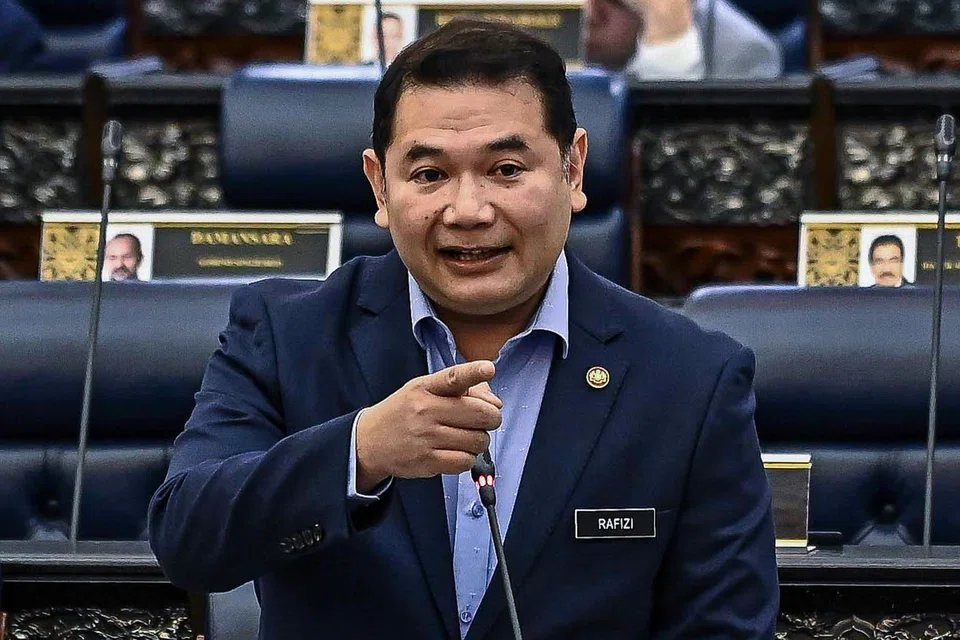
[KUALA LUMPUR] When Rafizi Ramli married in 2011, Malaysia’s future prime minister, Anwar Ibrahim, hosted a celebration at his home. Fifteen years later, the former allies are now political rivals, with Rafizi setting the groundwork to one day sideline his former benefactor.
Rafizi, 48, is building his new Parti Bersama Malaysia – translated as Malaysian United Party – as an alternative for voters disillusioned by Anwar’s unfulfilled reform promises and wary of the conservative race and religion-based politics of his rivals.
It’s a new chapter for a former whistleblower, strategist and economy minister. Rafizi left the cabinet and later quit Anwar’s People’s Justice Party, or PKR, after losing the No 2 post to the premier’s daughter last May – ending about three decades of alignment with Anwar.
His re-emergence comes at a vulnerable moment for the prime minister. The ruling Pakatan Harapan coalition has suffered a string of electoral setbacks, prompting soul-searching within its two biggest members – Anwar’s PKR and the Democratic Action Party – ahead of a general election due by February 2028.
Rafizi’s broad strategy is to capitalise on what he expects will be Anwar’s defeat in the next national election on a push by rival parties to unite Malay voters and disillusionment among the 79-year-old leader’s supporters.
“This is a long-term project,” Rafizi said in an interview. “There will come a point when progressive voters have to look beyond Pakatan Harapan, especially in the event that it doesn’t do well or loses the next general election.”
Bersama aims to reach 50,000 members by the end of October, up from about 30,000, according to Rafizi. More than 60 per cent are Malays – broadly reflecting the country’s ethnic makeup – and an equal proportion have never been involved in politics, he said.
In comparison, United Malays National Organisation, the country’s oldest and biggest party, has about 3.5 million members. Anwar’s PKR claims about one million.
Bersama, which plans to remain outside existing alliances, is targeting as much as 20 per cent of the vote in the constituencies it contests by the next general election. It won roughly 3 to 6 per cent in seats it fought for in the Johor state polls in July, its electoral debut.

The party is now looking to the Malacca state election, expected in the coming months, as its next test. Rafizi said Bersama expects to contest 15 of the state’s 28 seats. It could potentially aim to fight for at least 30 of the 222 parliamentary seats in the next general election, he said.
Bersama has a 12-point agenda that includes a minimum 5 per cent annual wage growth target linked to economic performance; capping migrant workers at 5 per cent of the workforce; expanding affordable housing; and shifting key appointment and oversight powers from the prime minister to parliament.
“Bersama seems to share the same centre-left space as Pakatan Harapan,” said Syaza Farhana Mohamad Shukri, associate professor for political science at International Islamic University Malaysia. “How it might differ is in the political will to push that agenda.”
Rafizi wants Bersama to eventually “become a party of choice for progressive voters” by the general election after the next one, while dismissing the notion he could become prime minister.
“It’s a joke if anyone in Bersama envisions power, let alone prime ministership,” he said.
Rafizi trained as an engineer and accountant, then worked at state energy giant Petronas before entering politics and working as a strategist for Anwar’s campaigns and party.
He rose to prominence early last decade by exposing the misuse of funds by National Feedlot. He later disclosed then-classified material related to the government’s audit of 1Malaysia Development, part of the broader revelations of the multibillion dollar fraud that brought down Prime Minister Najib Abdul Razak.
He was prosecuted for disclosing confidential information, and given a good behaviour bond in the 1MDB case.
Rafizi also founded Invoke, which used polling, voter databases and data analytics to identify persuadable voters and direct campaign resources. That helped Anwar’s Pakatan defeat the Barisan Nasional coalition in 2018, a watershed moment that ended Barisan’s unbroken rule since independence.
Rafizi became PKR’s deputy president in 2022 and then economy minister. But tensions emerged over the pace and direction of reforms. The split became final in May 2025, when Rafizi lost reelection as deputy president to Anwar’s daughter.
A year later, Rafizi and former minister Nik Nazmi Nik Ahmad quit PKR to launch Bersama, leaving parliament.
Rafizi argues the Anwar government’s anti-graft credentials were hurt by a controversy involving the Malaysian Anti-Corruption Commission. He spoke at demonstrations on the issue earlier this year.
Anwar has repeatedly said the watchdog operates independently.
After he left Anwar’s party, Rafizi’s son was attacked with a syringe outside a shopping mall. Rafizi has alleged that the attack was meant to silence him after a group of whistleblowers approached him with information on a scandal, details of which he hasn’t disclosed.
His wife later said she received threatening WhatsApp messages that read: “Shut up, if you continue, Aids.”
Anwar called the assault malicious and deceitful, and vowed a swift and transparent investigation. Rafizi, who has known Anwar since he was 17, said he has received no meaningful update on the investigation, and expected greater concern from the premier.
If such an attack had happened to the son of a close friend, “it would have affected me emotionally, and I’d want to get to the bottom of it,” he said. With Anwar, “there’s no reaction.”
Anwar’s office didn’t respond to a request for comment on Rafizi’s remarks on the MACC or the syringe attack.
Rafizi said Bersama sees an opening among voters who no longer fit neatly into Malaysia’s traditional political blocs, particularly middle-class and educated Malays.
Anwar’s Pakatan relies heavily on urban and non-Malay support, while the country’s Islamist party, Parti Islam Se-Malaysia or PAS, has made major inroads among Malay voters.
Still, many progressive non-Malays are reluctant to experiment with a new party because they fear vote-splitting that would inadvertently help the Islamist party.
But Malay voters who swing towards PAS or the once-dominant Umno this cycle may be disillusioned if those parties secure power, Rafizi said.
“The same complaints about wages, about cost of living, about underemployment, that will persist whoever is the government,” he said. “And then the moment they’re not able to move the needle on those, then they will swing again.”
Bersama has no intention of joining a ruling coalition even if it wins seats at the next general election, Rafizi said, saying that such alliances could reproduce the compromises that he believes diluted Pakatan’s reform agenda.
“Bersama is a long-term political project rather than an immediate bid for power,” said Kamles Kumar at Asia Group Advisors, noting that the party’s refusal to join a coalition could limit its influence.
“In the near term, Bersama is therefore more likely to be disruptive than transformative,” Kamles said. BLOOMBERG
Decoding Asia newsletter: your guide to navigating Asia in a new global order. Sign up here to get Decoding Asia newsletter. Delivered to your inbox. Free.
Share with us your feedback on BT's products and services
TRENDING NOW

Once staunchly pro-China, Malaysian Chinese businesses are now distancing themselves from Beijing

Grab CEO’s wife Chloe Tong on life with Anthony Tan and finding her purpose

Could stablecoins be the future of money?

ST Engineering opens tech-focused aircraft maintenance facility in Changi; to create over 500 jobs

