Asean leaders seek to bring regional trade pact into force this year amid Middle East pressures
They want to expedite the process to get the Upgraded Asean Trade in Goods Agreement to take effect

[CEBU] South-east Asian nations are looking to bring a key regional trade agreement into force within the year, amid supply chain disruptions and rising energy costs due to the ongoing Middle East conflict.
This was one of the issues discussed at the 27th Asean Economic Community Council (AECC) meeting held on the island of Cebu in the Philippines on Thursday (May 7), ahead of the 48th Asean Summit.
At the meeting, the region’s economic ministers – including Singapore’s Deputy Prime Minister and Trade and Industry Minister Gan Kim Yong – reaffirmed commitments to uphold open trade and resilient supply chains in response to the situation in the Middle East.
They also took forward recommendations from a special AECC meeting convened on Apr 30 to address the rapidly evolving developments in the region.
The move to expedite the entry-into-force of the Upgraded Asean Trade in Goods Agreement (Atiga) was one of the recommendations. It needs to undergo a ratification process before it can take effect.
Upgraded pact
Atiga first came into force in 2010 to provide a legal framework for the free flow of goods in the region, and has since eliminated 99 per cent of tariff lines among member states.
It was upgraded in October 2025 to address challenges beyond tariffs, including regulatory complexity, non-tariff measures, supply chain disruptions and digital transformation.
Key new features include enhanced transparency of non-tariff measures, full legal recognition of electronic certificates of origin and a new framework for essential goods during humanitarian crises.
Once ratified, Atiga would pave the way for Asean member states to implement cooperation and crisis-related commitments amid the Middle East situation.
SEE ALSO
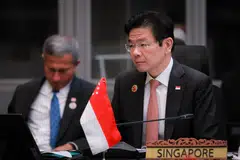

In a separate statement on Thursday, Philippine Trade and Industry Secretary Cristina Roque, who chaired the meeting, said that rising energy costs and supply chain disruptions continue to affect Asean economies and their people.
“We are here not only to respond to these pressures, but to ensure that our region remains open, stable and moving forward,” she said.
On Friday, Asean leaders, including Singapore Prime Minister Lawrence Wong, are expected to issue a statement on the bloc’s collective response to the Middle East crisis.
The statement is likely to outline the actions that member states will take to strengthen energy security, market stability, financial resilience and macroeconomic stability.
The statement is also expected to address food security and agricultural supply chains, as well as the regional humanitarian response.
DPM Gan said Singapore was working actively with its Asean partners to champion resilient supply chains while growing the digital and green economies.
“Singapore will continue to monitor global developments closely and remain a constructive partner to advance regional integration priorities,” he said.
“We are committed to deepening partnerships in Asean, to ensure the region maintains its position as a trusted, connected and open trading partner.”
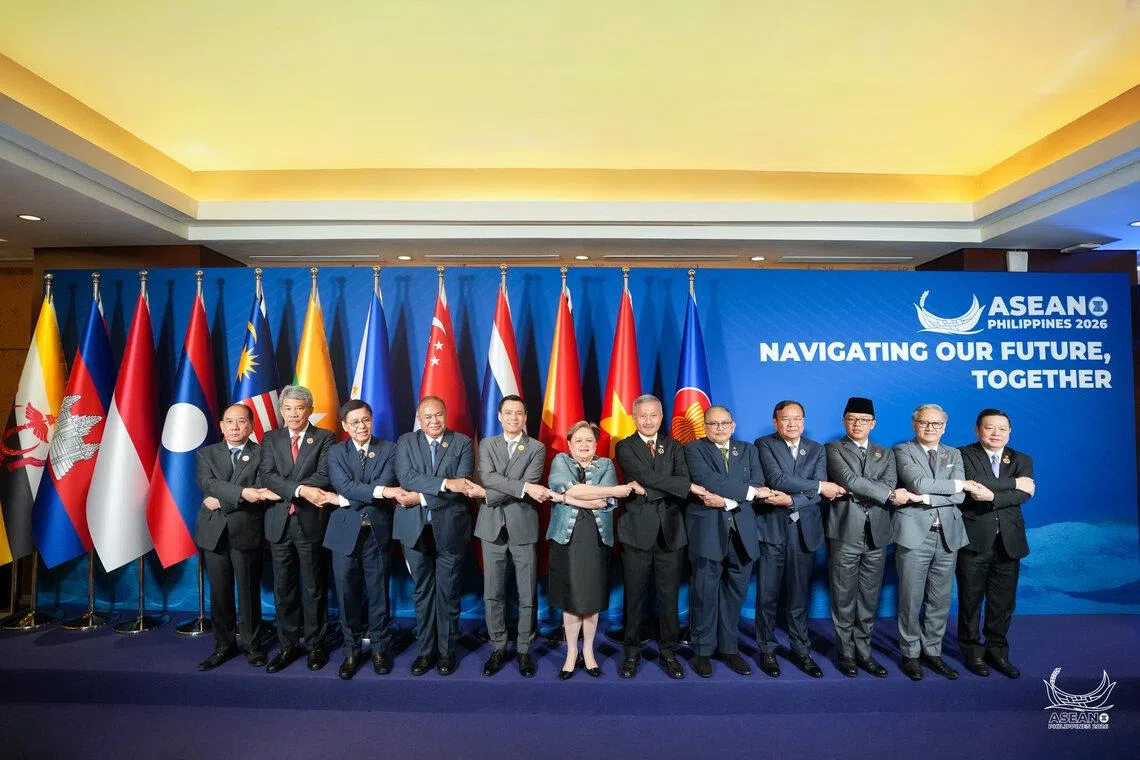
The AECC meeting preceded the Joint Asean Foreign and Economic Ministers Meeting, which will further discuss the cascading impacts of the Middle East situation.
Singapore’s Foreign Minister Vivian Balakrishnan said the foreign ministers were united on the need to strengthen collective resilience and accelerate the implementation of the Asean power grid to enhance regional energy security.
They also reaffirmed commitments to keep supply chains open and stable, and uphold navigational rights and freedoms under international law.
Green, digital economy
The ministers also discussed the Asean Digital Economy Framework Agreement, reaffirming that it remains on track for full conclusion and signing this year.
This will be the region’s first comprehensive digital economy agreement, introducing commitments to facilitate trusted cross-border data flows, end-to-end digital trade and protection of key proprietary information.
It will also help digital businesses, especially micro, small and medium-sized enterprises, scale up regionally and beyond.
On the green economy, the ministers set out next steps on priority carbon neutrality initiatives, including commissioning a feasibility study for a potential rules-based Asean Green Economy Framework Agreement.
They also made progress on the Asean Power Grid, urging members to accelerate the development of a framework on submarine power cables, which is essential for energy imports.
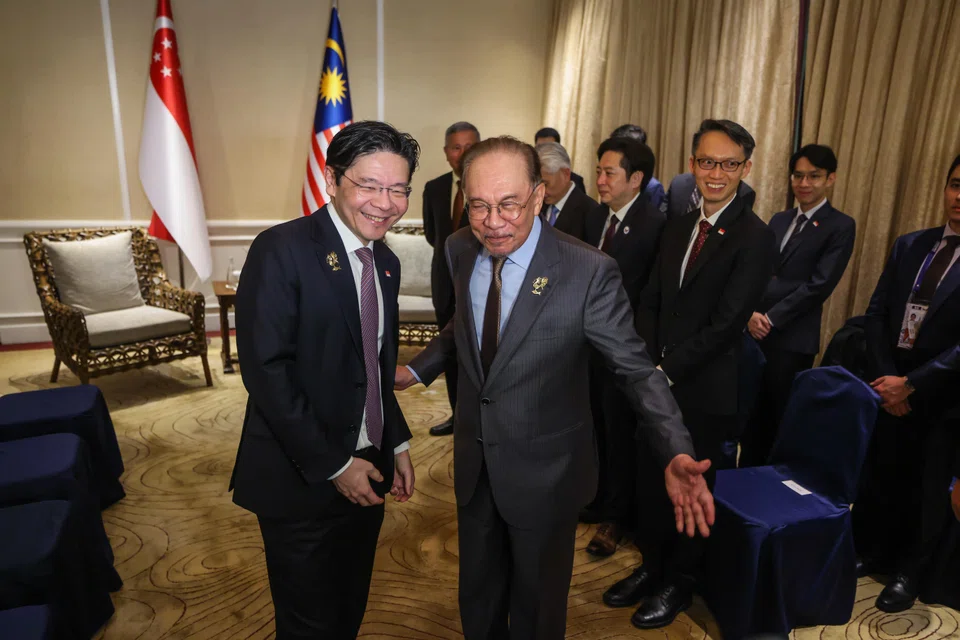
PM Wong arrived in Cebu on Thursday afternoon ahead of the Asean Summit. He held bilateral meetings with Cambodia’s Prime Minister Hun Manet and Malaysia’s Prime Minister Anwar Ibrahim.
PM Wong said that, in his meeting with Anwar, the two leaders reviewed key bilateral issues and discussed ways to strengthen partnership.
Anwar said that they discussed the Johor-Singapore Special Economic Zone, developments in the Middle East conflict, and the need for Asean to continue playing a principled role in maintaining the stability, security and continuity of global supply chains.
Decoding Asia newsletter: your guide to navigating Asia in a new global order. Sign up here to get Decoding Asia newsletter. Delivered to your inbox. Free.
Copyright SPH Media. All rights reserved.