



From 1MDB to ‘corporate mafia’: Is Malaysia facing a new governance test?
Corporate control allegations targeting the anti-graft agency and powerful businessmen are testing governance credibility

[KUALA LUMPUR] A decade after the 1MDB scandal shook Malaysia’s institutions, a new controversy is surfacing. This time, the concern is not the misappropriation of billions, but allegations of high-level shadow-play within the country’s corporate giants.
Claims of interference, coupled with mounting scrutiny of the Malaysian Anti-Corruption Commission (MACC), are unsettling investors and raising a fundamental question: Are the rules of the game being applied fairly?
A different kind of scandal
This current storm was sparked by a Bloomberg News report describing what it termed a “corporate mafia” – a network of businessmen and intermediaries allegedly able to influence, or even seize, control of public-listed companies.
That has sparked concerns over orchestrated displacement. The growing suspicion is that enforcement actions are being used to “soften up” targets, leveraging the threat of prosecution to force a changing of the guard and clear a path for a new era of corporate kingmakers.
If proven, such practices point to vulnerabilities within the system that is meant to safeguard corporate governance.
Who and which companies are involved?
The “corporate mafia” controversy has ensnared a mix of regulators, businessmen and political figures, exposing the scale of the alleged collusion.
Individuals
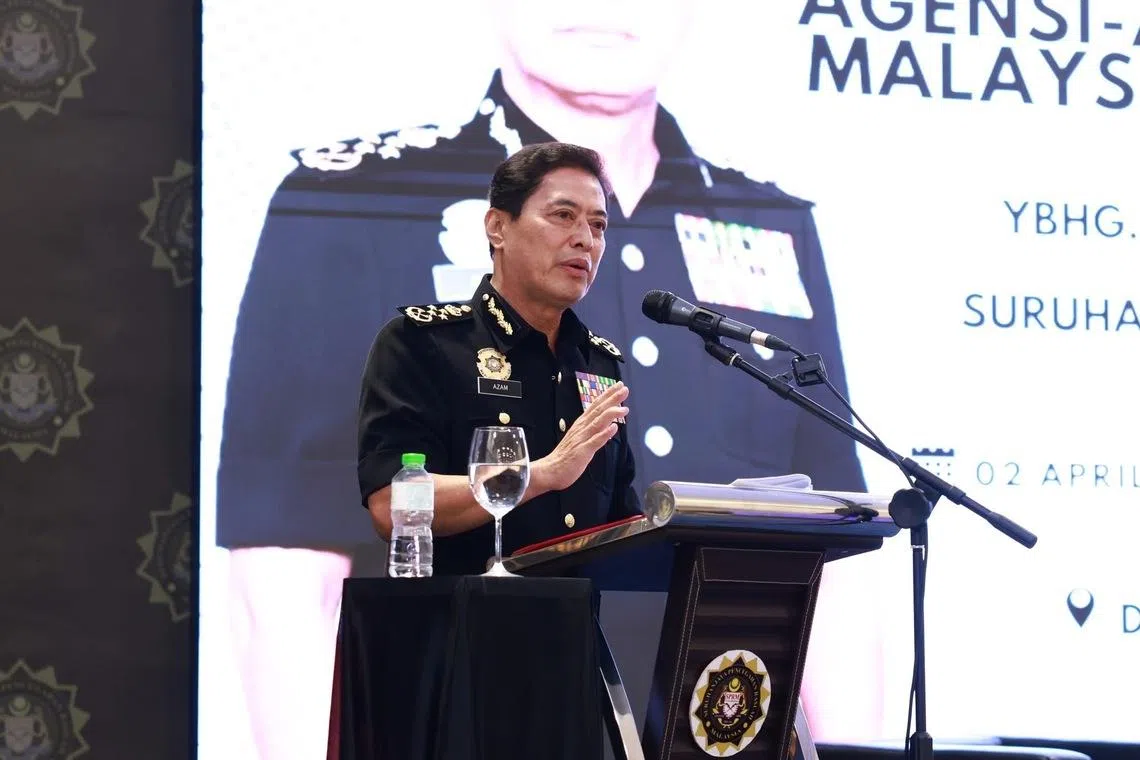
Azam Baki, MACC chief commissioner: The nation’s top anti-corruption official finds himself at the centre of the storm. Allegations include a potential conflict of interest over his shareholding in Velocity Capital and claims of close links to individuals tied to the alleged network.
He has denied the allegations, saying the shares were declared and subsequently disposed of.
He has urged enforcement agencies to combat the “corporate mafia”, noting that these syndicates were using professional networks, including those of lawyers and accountants, to mask their illegal operations within a complex criminal ecosystem.
Victor Chin: A prominent Malaysian businessman with past and current executive and shareholding roles in several Bursa Malaysia-listed companies, notably MMAG Holdings, NexG Bhd (formerly Ingenuity Solutions) and Classita Holdings (formerly Caely). He is identified in reports as a key figure in the alleged network.
In a statement in March, Chin declared: “Let me be clear: there exists a corporate mafia in Malaysia, but I AM NOT (a part of) this corporate mafia.”
He admitted to paying RM9.5 million (S$3 million) to a middleman (allegedly a prominent politician) as a “service fee” or “protection fee” to unfreeze hundreds of bank accounts and stop harassment against his associates.
Positioning himself as a whistleblower, he has called for an Royal Commission of Inquiry to uncover the true masterminds.
Tai Boon Wee: The former head of industrial firm GIIB Holdings has provided a harrowing account of the alleged mafia tactics of the MACC. He claimed that aggressive raids, threats and physical intimidation were used to force him to sell his shares and surrender company control.
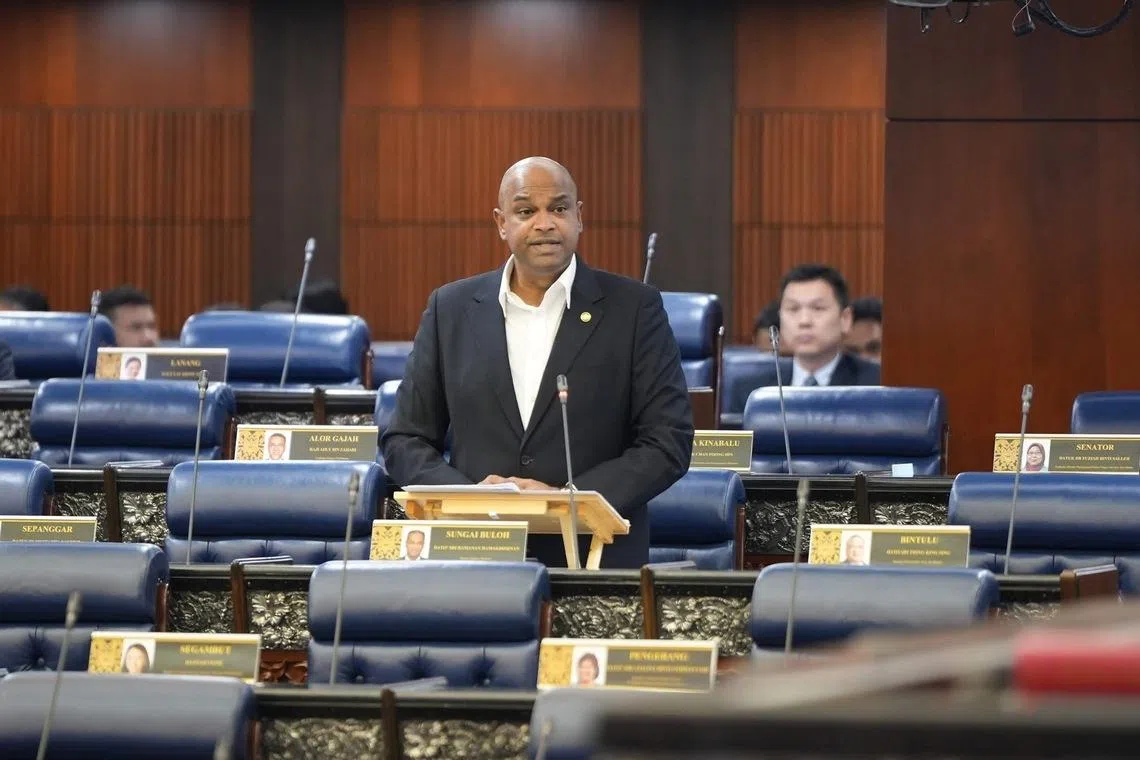
“Mr R”: Malaysia’s Minister of Human Resources Ramanan Ramakrishnan has been linked in public discourse to the “Mr R” cited by Chin, who alleged that a People’s Justice Party Member of Parliament and HeiTech Padu executive director received RM9.5 million to resolve issues tied to the alleged network.
Ramanan has rejected the allegation at a press conference, calling it a smear campaign.
James Chai: Once an aide to former economy minister Rafizi Ramli, Chai is linked to a separate probe into British semiconductor and software design company Arm Holdings. His involvement contributes to broader scrutiny of enforcement actions tied to corporate dealings.
While he previously issued a statement denying all allegations of misappropriation or abuse of power and accused the MACC of treating him “like a fugitive”, the commission has stood its ground.
MACC has said that Chai, now living and working in London, has failed to return to Malaysia for questioning. The authorities are considering seeking international cooperation, including through Interpol, to secure his attendance at their Putrajaya headquarters.
Companies
NexG: Formerly Datasonic Group, this company is a central focus of the controversy. It holds key government contracts, including those for the country’s passport and identity-card systems. Chin has alleged that the company was targeted as part of efforts to shift control.
GIIB Holdings: Previously Goodway Integrated Industries, the company sits at the centre of Tai Boon Wee’s allegations of forced boardroom changes under regulatory pressure.
Velocity Capital Partner: The company linked to Azam’s shareholding, which triggered questions over compliance with civil service ownership limits.
HeiTech Padu: Drawn into the controversy through its executive director, who has been identified by Chin as the alleged intermediary, “Mr R”.
United Kingdom-based Arm Holdings: While not directly tied to the “corporate mafia” allegations, its RM1.1 billion semiconductor deal is under investigation by MACC, adding to broader scrutiny of enforcement actions involving corporate transactions.
To date, investigators have questioned 17 individuals, with eight more, including overseas parties, expected to be called as the commission broadens its reach.
The ‘Victor Chin’ factor
Police confirmed on Mar 30 that Chin was among 10 individuals detained during Ops Viking, an anti-money laundering operation conducted between October 2025 and January 2026.
He was released on bail in December, but remains under investigation.
In a statement issued on Mar 16, he highlighted the severe collateral damage caused by ongoing enforcement. He noted that more than 500 stockbroking and bank accounts, many linked to NexG, have been frozen for over 90 days.
He said these freezing measures affected companies he does not even own, disrupting operations for countless investors and employees.
Chin also appealed for an end to enforcement actions at his Sungai Long residence, citing the declining health of his elderly parents.
He maintains that in several cited cases, his shareholdings were disposed of long before any alleged wrongdoing occurred.
To clear his name, he has pledged to submit evidence through legal counsel and distance himself from the alleged criminal network.
Anti-graft buster under scrutiny
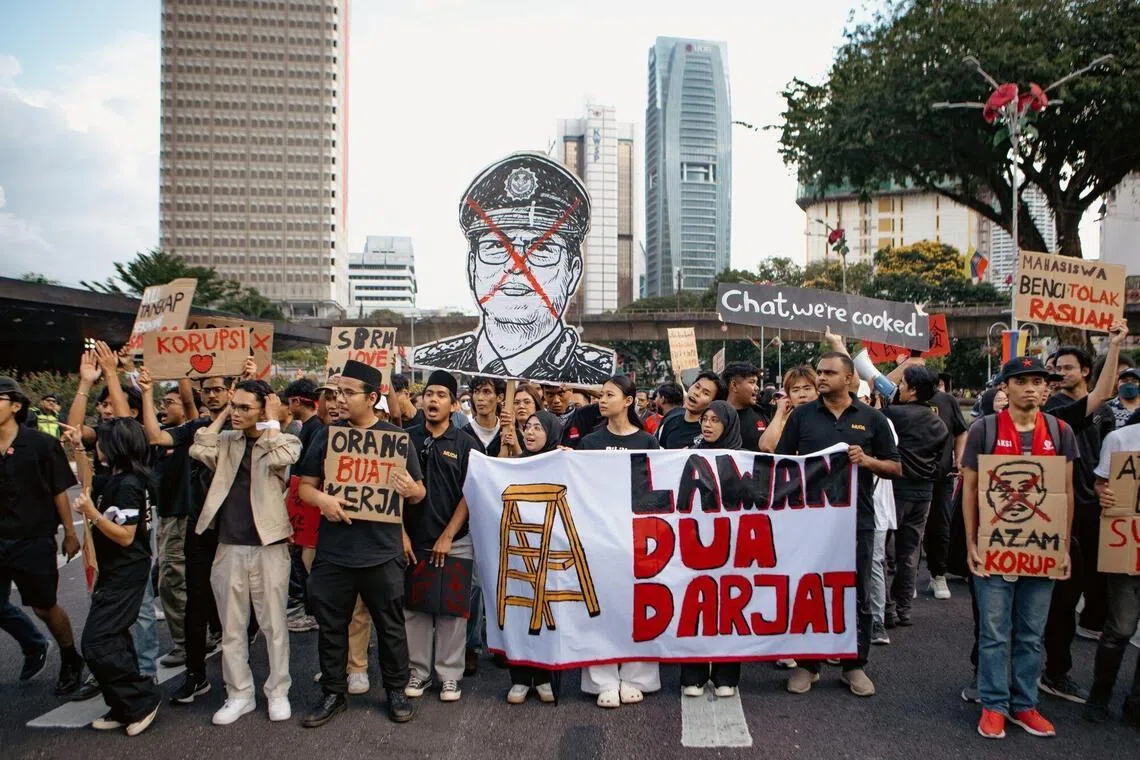
The MACC is currently facing intense pressure over its role as the country’s top graft-buster. In February 2026, Bloomberg News published two major reports on the agency and its chief, Azam.
The first report questioned his 17.7 million shares in Velocity Capital Partner, valued at about RM800,000.
This sparked a debate over a 2024 government rule limiting civil servants’ shareholdings to RM100,000 or 5 per cent of a company, whichever is lower.
In his own defence, Azam said he had declared the investment and sold the shares in 2025. His legal team has since issued a letter of demand to Bloomberg over the claims.
The second report alleged that a “corporate mafia” – referring to a group of businessmen including Chin – was using MACC officers to force takeovers of public companies.
The report claimed that official raids and investigations were timed to help these businessmen seize control from existing owners.
Both Azam and the MACC have denied these allegations, calling them a smear campaign and insisting that all their actions have followed the law.
On the enforcement front, the police-led Ops Viking recently confirmed Chin’s detention and subsequent bail, alongside the freezing of over RM470 million in assets and 404 bank accounts.
However, as of early April, police noted that no MACC officers were among those formally called up in the money laundering investigation.
Calls for investigation grow
The government’s handling of the issue has also drawn criticism. The administration led by Prime Minister Anwar Ibrahim has launched a multi-agency probe, but has stopped short of initiating a Royal Commission of Inquiry, arguing that such a move would be premature.
The reluctance to escalate the investigation has fuelled public dissatisfaction, with critics questioning whether the government is moving decisively enough to address concerns over enforcement credibility.
Civil society groups, such as Transparency International Malaysia and the Centre to Combat Corruption and Cronyism, have called for stronger institutional safeguards, including enhanced parliamentary oversight and the setting up of an independent ombudsman to investigate misconduct in the civil service.
TRENDING NOW

DBS, OCBC, UOB rout lops billions off STI as inflation, rate concerns spook investors

Grab CEO’s wife Chloe Tong on life with Anthony Tan and finding her purpose

OCBC sheds S$8 billion in value as shares close nearly 6% down; analysts cautious on banks

Deal between tycoon friends sparks scrutiny of Philippine power sector

