



After Indonesia, Grab comes under pressure in Vietnam over driver earnings
The ride-hailing services remained undisrupted despite driver-partner pushback over the weekend
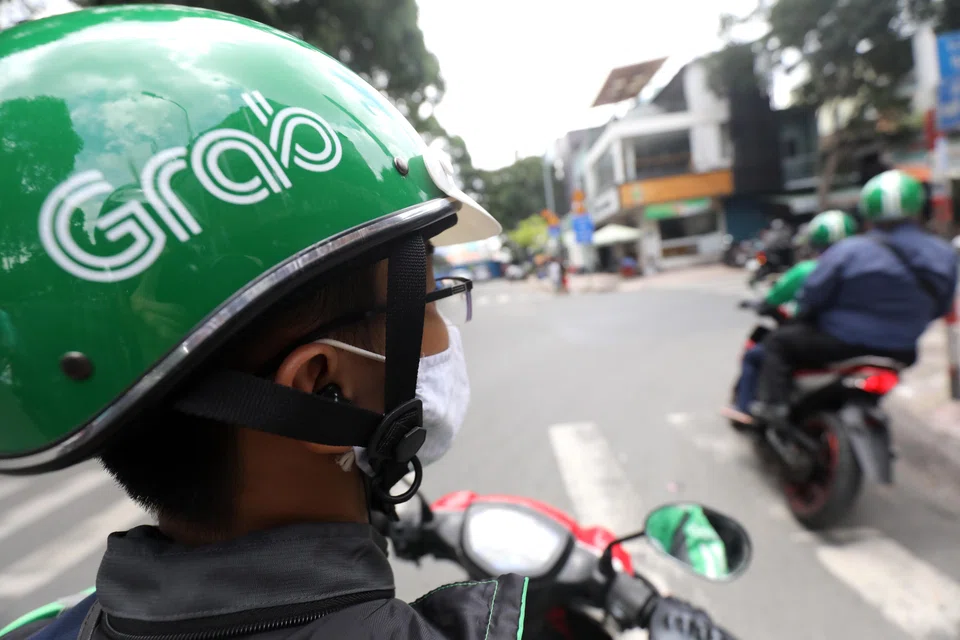
GRAB’S Vietnam operations continued largely uninterrupted through the weekend despite calls for a two-day driver boycott as the Singapore-headquartered ride-hailing giant faces mounting pressure from drivers and regulators over fares, commissions and shrinking take-home earnings.
Drivers had urged colleagues on social media to switch off the app, alleging that lower fares and higher deductions were squeezing their income, with some claiming that deductions on individual trips could reach as much as 50 per cent of the passenger fare.
Regulatory pressure is also building. Vietnam’s National Competition Commission separately said on Friday (Sep 11) that it was reviewing the complaints and had asked Grab to provide relevant information and documents.
It also asked other ride-hailing platforms in Vietnam to provide information on pricing and fee policies for passengers and driver-partners, although it did not identify the companies by name.
“If signs of violations of competition law are detected, (the commission) will investigate and take action in accordance with its authority and the law,” it added.
The latest development comes only months after Grab and GoTo agreed to cut per-trip commissions for their two-wheeled drivers in Indonesia to 8 per cent from 20 per cent from Jul 1.
This followed months of pressure from drivers in the country over pay and working conditions, alongside the government’s moves to tighten oversight of platform commissions and strengthen protections for gig workers.
Services remain
The pushback in Vietnam, however, did not appear to materially disrupt operations.
It is also worth noting that the gap between the passenger fare and a driver’s take-home earnings can reflect platform fees, taxes, insurance, other applicable deductions and the effect of incentive schemes, rather than Grab’s commission alone.

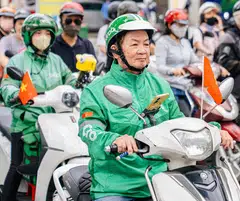

In an e-mail response to The Business Times, Grab said that it was aware of “false and misleading information” circulating online about driver account suspensions and its commission structure.
“Over the weekend, Grab’s services remained stable and fully operational,” its spokesperson added, saying active driver-partners recorded a week-on-week increase in average earnings despite adverse weather in some cities and areas.
Hanoi police said on Monday that they had identified social-media posts claiming that Grab had been “paralysed” or that all of its drivers had stopped working, as well as unsourced claims about driver earnings and commission rates.
One account owner was fined for posting content about the coordinated shutdown to drive online engagement, while users were urged not to share unverified information.
Nguyen Sang, 39, a part-time Grab bike driver interviewed by BT, was among those who had continued to provide rides over the weekend.
Sang said his earnings from Grab had declined over the past year compared with earlier periods, with the share retained by the platform varying by trip under the platform’s flexible fee structure, which replaced earlier fixed financial arrangements for two-wheeled driver-partners.
He estimated that, for some short rides, the split could be as much as 50-50 between Grab and the driver, while a more typical split was around 65 per cent for the driver.
Still, Sang saw little reason to leave.
“Grab has been in the market for a long time. The other apps are newer and not as strong, so I don’t intend to switch,” he said, adding that he found Grab’s mapping and navigation more accurate and easier for drivers to use.
For Sang, who has a full-time job in Dong Nai – a neighbouring province east of Ho Chi Minh City – and drives only on weekends for additional income, the economics remain acceptable. He said he could still make about 600,000 dong (US$23) to 700,000 dong a day on weekends.
“If there were no app, how would I earn this extra income?” he asked.
“Any real change will have to come from the government,” he added, noting that the protesting drivers were just a few minnows without the capability to create enough pressure.
He also said that he was reluctant to switch to Grab’s domestic electric-vehicle-based rival Green SM, citing the upfront investment required for an EV and his preference is for petrol vehicles, which he considers easier to repair.
The choice also underscores a big difference in the business model of the two ride-hailing services.
GSM, the VinFast-affiliated operator behind Green SM, hires its car drivers as employees under labour contracts. This grants them compulsory social, health and unemployment insurance and access to company vehicles and other benefits. For its bike operations, the arrangement includes both contract-driver and platform-partner models.
Meanwhile, Grab classifies its drivers as independent partners rather than employees.
Many part-time drivers appear drawn to the flexible structure versus a company-driver model as the latter would involve changing the nature of their gig work, a Grab car driver-partner told BT.
Grab moves to reassure drivers
As calls for the weekend shutdown spread, Grab sent several notices to its driver-partners.
In one in-app notice seen by BT, the company said that drivers were free to decide whether to switch the app on or off. Suspension would apply only in cases involving violations of the law or its existing code of conduct.
“Grab does not apply any form of penalty, including account suspension, when a driver-partner chooses to temporarily stop operating with Grab,” the company said.
On Facebook groups for Grab drivers in Vietnam, some users shared screenshots showing one-star ratings for drivers who continued accepting bookings during the stoppage, while others appeared to place fake bookings deliberately to disrupt those who remained online.
Grab separately warned against deliberately placing ride or food-delivery orders without intending to use the service, saying accounts involved in such activity could be suspended under its code of conduct.
The company also provided channels for drivers to report fake bookings, ride disruptions and other incidents.
“We take feedback from our driver-partners seriously and continue to listen to their concerns,” the Grab spokesperson told BT, adding that the company wants its platform to balance “user affordability” with “fair, long-term earning opportunities for driver-partners”. THE BUSINESS TIMES
Decoding Asia newsletter: your guide to navigating Asia in a new global order. Sign up here to get Decoding Asia newsletter. Delivered to your inbox. Free.
Share with us your feedback on BT's products and services
TRENDING NOW

Government to bring forward raising of retirement age, give employers more financial support to create flexi-load jobs

If Europe goes to war, the fallout will be felt in East Asia

Indonesia stocks suffer worst plunge in nearly 30 years as MSCI proposes standalone status

Vietnam’s northern provinces, not Hanoi or Ho Chi Minh City, are powering near 10% GDP growth

