



Asean can be self-sufficient in energy, food with an integrated market: Singapore’s chief climate negotiator
The Republic’s role is to galvanise more public-private partnerships to address these twin challenges, he adds

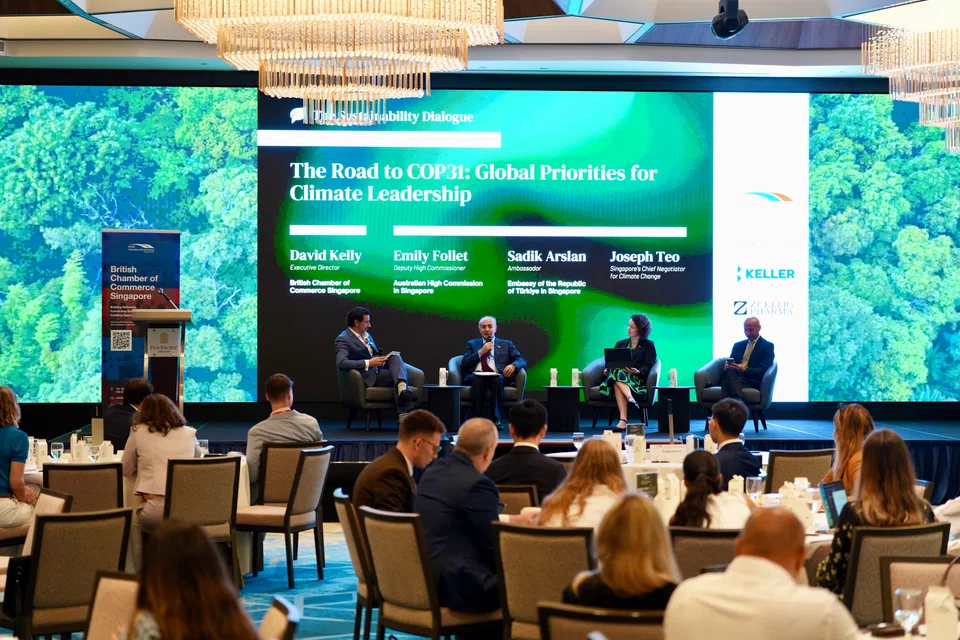
[SINGAPORE] ASEAN can achieve self-sufficiency in energy and food through a more integrated and cohesive regional market, said Singapore’s chief climate change negotiator Joseph Teo.
Energy and food security have become a bigger focus for Asean governments following supply disruptions caused by recent geopolitical events, and they will be among Singapore’s list of priorities as it takes on the role of chair for the regional bloc in 2027.
Teo cited some examples, including how the Russia-Ukraine war has affected the import of wheat into the region.
The flow of fertilisers was also changed due to the Iran war, as the Strait of Hormuz, a major shipping route, was blockaded following the outbreak of the conflict. Oil and gas imports were also disrupted, sending energy prices skyrocketing in the region earlier this year.
“Technically, if Asean gets its act together, we can be self-sufficient in our energy needs, and we can be self-sufficient in our food needs. And the key challenge then is to make sure that the entire Asean market is integrated and more cohesive,” said Teo, who was responding to a question during a panel on the possible mechanisms that could drive sustainability and climate projects in the regional bloc.
The panel was part of a sustainability conference organised by the British Chamber of Commerce Singapore on Thursday (Sep 3).
'%3e%3cpath%20d='M12.1475%2025.5262C13.7713%2025.4295%2014.94%2023.913%2014.94%2021.8832C14.94%2019.5359%2013.474%2018.093%2011.5917%2018.093C11.3745%2018.093%2010.9582%2018.093%2010.8393%2018.1413V25.2086L11.8891%2025.5745C11.8891%2025.5745%2012.207%2025.5262%2012.1475%2025.5262ZM11.4934%2017.6281C13.2567%2017.6281%2014.3843%2016.4292%2014.3843%2014.4501C14.3843%2012.372%2013.275%2011.2973%2011.4339%2011.2973H10.8393V17.6305H11.4934V17.6281ZM6.66078%2025.6482L7.39265%2025.5492C8.02617%2025.4502%208.26403%2025.3053%208.26403%2025.1097V11.6149C8.26403%2011.4193%208.1451%2011.3709%207.23484%2011.249L6.68137%2011.173L6.6219%2010.7588H11.9508C15.7153%2010.7588%2017.0624%2012.0797%2017.0624%2014.1578C17.0624%2015.9666%2015.7748%2017.1909%2013.4969%2017.6305V17.7041C16.111%2017.948%2017.6571%2019.5382%2017.6571%2021.7636C17.6571%2024.3318%2015.8937%2026.0417%2012.1109%2026.0417H6.60132L6.66078%2025.6482Z'%20fill='%232B2B2B'/%3e%3cpath%20d='M20.6287%2025.6505L21.5596%2025.5515C22.1725%2025.4779%2022.4104%2025.3076%2022.4104%2025.112V11.249H21.9346C20.073%2011.3479%2018.982%2013.0095%2018.408%2014.6227L18.1907%2015.5018H17.6555L18.1701%2010.7588H29.3837L29.6421%2015.4787H29.1664L28.9491%2014.6227C28.3728%2012.8645%2027.3047%2011.2743%2025.5002%2011.249H24.9856V25.1856C24.9856%2025.3812%2025.1251%2025.4548%2025.9965%2025.5515L26.7695%2025.6505L26.829%2026.0417H20.5693L20.6287%2025.6505Z'%20fill='%232B2B2B'/%3e%3c/g%3e%3cdefs%3e%3cclipPath%20id='clip0_5242_21648'%3e%3crect%20width='24'%20height='16.8'%20fill='white'%20transform='translate(6%2010)'/%3e%3c/clipPath%3e%3c/defs%3e%3c/svg%3e)
As a small country, Singapore aims to play the role of a connector in galvanising more public-private partnerships to address these twin challenges, he said.
The Financing Asia’s Transition Partnership (Fast-P), a blended finance initiative launched in 2023, was cited as an example of Singapore’s early efforts to mobilise capital towards the region’s energy transition.
Thus far, it has raised more than US$1.1 billion from two of its three funds, and aims to mobilise US$5 billion by bringing together both public and private-sector partners to de-risk and fund transition and marginally bankable green projects in Asia.


Blended finance is a capital-raising approach that leans on investors with higher risk appetites – such as multilateral development banks, development finance institutions, philanthropists and governments – to provide concessional or catalytic capital to pull in more commercial investors.
Teo added: “Looking ahead, we may be putting some thought into how do we do the same for some of the adaptation needs. That will come much later. But first, we have to deliver on Fast-P.”
Climate finance
Singapore’s Fast-P initiative is an attempt to “turn the debate of (climate financing) on its head” by using the proceeds raised to fund smaller-scale energy transition projects, he noted.
It was previously announced that 25 per cent of the first close amount (US$128 million) of the green investments partnership fund has been committed to four sustainable infrastructure investments in South-east Asia.
Climate financing has long been a major point of contention at the annual United Nations climate change conference, known as COP.
At COP29, held in 2024 in Baku, Azerbaijan, states agreed to raise the minimum amount developed countries are obligated to provide to developing countries to US$300 billion a year, up from the previous floor of US$100 billion.
However, many developing countries have criticised the new quantum as falling far short of the US$1.3 trillion the UN estimates it needs every year for climate action until 2030.
This year’s conference, COP31, will be focused on implementation and acceleration, said Sadik Arslan, Turkish ambassador to Singapore, and Emily Follett, Australian deputy high commissioner to Singapore.
Both were in the same panel as Teo, and discussed their priorities for the upcoming conference, which will be held in Antalya, Turkey, in November.
COP31 will be the first COP with a shared presidency. Turkey will serve as the official COP31 president and is managing voluntary action from non-state entities such as businesses, while Australia will lead the formal UN climate negotiations.
Follett noted that COP31 is taking place at a time when “the multilateral system is under significant strain”.
“Consensus is never automatic and rarely easy, but it remains essential, and particularly for a challenge like climate change, where no country can solve this issue by itself. This requires a collective approach,” she added.
Decoding Asia newsletter: your guide to navigating Asia in a new global order. Sign up here to get Decoding Asia newsletter. Delivered to your inbox. Free.
Copyright SPH Media. All rights reserved.
TRENDING NOW

Once staunchly pro-China, Malaysian Chinese businesses are now distancing themselves from Beijing

Looking beyond looming CEO succession, should UOB potentially pursue a transformative merger?

Could stablecoins be the future of money?

Grab CEO’s wife Chloe Tong on life with Anthony Tan and finding her purpose

