Sky-high prices and black market guns
The gambling boom in Cambodia’s Sihanoukville was accompanied by a rise in crime. While the casinos have left, problems remain.

Arriving in the coastal Cambodian city of Sihanoukville, one might have the surreal impression of being in China. Almost all the signboards are in Chinese, and familiar Chinese brands are everywhere.
Before the online gambling ban, more than 200,000 Chinese citizens lived in Sihanoukville. But as the gold rush abated, their numbers declined. As of May this year, only 23,375 remain, and many casinos and shops have shuttered.
Local residents expressed mixed feelings about the departure of the Chinese. They prefer today’s relative calm, but see Chinese tourists and investment as essential for Sihanoukville’s development.
“Sihanoukville is not as noisy as before,” said accountant Chea Chivey, 22. “After the Chinese left, there were also fewer social problems. But Sihanoukville is at a stage where it urgently needs foreign investment. Without continued investment from China, development will stop.”
The influx of Chinese drove up costs of living and housing. Some Sihanoukville residents struck gold overnight, but far more were hit by sky-high inflation. A bowl of street-side noodles costs around US$4, with prices higher than in the capital of Phnom Penh.
HLH Group executive deputy chairman and chief executive officer Ong Bee Huat said the flood of Chinese real estate investors caused prices to rise from a few hundred US dollars per square metre, to US$3,000 to US$4,000.
“There were too many people, and an undersupply of food and accommodation,” he said. “Housing prices went up, rents went up, food prices also went up. At the peak, one egg cost US$1.”
Looking to profit from the red-hot rental market, restaurant owner Svay Saiye, 54, built a house in 2018 and rented to Chinese tenants for US$4,000 a month. But the windfall was fleeting, and the exodus of Chinese capital has left the house empty. Saiye lamented: “I hope the Chinese come back soon. My house has been empty for three years, and I still have to pay a few thousand dollars every month towards the mortgage.”
The cost of living in Sihanoukville has since fallen, and domestic tourists – who previously avoided the city due to high hotel prices – are returning. Tame, 37, a street peddler by the beach, said that back when most beachgoers were Chinese, they patronised Chinese businesses exclusively. “It really didn’t help us. But now some Cambodians have returned, so our business is actually better.”
“I think there should be a balance, so even if the Chinese come back, locals and tourists of other nationalities will also come.”
Tackling cross-border crime
The gambling boom brought law and order problems that caused locals to live in fear. Whether these can be effectively addressed, restoring tourist and investor confidence, will determine Sihanoukville’s success.
In recent years, Chinese criminal gangs have used Sihanoukville as a base for illegal gambling networks and racketeering, even engaging in abduction and human trafficking to staff their operations.
Smey Simayi, 25, who works in a provision shop opposite a casino, said she often saw the Chinese brawling outside the casino and even witnessed an abduction. “We often heard gun shots, it’s very scary.”
Under Cambodian law, firearms can be carried only by army and police personnel, and licensed persons. But locals revealed that black market firearms were readily available for around US$5,000.
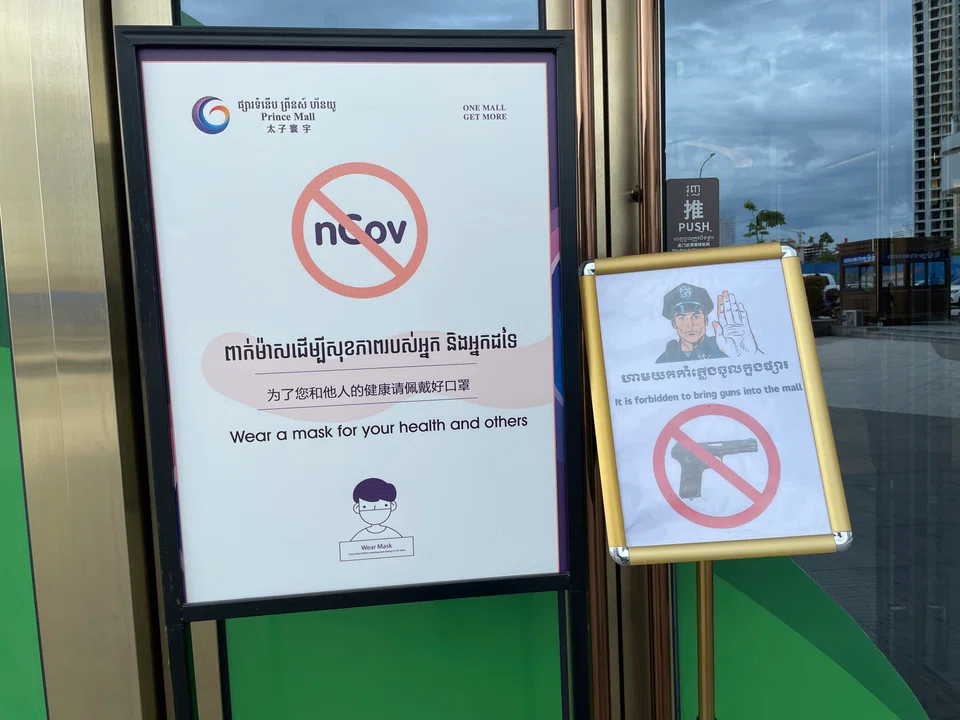
Guns are not uncommon in Sihanoukville, and many foreign business owners – who are not allowed firearm licenses – hire armed bodyguards. The ubiquity of guns has even driven some shopping centres to put up notices prohibiting firearms on their premises.
The Cambodian government has tightened gun controls in recent years. Said Ong: “In the last few years, we would often see police roadblocks, checking vehicles for drugs and guns.”
According to Cambodian media reports, a gang of firearms smugglers were arrested in Sihanoukville this June. Sihanoukville governor Kuoch Chamroeun said then that the authorities had become a laughingstock because they had lost control of the situation: “I want to declare again that we will not tolerate lawlessness and will continue to root out violent crime.”
In 2019, the China-Cambodia Law Enforcement Coordination Committee, an inter-governmental partnership, was set up to target cross-border crime. To date, over 100 Chinese criminals have been arrested and repatriated.
Lawrence Lennon, managing director of CBRE Cambodia, expects the Chinese and Cambodian governments to expand their law enforcement cooperation. He estimates that as Sihanoukville goes upmarket, black and grey market criminal activity will become costlier and ultimately get squeezed out.
Ong observed that while the crackdown will take time, the government has clearly begun taking steps in the right direction, which will benefit the future development of Sihanoukville.
Daryl Lim is a journalist with Lianhe Zaobao’s Foreign News Desk. This article is part of a collaboration on a series of weekly features translated from Lianhe Zaobao. The original story first appeared on July 3. The next package on July 18 will take a look at Chinese electric vehicle companies and their plans in South-east Asia.