Asean gold demand in Q2 buoyed by Indonesia, Thailand, bucks broader global sell-off
Singapore’s second-quarter bullion demand climbs 6% year on year amid geopolitical uncertainty, softer prices
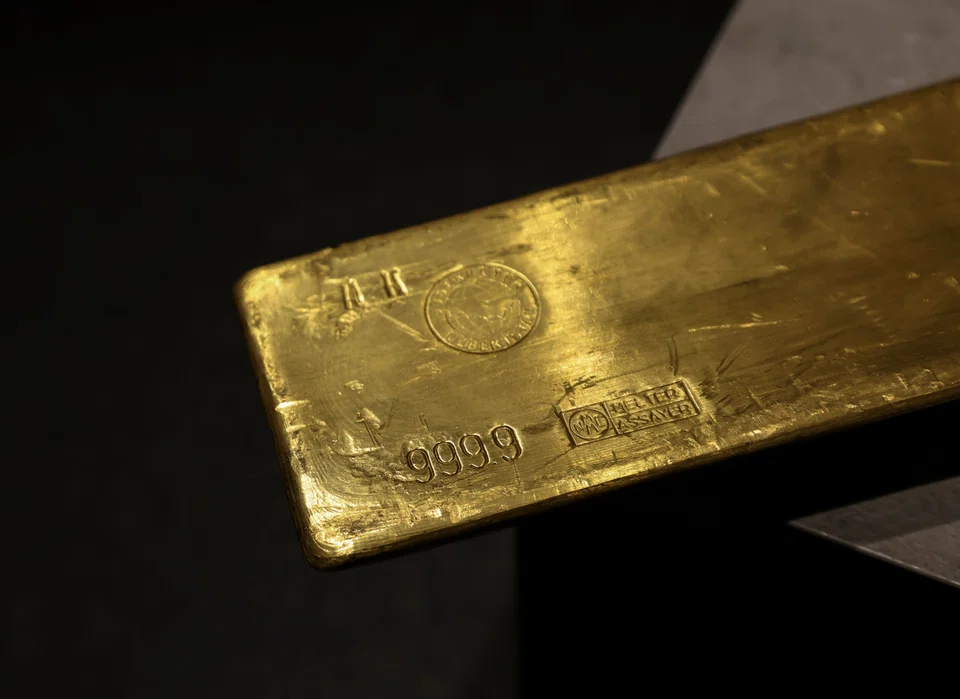
[SINGAPORE] Investor appetite for gold in Asean remained resilient in the second quarter, defying broader year-on-year declines in the global demand for gold.
Global demand for bars and coins for the quarter retreated 3 per cent from the year before to 307.1 tonnes, based on data from the Gold Demand Trends Q2 2026 report of the World Gold Council (WGC) released on Thursday (Jul 30).
Following the US Federal Reserve’s decision on Wednesday to keep interest rates unchanged, the price of the yellow metal posted a modest gain, advancing nearly 1 per cent the same day.
It was trading relatively flat at US$4,069.16 an ounce as at 6.15 pm in Singapore on Thursday.
Gold has retreated by around 26 per cent from a record high of US$5,500 an ounce in January, as investors sold down to raise liquidity during the Middle East conflict.
In Singapore, investors seeking safe-haven assets and portfolio diversification contributed to a 6 per cent year-on-year increase in demand for bars and coins, to 2.3 tonnes during the quarter.
Indonesia was one of the strongest-performing markets globally, with investment demand rising 40 per cent to 14.5 tonnes from the corresponding quarter the year before.
“(Indonesia’s) currency weakness and concerns about the domestic economic outlook continued to reinforce gold’s role as a store of value,” noted WGC.
The Indonesian government formalised its gold ambitions in 2026 with a road map for fortifying its bullion ecosystem and encouraging downstream development in the sector.


Among the Asean states, Thailand recorded its strongest second quarter since 2019 as price correction in the local gold price “encouraged bargain hunting”, noted the report.
Demand for bars and coins in the country rose 10 per cent on the year to 10.9 tonnes during the quarter. WGC added that market participants reported growing participation from among younger investors, along with strong interest in gold savings accounts.
Bullion demand in Malaysia similarly grew 28 per cent year on year to 2.5 tonnes during the quarter. This came despite uncertainty caused by regulatory changes that affect imported bullion products.
In contrast, Vietnamese demand shrank 31 per cent to 6.5 tonnes from the year before. WGC attributed this largely to constrained import quotas which “distorted market conditions, keeping the local price premium discouragingly high”.
Louise Street, a senior markets analyst at WGC, noted that bullion investment is “likely to drive growth” in H2.
“However the demand mix could shift,” she added. “Over-the-counter activity and demand from Asian investors are expected to play an increasingly prominent role, while Western gold exchange-traded fund interest may be more closely linked to real yields, US monetary policy expectations and the dollar.”
Fan Shaokai, head of Asia-Pacific (ex-China) and global head of central banks at the WGC, added: “As access to gold investment products expands and market development initiatives gain momentum, (Asia) is well-positioned to remain an important source of gold demand in the years ahead.”
Regional trends
Asia-listed gold-backed ETFs posted their strongest H1 inflows on record despite 15 tonnes of outflows in Q2. The outflows came as Chinese investors pivoted towards stronger local equity markets, noted WGC.
Meanwhile, global gold-backed ETF holdings fell by 45 tonnes during the quarter. The quarterly reversal was concentrated in June, when global investors cut holdings by 74 tonnes.
Demand for jewellery in the region also remained under pressure during the quarter as high prices weighed on affordability and encouraged substitution towards investment products.
Singapore’s jewellery consumption fell 7 per cent year on year to 1.4 tonnes, in a decline that was mirrored across Asean markets.
WGC added that lower-carat jewellery gained further market share in Asean as consumers adjusted their buying behaviour.
More broadly, Street expects central banks to remain significant buyers, “albeit at a slightly slower pace than we’ve seen over the last four years”.
Central banks and other official institutions added 288.9 tonnes to their reserves in Q2, up 62 per cent year on year, as buying picked up in several markets.
The WGC’s Central Bank Gold Reserves Survey, published in June, found that 45 per cent of respondents intended to grow their own gold reserves over the next 12 months.
Decoding Asia newsletter: your guide to navigating Asia in a new global order. Sign up here to get Decoding Asia newsletter. Delivered to your inbox. Free.
Copyright SPH Media. All rights reserved.