Asean Summit: Trump’s KL visit puts South-east Asia’s neutrality to the test
His visit comes as regional leaders gather under the theme ‘Inclusion and Sustainability’

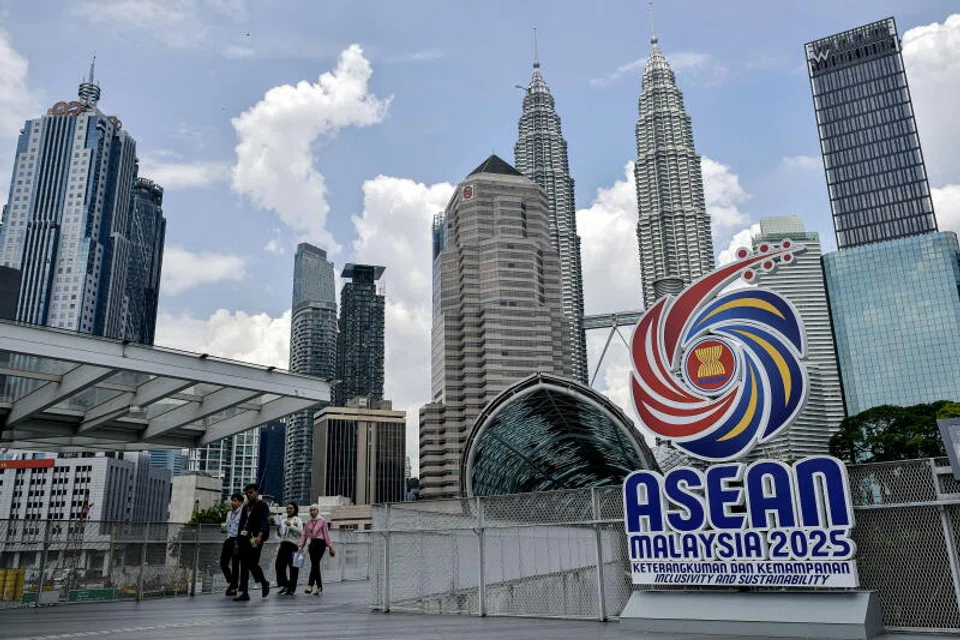
[KUALA LUMPUR] With US President Donald Trump confirming his attendance at the upcoming 47th Asean Summit in Kuala Lumpur, he arrives at a moment of delicate balance for South-east Asia and for America’s standing in a region increasingly defined by rivalry, realignment and rising uncertainty.
Trump’s three-day visit from Sunday (Oct 26) to Tuesday comes as regional leaders gather under the theme “Inclusion and Sustainability”.
Held at the Kuala Lumpur Convention Centre beside the Petronas Twin Towers, the summit is expected to draw over 12,000 delegates, making it one of the largest in Asean’s history and a crucial test of the bloc’s ability to turn consensus into action.
The scale of the event has prompted one of Malaysia’s largest-ever summit security operations. Around 20,000 security personnel will be deployed across the Klang Valley during the week.
Six highways and 25 major roads – including those around Kuala Lumpur City Centre, Bukit Bintang and Jalan Ampang – will be subject to rolling closures of up to 45 minutes at peak times as convoys move through the capital.
Historic scale and global attendance
Presidents Luiz Inacio Lula da Silva of Brazil and Cyril Ramaphosa of South Africa will attend as Asean’s newest sectoral dialogue partners, while Cypriot President Nikos Christodoulides, and Finnish Prime Minister Petteri Orpo are expected to be admitted as full dialogue partners – extending Asean’s reach beyond Asia into Europe, Africa and Latin America.
Leaders from the Asean bloc and Timor-Leste PM Xanana Gusmao will attend the summit. The attendance of Canadian PM Mark Carney, Chinese Premier Li Qiang and Russia’s Deputy PM Alexander Novak are expected.
The summit concludes on Oct 28 with the closing ceremony and handover of the Asean chairmanship to the Philippines. Many leaders will then depart for the Asia-Pacific Economic Cooperation summit in Gyeongju, South Korea, scheduled for Oct 31 to Nov 1.
Timor-Leste joins the bloc
Timor-Leste’s admission as Asean’s 11th member at a signing ceremony on Sunday headlines the summit, alongside Trump’s attendance to witness a Cambodia-Thailand peace agreement and the launch of an Asean observer mission to monitor the ceasefire’s implementation.
Malaysia’s mediation of the accord, dubbed the Kuala Lumpur Accord, has drawn regional praise for reasserting Asean’s conflict-resolution role.
Timor-Leste’s formal inclusion marks Asean’s first expansion in nearly two decades, culminating a 14-year journey since its 2002 independence and 2011 membership application.
A report by Iseas – Yusof Ishak Institute senior fellows Julia Lau and Sharon Seah highlighted that Timor-Leste’s accession could strengthen the bloc’s cohesion by prompting critical, necessary discussions in an increasingly fragmented world.
Trade and economic outcomes
Malaysia’s Foreign Minister Mohamad Hasan earlier said 84 outcome documents are expected – the most in Asean’s history – outlining progress towards the Asean 2045 Vision. Adopted in May this year, Asean’s “Our Shared Future” vision replaces Asean 2025, guiding a resilient, innovative, people-centred community focused on peace, sustainability, digital transformation, and inclusive growth.
He also highlighted that for the first time, Asean foreign and economic ministers will meet jointly to align decisions on diplomacy and trade policy.
The economic agenda is equally ambitious. Asean will unveil the upgrade of the Asean Trade in Goods Agreement, marking the bloc’s first overhaul of its trade architecture in over a decade.
Negotiations for the Digital Economy Framework Agreement (Defa) are nearing completion, laying the groundwork for a unified regional digital market.
Asean will also sign the Asean-China Free Trade Area (ACFTA 3.0) upgrade, aimed at improving market access and regulatory alignment, while Asean and New Zealand are set to elevate ties to a comprehensive strategic partnership, marking 50 years of dialogue relations.
The region’s leaders will further push cooperation in digital and green transitions through Defa and the Asean Power Grid, which seeks to accelerate cross-border electricity trade and renewable integration.
Separately, Malaysia will hold a bilateral meeting with US Secretary of Commerce Howard Lutnick to discuss sectoral tariffs, including semiconductors, after Washington imposed a 19 per cent levy on Malaysian exports in August – though chip exports remain exempt pending a security review.
Mixed expectations for the US role
Analysts said Trump’s attendance is symbolically significant but unlikely to deliver dramatic policy shifts.
Stephen Olson, senior visiting fellow at the Iseas – Yusof Ishak Institute, said: “I don’t expect outcomes that dramatically reshape security cooperation or trade.”
“Trump’s primary reason for participating is to burnish his credentials as the ‘peace president’ and, in his mind, strengthen his case for the Nobel Peace Prize,” he told The Business Times.
He added that any announcements or frameworks arising from the summit are unlikely to be meaningful.
The US’ reciprocal tariff regime and selective trade deals with Asean members provide a clearer indication of how the US sees its economic relationship with the region, he explained.
“Its primary concern is to prevent countries in the region from being used to help China circumvent US tariffs or to otherwise strengthen China’s position,” he said.
Still, Olson noted that Trump’s hands-on diplomacy could offer modest gains. “Trump conducts his foreign policy largely based on personal relationships, and spending time at the summit with regional leaders could be helpful in building closer personal ties,” he added.
For Dr Yeah Kim Leng, president of the Malaysian Economic Association, Trump’s visit reaffirms Asean’s enduring importance in global supply chain diversification.
“The visit is also an integral part of the US’ ‘pivot-to-Asia’ geopolitical strategy to limit China’s rise,” he added.
Dr Yeah expects Asean leaders to press Washington to revisit tariffs and expand investment in digital, physical and green infrastructure. “Malaysia’s semiconductor and data centre industries, especially in artificial intelligence, stand to benefit from deeper US engagement,” he said.
Dr Lee Pei May, assistant professor at the International Islamic University Malaysia, said Trump’s visit carries as much political theatre as policy intent.
She noted that being present to witness the Thailand-Cambodia peace accord allows him to project himself as a global dealmaker.
“Being present to oversee or even preside over the signing would enhance Trump’s credibility both in the region and internationally, bringing him a step closer to the Nobel Peace Prize he desires,” she added.
She noted that Malaysia’s Ministry of Investment, Trade and Industry will finalise a reciprocal trade agreement with the US next week, providing Trump with a domestic talking point.
“This can showcase that he has secured beneficial deals for Americans, while also demonstrating to others that he is willing and ready to strike new agreements,” she added.
However, Dr Lee said the optics are delicate for Malaysian PM Anwar Ibrahim, whose government faces public pressure over US support for Israel.
Whether Anwar can convert his international exposure into domestic political strength depends less on the number of attending leaders and more on how skillfully he uses the platform to voice Malaysia’s concerns about Trump’s Gaza peace plan, said Dr Lee.
“Striking the right balance is crucial, as overemphasising the issue could strain US ties. While Anwar may gain praise internationally, domestically he will likely face scepticism and doubts,” she added.
Stability over spectacle
With or without Trump, the 47th Asean Summit underscores a bloc striving to stay relevant and cohesive in a turbulent world.
For Malaysia, hosting the summit offers both diplomatic prestige and strategic leverage. Analysts said these efforts reinforce Malaysia’s image as a bridge-builder between developed and developing economies.
As Olson said, Washington’s trade policies show that its primary concern is containment of China, not partnership with Asean.
Dr Yeah remained optimistic, noting that Asean’s best outcome is one where trade remains open, growth sustainable and neutrality preserved.
And as Dr Lee observed, Malaysia’s handling of the summit – balancing ambition with pragmatism – will define its diplomatic legacy. “Such success can be leveraged by Anwar to demonstrate that Malaysia is respected for its diplomacy and leadership,” she added.