



Asean+3 bloc to grow 4% in 2026 and 2027 despite external challenges: Amro
The region has buffers to help deal with energy price hikes stemming from the Iran conflict

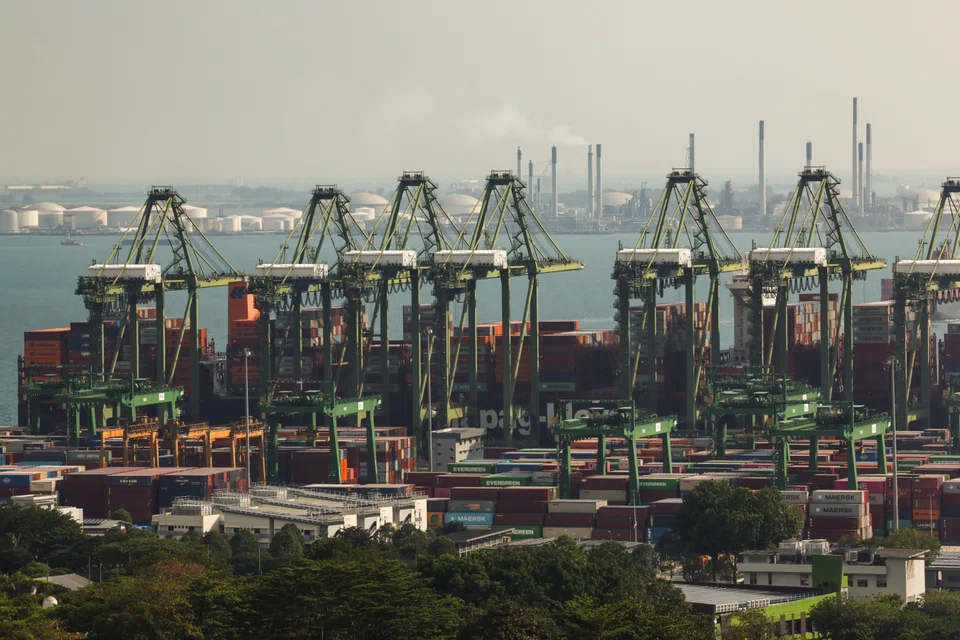
[SINGAPORE] The Asean+3 region, which is made up of 10 economies in the Association of Southeast Asian nations plus China, Japan and South Korea, is projected to grow 4 per cent this year and next, despite external challenges such as the Iran conflict and uncertainty over US tariff policy.
Timor Leste became the 11th member of Asean in October 2025, and is not a member of Amro yet.
Amro, short for the Asean+3 macroeconomic research office, said on Monday (Apr 6) that while the conflict in the Middle East represents a downside risk, the bloc has entered 2026 in a “position of strength”.
“The region has been supported by stronger-than-expected growth, low inflation and improved external buffers,” Amro said.
In an interview with The Business Times, Amro’s chief economist Dong He acknowledged that the Middle East conflict worsens Asean’s near-term outlook but economies that show they have sufficient logistics reliability, local supplier depth, and energy security will stand to benefit.
He argued that firms are still diversifying supply chains into Asean, noting the region still attracted strong foreign direct investment flows last year in advanced electronics, electric vehicles and semiconductor packaging despite global macroeconomic uncertainty.
“For Asean as a diversification destination, the proposition is shifting from ‘low-cost alternative’ to ‘resilient production base’,” Dr He said.
Brent crude prices, the international benchmark for oil, have remained elevated, trading at above US$100 per barrel in recent weeks due to the Middle East conflict, but Dr He said Asean+3’s 0.9 per cent headline inflation in 2025 gives central banks room to manoeuvre without being forced into growth-damaging tightening.
The chief economist argued that growing renewable energy capacity also means that the region is structurally better placed to deal with this current energy price shock compared to previous episodes.
He advised that immediate policy tasks should be targeted relief for the most exposed households and sectors rather than broad-based price suppression, as this would help prevent an external energy shock from translating into persistent inflation and broader macro stress.
Amro’s current growth projection assumes Brent crude prices to remain elevated for several months before moderating to US$75 to US$85 a barrel in the second half of this year as tensions ease. Inflation is also expected to rise to 1.4 per cent this year, up from 0.9 per cent in the year before.
Dr He warned that if the conflict intensifies and oil prices sustain at above US$100 per barrel for the rest of 2026, then growth could slow to 3.7 per cent with inflation rising above 2 per cent – the weakest and highest, respectively, since 2022.
Over 35 per cent of the region’s crude oil is sourced from Middle East partners, which transit through the Strait of Hormuz, a global maritime chokepoint between Iran and Oman, according to Amro.
Tariff threat
On tariffs, Dr He warned that the uncertainty around current US trade policy remains the biggest issue.
According to him, the effective tariff rate the region faces is currently around 12.5 per cent following the US Supreme Court ruling in February that invalidated Trump’s “Liberation Day” tariffs, substantially lower than the peak of nearly 39 per cent announced on that day last April.
Yet while the current tariff rate may be lower, the Trump administration has been looking to use other tools like Section 301, that targets alleged unfair trade practices, and Section 232, which allows the US president to impose tariffs on national security grounds.
He said: “The Section 301 investigations put Asean squarely in the policy perimeter. Sector-specific investigations covering semiconductors and pharmaceuticals remain open. The proposed tariff on transshipment goods, though lacking enforcement detail, creates particular risk given the region’s extensive intra-regional linkages.”
The chief economist added that economies with genuine local value-add, compliance credibility and strong supplier ecosystems will be better-positioned to navigate the tariff uncertainty.
Dr He argued that this current external environment also reinforces the case for deepening intra-Asean economic integration as it would expand the range of suppliers and markets available, reduce dependence on any single partner, and strengthen the region’s collective resilience against the kind of trade policy and supply-chain shocks it is now facing.
Some of that intra-Asean integration is already happening. Amro highlighted that the Asean+3 region has become more regionally anchored over the past two decades.
The share of the region’s value-added exports to the US has declined from about one-third to 20 per cent while the share absorbed within the region has risen to nearly 30 per cent.
China’s 15th Five-Year Plan, which was adopted in March 2026, could also help the bloc. The plan prioritises technological self-reliance, advanced manufacturing, the digital economy and boosting domestic consumption.
He said a positive of China’s continued push into advanced manufacturing should sustain demand for intermediate inputs from Korea, Japan and parts of Asean.
The plan’s stated commitment to boosting domestic consumption is also encouraging, Dr He said.
If it is accompanied by deeper structural reforms to support household income and spending, then it could further strengthen the region’s demand base and reduce sensitivity to external shocks.
Decoding Asia newsletter: your guide to navigating Asia in a new global order. Sign up here to get Decoding Asia newsletter. Delivered to your inbox. Free.
Copyright SPH Media. All rights reserved.
TRENDING NOW

LTA proposes combining car COE categories, adding rebate-surcharge system
StarHub to acquire MyRepublic’s mobile business amid ongoing telco consolidation

DBS, OCBC, UOB rout lops billions off STI as inflation, rate concerns spook investors

Grab CEO’s wife Chloe Tong on life with Anthony Tan and finding her purpose

