



Becamex’s ‘not young’ vice-chair who is taking a 40-year-old legacy into the future
Nguyen The Duy is pushing the Vietnamese state-backed giant to grow beyond its industrial-property roots
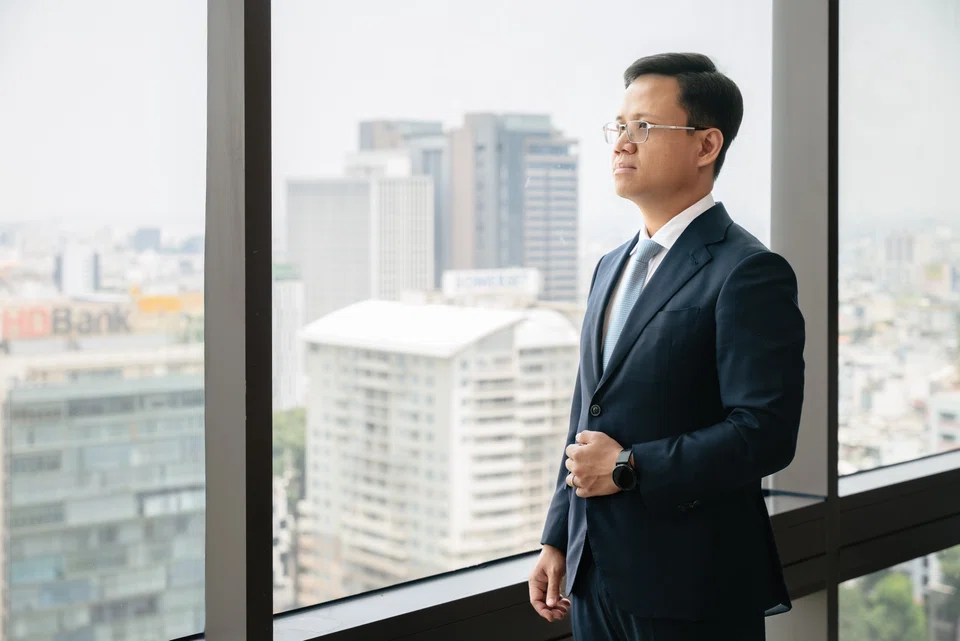
NGUYEN The Duy does not particularly like being described as a young leader.
At 32, the vice-chairman and deputy CEO of Vietnam’s Becamex Group is younger than most executives near the top of a large state-controlled corporation. The Ho Chi Minh City government has more than a 95 per cent stake in Becamex.
His election to Vietnam’s National Assembly this year also makes him one of the youngest members of the current five-year legislature.
Duy describes his rise as bringing an “invisible pressure”, but believes executives younger than the norm have the energy, ambition and drive to make the most of the opportunity.
“A lot of people say I’m young, but personally I don’t think I’m that young. I define 60 as old. I’m already 32, which means more than half of that life has passed,” he quipped.
The joke hints at a sense of urgency about Becamex’s future.
Over four decades, the group has helped transform its home base of Binh Duong, just north of Ho Chi Minh City, from an agricultural hinterland into one of Vietnam’s largest manufacturing hubs by developing industrial parks alongside housing, healthcare, schools and transport infrastructure.
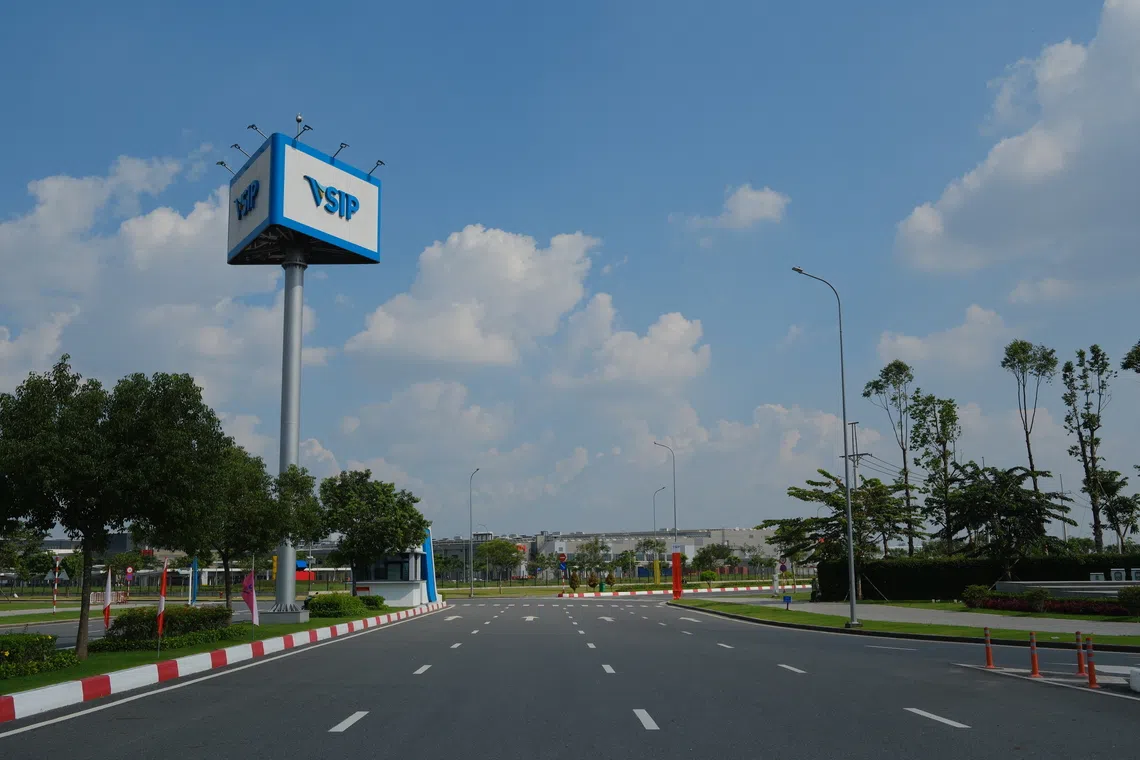
In partnership with Singapore’s Sembcorp, it created Vietnam-Singapore Industrial Park, or VSIP, one of the country’s largest industrial platforms. The joint venture now has 30 industrial park projects across Vietnam, with a presence in 19 provinces and cities and tenants from 30 countries and territories.
For Duy, decades-long experience is valuable only if it does not turn into inertia. “If we stay focused on traditional ways,” he warns, “the company will be left behind.”
That view echoes Becamex chairman Nguyen Van Hung’s remarks to The Business Times in an interview in March: Renewing the group also means building a management team capable of adapting as the business evolves.
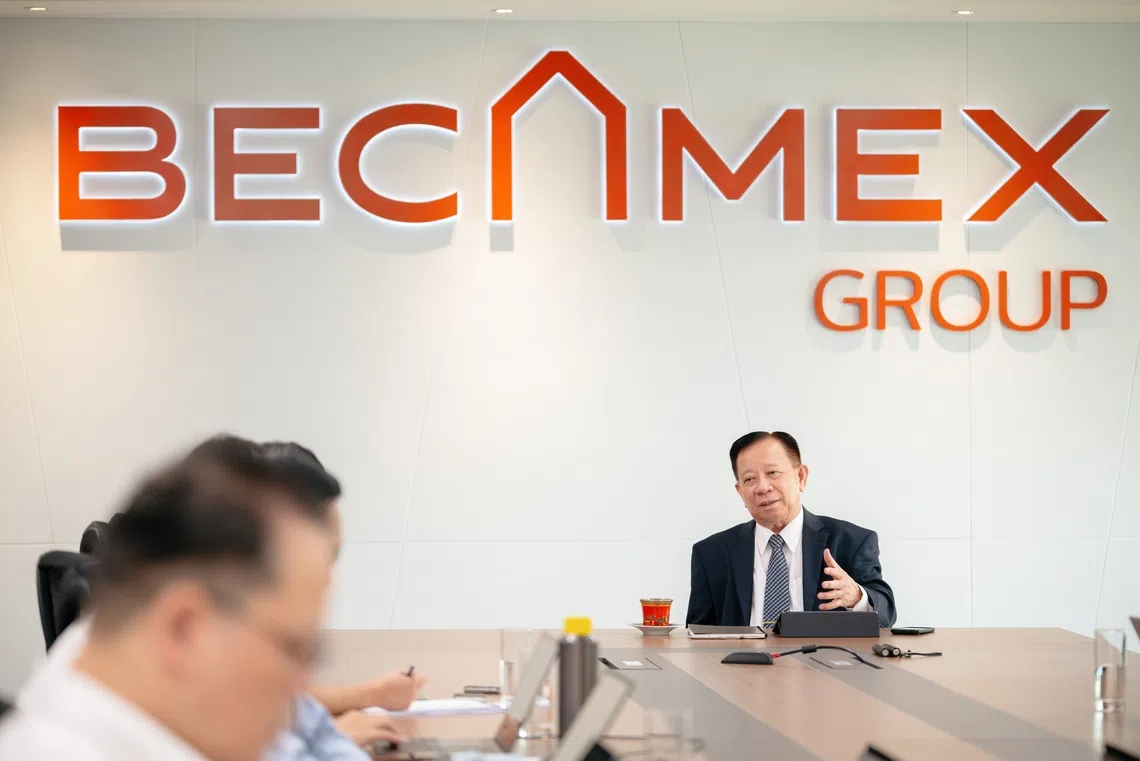
From marketing employee to the board
Born in 1994 and raised in Binh Duong, Duy joined the company in 2017, initially working in its marketing department.
The team was responsible for attracting foreign investment into Becamex’s dense network of industrial parks as well as looking after companies already operating there.
For years, one of Becamex’s greatest strengths was identified as land banks, with analysts pointing to those strategic reserves as a multi-year growth driver for the group.
But Duy argues that land alone is no longer enough.
A new generation of high-value manufacturers, including those diversifying production beyond China, is looking beyond space and cost and increasingly demanding smarter industrial parks, eco-friendly standards and access to renewable energy.
Cost-sensitive industries requiring large factory footprints, meanwhile, are now increasingly moving towards areas such as central Vietnam, where industrial land is cheaper, the vice-chairman added.
“For areas close to Ho Chi Minh City, I see a very big opportunity in higher-value industries,” he noted. “They require science and technology and, especially, green electricity.”
For example, the next generation of VSIP parks, dubbed “VSIP 2.0”, is designed with sustainability and digitalisation built in from the outset.
Reinventing state-owned group
Duy’s nearly decade-long career at Becamex has also coincided with a broader structural shift inside the state-owned group.
In his early days there, he remembers sometimes spending almost an entire working day circulating paperwork for approvals. Documents had to be printed, carried from one executive to the next, signed and eventually stamped.
And if the process stalled halfway through, “you went back to the beginning”.
He had studied and worked in the US before returning to Vietnam, and confessed that he had “a few preconceived notions” about joining a company with such entrenched processes and heavy state ownership.
Those impressions, however, began to change when he started working with multinational companies from the US, Japan, South Korea and Taiwan operating across Becamex’s industrial parks.
Although the group remained state-controlled, Duy said its leaders adopted a “global mindset” – both to deal with foreign manufacturers and to keep pace with new industries.
At the same time, Becamex itself was becoming more market-oriented. It became a joint-stock company and subsequently listed on the Ho Chi Minh City Stock Exchange (HoSE) in 2020, bringing higher expectations around disclosure, transparency and corporate governance.
The group later set up a dedicated digital-transformation unit and shifted more processes online. Executives travelling abroad could approve documents remotely.
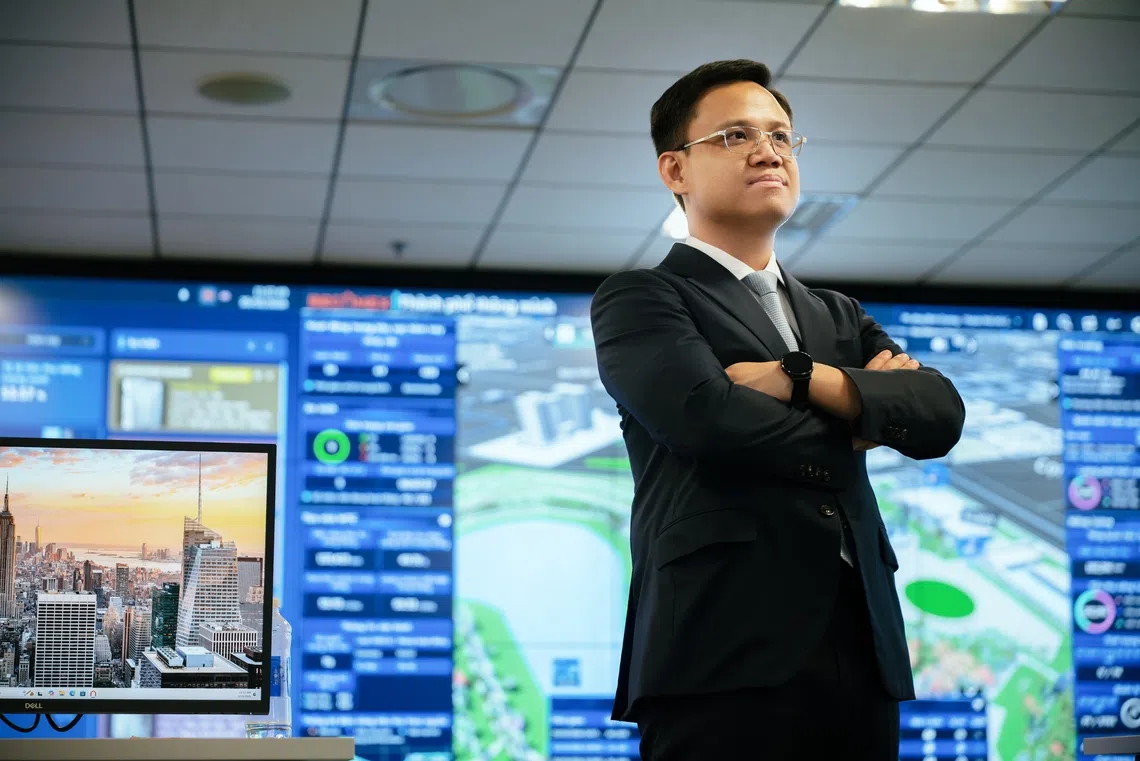
Internal digitalisation then expanded to the industrial parks and how they were run. The group uses integrated operation centres, or IOCs, to monitor areas such as energy and wastewater.
Duy said the centres reduce the need for some manual inspections, but he sees another benefit whenever prospective foreign manufacturers visit. “Becamex’s information and numbers are very transparent,” he said. “So they (investors) have a lot of confidence.”
Duy is now involved in studying a broader enterprise resource planning system that could eventually connect the parent to about 20 member companies.
“At the next stage, we can think in the direction of Becamex being like a holding,” he said.
Instead of generating most growth directly through industrial and urban development at the parent, Becamex could increasingly invest through subsidiaries, associates and joint ventures in a wider range of industries, Duy added.
He stressed that this direction has not been finalised by the board. But the economics already point that way.
From 2020 to 2024, profit from affiliates – led by VSIP – generated nearly two-thirds of Becamex’s average net income.
In 2025, Becamex’s total income rose 33 per cent to 9.82 trillion dong (US$382 million). Its share of profits from joint ventures and associates increased 35 per cent to 2.63 trillion dong – equivalent to roughly 75 per cent of the group’s consolidated net profit.
It previously floated a potential listing of VSIP. Also, BW Industrial – a major developer of ready-built factories and warehouses in which Becamex holds roughly 24 per cent – is reportedly targeting an initial public offering in Vietnam in 2027, according to Nikkei Asia.
The capital test
One challenge is that Becamex must reinvent itself while financing an increasingly ambitious investment pipeline.
The group is considering major highway and road projects with a combined investment of around 65 trillion dong, alongside a separate 550-trillion dong proposal for high-speed passenger and freight rails.
Management also outlined an ambition to reach a market capitalisation of US$15 billion to US$20 billion by 2030 at its 2026 annual shareholder meeting, up from roughly US$1.5 billion currently on HoSE.
Yet the group’s attempts to raise fresh equity have repeatedly stalled.
Becamex’s planned 20.88-trillion-dong auction in 2025, intended to fund VSIP, other industrial parks and power joint ventures, was postponed as market conditions deteriorated following US President Donald Trump’s “Liberation Day” tariffs.
It later considered a smaller equity sale of at least 7.5 trillion dong, but that proposal also did not proceed.
The decline in Becamex’s share price has added to its fundraising challenges. By November 2026, the counter was trading at roughly half the starting price set for the postponed 2025 auction.
“The capital increase had to be postponed so that we could wait for a better time to raise funds, as well as bring in investors with real experience to accompany Becamex,” Duy said.
“The road map to reduce state ownership will continue,” he added. Becamex aims to cut the state’s stake to as low as 65 per cent by 2030 through public share offerings.
“Internally, Becamex will have to pay even more attention to standardisation, public disclosure and transparency,” Duy pointed out.
Bringing in outside capital and strategic investors will enable the group to take on “larger projects with greater value and impact”, he added. THE BUSINESS TIMES
Three questions with Becamex vice-chairman and deputy CEO Nguyen The Duy
Q: Was there a pivotal moment that changed your approach to leadership?
What has stayed with me most is Becamex’s idea of always innovating in order to develop. Even when we brought in external consultants to revisit the brand, vision, mission and slogan, that idea remained. For me, leadership means you cannot stop changing.
Q: What is one piece of unconventional wisdom you believe that most business schools might tell you is wrong?
Development should always be connected with local people and employees. There were periods, especially during Covid, when the direction from the company’s leaders was that people and the local community had to come first rather than revenue or profit.
Q: When you feel burnout creeping in, what non-business activity or routine reliably resets your focus?
I normally drive long distances by myself. When I drive, my mind stops focusing on a problem because I have to concentrate on the road. I also like observing infrastructure and how different places develop. It reduces stress and gives me space before making an important decision.
TRENDING NOW

What shattered Crystal Jade? How the culinary empire shrank from 120 to just 9 outlets

As Indonesia picks new vice-president to succeed Gibran, investors see risks and opportunities

South-east Asia has lost Nvidia’s best salesman

Beyond the greenback, Vietnam’s big borrowers turn to Asian-currency bonds

