‘Billion-dollar business’ plan: DFI to expand Starbucks footprint in Thailand, Vietnam
DFI will also have full operational control of operations in Singapore, Hong Kong, Cambodia, Macau and Laos

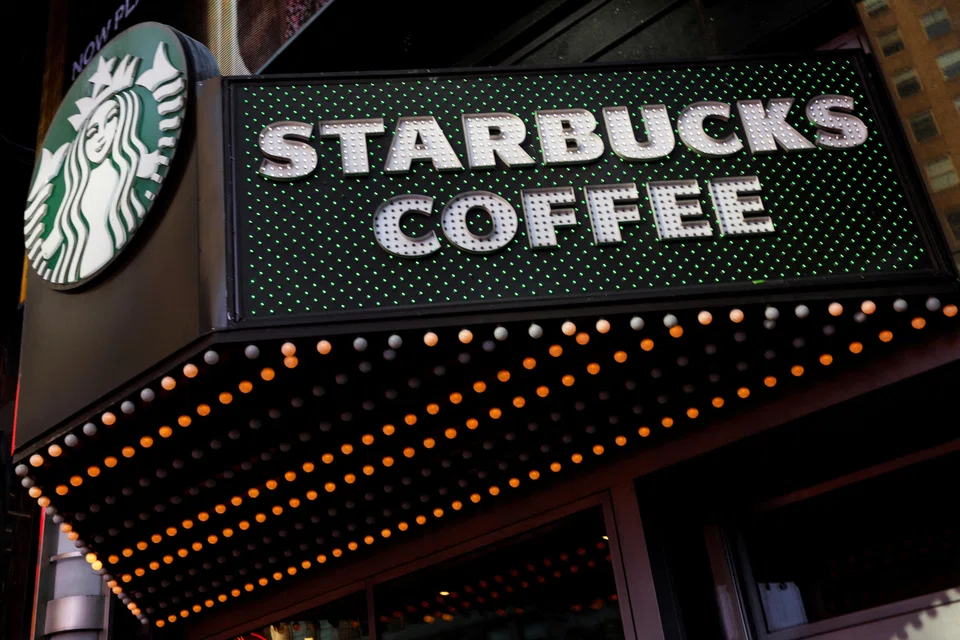
[SINGAPORE] DFI Retail Group will expand Starbucks’ footprint in Vietnam and Thailand as it works towards turning its licence for the American coffee chain into a “billion-dollar business” within the next three years.
The retail company will open 250 more stores, primarily in these two “high-growth coffee markets”, with the aim of making Starbucks its second-most profitable business, said Wu Kaizhi, chief financial officer of the mainboard-listed company.
He was speaking to investors and analysts on Thursday (Oct 1) morning, a day after DFI announced a reorganisation of its 50-50 joint venture (Maxim’s Caterers) with Hongkong Caterers.
DFI will take on the full interest of Maxim’s Caterers’ Starbucks-licensed business.
The business comprises a network of more than 1,100 coffee houses in Thailand, Hong Kong, Singapore, Vietnam, Cambodia, Macau and Laos.
Last year, the Starbucks-licensed business reported revenue of US$746 million with an underlying operating margin of 7 per cent.
Capital expenditure for the new stores is estimated to be between US$90 million and US$100 million over the three years, or about 3 per cent of the business’s annual regional revenue.
Investors seemed positive on the move, with the counter gaining as much as 7.5 per cent to US$3.43 in early trade on Thursday. DFI pared some gains by the close, finishing 6.6 per cent higher at US$3.40.
Low-cost competition
Based on Euromonitor data cited by DFI, South-east Asia’s specialist coffee and tea market totalled US$3.8 billion in 2025 and is projected to expand at a 5 per cent compound annual rate (CAGR) through 2030.

The expansion comes as mainstream coffee operators face increased pressure from competitors across Asia.
“Regional consumers remain under pressure with intense competition from fast-growing Chinese chains,” said DBS in a Thursday note, pointing to operators such as Luckin Coffee – which has opened 103 Singapore stores in nearly four years – and Chagee.
Rather than engaging in price wars, DFI plans to maintain Starbucks’ premium positioning, said Andrew Wong, chief executive of DFI Ikea and a former executive at regional chain Pacific Coffee. He will also oversee the Starbucks business for DFI.
To achieve a targeted 6 to 7 per cent annual revenue growth rate for the licensed business, DFI aims to increase average customer spend across the entire day, rather than only in the mornings.
Still, DBS was cautious about DFI’s target, stating that expectation may face “investor scrutiny, particularly given the increasingly competitive market backdrop”.
It maintained a neutral view on the reorganisation, with a “buy” on the stock and a US$5 target price.
Menu overhaul
The company will introduce dedicated category menus for matcha, chai and functional beverages such as protein drinks, alongside expanding Starbucks’ Teavana tea brand.
Starbucks outlets will also add premium all-day snacking, savoury items and grab-and-go options.
DFI will adapt food offerings to regional tastes by drawing on consumer data from its network of more than 3,000 7-Eleven stores across Singapore, Hong Kong, Macau and Guangdong, including cross-brand partnerships with local bakeries.
In diverse markets such as Hong Kong, DFI will execute a two-tier strategy: preserving Starbucks as a high-end in-store experience while offering low-cost convenience coffee through its 7-Eleven network.
Financial impact
The acquisition will help to lower operating expenses by integrating Starbucks into its regional retail infrastructure across five shared Asian markets, said DFI’s management.
For instance, the company will combine bulk raw food purchasing with its grocery and convenience divisions while utilising existing regional distribution networks. Real estate costs will be addressed by negotiating joint lease terms with landlords across shared markets and developing side-by-side store locations.
The transaction is part of a broader reorganisation of the 40-year joint venture between DFI and Hongkong Caterers.
As part of the deal, Maxim’s will buy back the 50 per cent indirect stake that DFI currently holds in the joint venture. The consideration for the share repurchase will be the entire equity interest in the Starbucks-licensed business, in addition to about US$340 million in cash paid to DFI.
The transaction will initially dilute DFI’s earnings per share because the company will stop equity-accounting for Maxim’s core restaurant and mooncake businesses.
However, the dilution will be mitigated through the cash consideration from Maxim, as well as other value-accretive mergers and acquisitions, said Wu.
“And with the margin accretion from Starbucks, we have greater confidence in achieving our 5 to 7 per cent overall operating margin target by 2028,” he added.
To distribute cash flows, DFI will increase its ordinary dividend payout ratio from 70 per cent, to 80 per cent starting in 2027.
It will return excess capital to shareholders, including possibly in the form of a special dividend, if it does not find an appropriate target to reinvest the cash consideration from the deal in the medium term, added Wu.
Decoding Asia newsletter: your guide to navigating Asia in a new global order. Sign up here to get Decoding Asia newsletter. Delivered to your inbox. Free.
Copyright SPH Media. All rights reserved.