Boustead Projects eyes larger overseas revenue share with Malaysia, Vietnam expansion
It wants 25% to 33% of sales to come from abroad within five years

[SINGAPORE] Boustead Projects is aiming to derive a more stable 25 per cent to 33 per cent of its engineering and construction (E&C) revenue from overseas markets over the next five years, as it steps up expansion in Malaysia and Vietnam.
The Singapore-based industrial real estate solutions provider is also targeting S$500 million to S$700 million in new construction orders annually.
Overseas markets currently contribute between 10 per cent and 30 per cent of its E&C revenue. The company hopes to achieve a more consistent overseas contribution of 25 per cent to 33 per cent over a larger revenue base.
The company said that its E&C and real estate businesses would serve as “twin engines” of growth under the plan. Its real estate division intends to expand its recurring income base through a regional portfolio, while using UI Boustead Reit, which listed in March this year, as a platform to recycle capital from stabilised assets into new developments and investments.
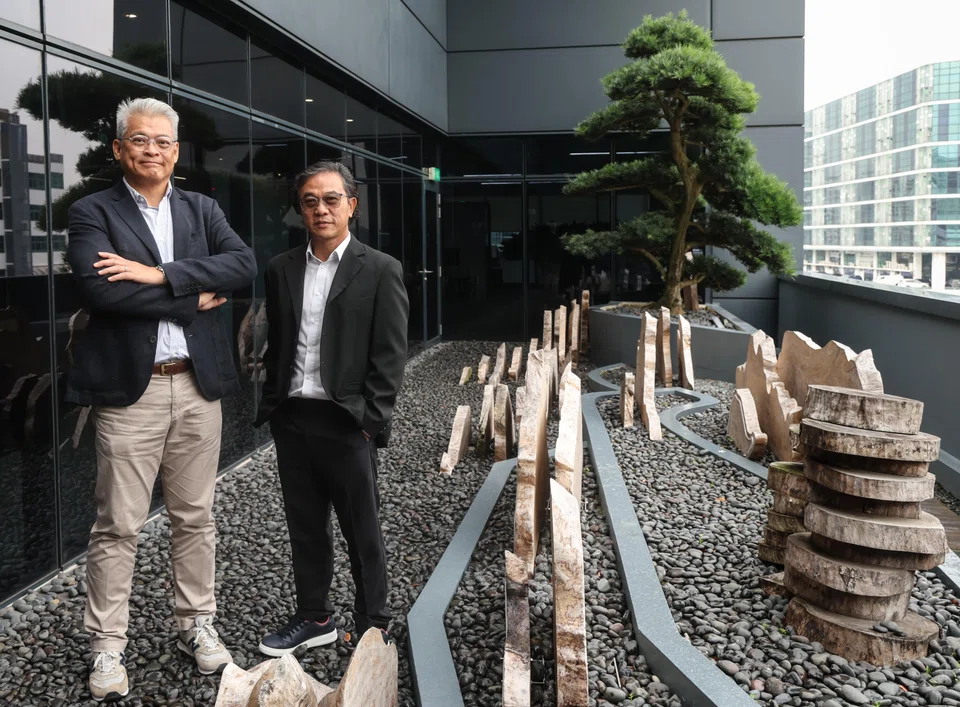
“We’d like to de-risk our concentration in Singapore,” said Thomas Chu, managing director of engineering and construction at Boustead Projects, in an interview with The Business Times as the company marks its 30th anniversary this year.
As Singapore becomes increasingly costly, some industries are moving overseas while new, higher-value industries are establishing operations here, Chu noted. This has created opportunities for Boustead Projects to follow its customers into regional markets.
While the company has an established track record overseas, its projects were previously undertaken on a more opportunistic basis.
It now intends to pursue a more deliberate expansion strategy, targeting higher-value industries such as semiconductors, pharmaceuticals, aerospace and data centres.
Strengthening regional presence
In Vietnam, the company is focusing on industrial provinces surrounding Ho Chi Minh City and Hanoi, such as Dong Nai and Bac Ninh, which have established industrial infrastructure, skilled labour pools and a presence of multinational manufacturers.
Boustead Projects also plans to strengthen its regional engineering capabilities, with teams in different markets potentially supporting one another on projects. For instance, engineering and building information modelling capabilities in Vietnam could eventually support construction projects in Malaysia and elsewhere in the region.
In Malaysia, Boustead Projects’ construction business is headquartered in Kulai, Johor, placing it within the broader Johor-Singapore Special Economic Zone (JS-SEZ) ecosystem. It will also pursue opportunities in Penang, Melaka and the Greater Kuala Lumpur region, depending on client requirements.
The company expects additional opportunities arising from the JS-SEZ to materialise over the medium to long term.
In November 2024, Boustead Projects’ Malaysian subsidiary BPX secured a contract worth about RM300 million (US$73.6 million) to construct a four-storey data centre, alongside an adjacent substation, pumphouse and cooling systems. The project has since been handed over to the client, the company said.
“These are some of the examples that we’ve opportunistically done in Malaysia, and now we are hoping to replicate what we do best here in Singapore to target high value customers in the region,” explained Chu.
Disciplined growth
Boustead Projects’ expansion plans come amid a substantial increase in its construction order backlog, which stood at over S$740 million as at May 2026. This was more than double the S$274 million reported for H1 FY2026 ended Sep 30, 2025, and more than three times the S$223 million recorded for FY2025.
The company expects outstanding contracts to be delivered over the next 12 months to 24 months on average. Recent wins included a contract worth more than S$400 million for a public-sector office development in April.
A significant proportion of the order backlog remained in Singapore, with technology and healthcare or pharmaceutical companies among its main clients in FY2026.
For FY2026 ended March, Boustead Projects’ revenue rose 70 per cent year on year to S$228.2 million, while operating profit edged up 6 per cent to S$9.3 million.
Chu expects construction activity to remain robust over the next two years, supported by public-sector projects and continued investments in advanced manufacturing.
Singapore has forecast construction demand of S$47 billion to S$53 billion in 2026, followed by annual demand of S$39 billion to S$46 billion from 2027 to 2030.
In the industrial sector, Chu pointed to a pickup in semiconductor investments, driven partly by growing demand for artificial-intelligence technologies.
“There’s a sudden surge because of the AI demands,” he said, noting that investments by major chip manufacturers are also drawing supporting industries and suppliers into Singapore.
Chu cautioned, however, that “the industry is very cyclical”, with demand for new facilities fluctuating alongside semiconductor investment cycles.
Manufacturers are also demanding faster delivery of new facilities. Once semiconductor companies decide to establish operations in a market, “they would like the facility to be out by tomorrow”, he added.
Boustead Projects also pointed to intensifying competition and rising costs in the construction sector. It is prioritising disciplined project selection and margin resilience, rather than pursuing aggressive order-book expansion.
“The objective is not simply to increase revenue,” Chu explained. “It is to establish sustainable sources of revenue and maintain a healthy network of opportunities across our target markets and sectors.”
Manpower remains one of the industry’s biggest challenges, even as construction companies increasingly adopt digital technologies to improve productivity. “We are essentially a construction company. It’s brick and mortar, we still need people with hands and trades, good tradesmen, to actually do the work,” he said, adding that getting subcontractors and vendors to adopt new digital processes is another challenge.
Boustead Projects’ regional plans come as it marks three decades in Singapore’s industrial property sector.
Established in 1996 as a design-and-build specialist, the company has since evolved into an integrated real estate solutions provider with capabilities spanning construction, development, investment, asset management and fund management.
To date, it has constructed or developed more than 3.8 million square metres of real estate across the region. Its business has also evolved alongside Singapore’s manufacturing sector and become increasingly specialised.
Chu said that Boustead Projects has built facilities for three of the world’s leading semiconductor equipment manufacturers, alongside developments for pharmaceutical companies.
For Steven Koh, Boustead Projects’ senior director of engineering, the industry’s transformation is particularly evident in how industrial buildings are designed and constructed.
Koh, who has been with the company for 27 years, recalled how construction projects previously relied heavily on paper drawings and physical coordination meetings. The company now uses technologies such as prefabrication and AI to reduce the need for labour-intensive construction work and improve productivity.
Three decades of change
For Chu and Koh, who have spent almost their entire careers with Boustead Projects, the company’s evolution has been closely intertwined with their own professional journeys.
Chu joined in 1997, when Boustead Projects was only about a year old. At the time, the company had a small team, and employees were expected to take on responsibilities across different aspects of the business. “We started off with a handful of guys in the office,” Chu recalled. He initially expected to take on a site engineering role, but found himself working across project management, business development and aspects of real estate development.
One of the projects that stands out in his career was Boustead Projects’ involvement in two major Rolls-Royce developments at Seletar Aerospace Park around 2011. These comprised a fan blade manufacturing facility – Rolls-Royce’s first outside the United Kingdom – and a test cell facility capable of testing Trent 900 engines used on the Airbus A380.
Koh, meanwhile, recalled entering the construction industry at a time when securing a livelihood was his immediate priority. He cited early build-and-lease developments and ramp-up warehouses at Airport Logistics Park as milestones that helped broaden the company’s industrial property offering.
Yet even as Boustead Projects embraces new technologies and pursues opportunities overseas, attracting and retaining younger engineers remains a challenge.
Chu noted that industrial developments often receive less recognition than iconic buildings, despite the sophisticated engineering involved. This makes it harder to attract young professionals to the sector, some of whom leave the industry after graduating, he said.
Koh similarly highlighted the difficulty of attracting “new blood” to industrial construction, which he said is often perceived as dirty and physically demanding work.
Chu said that Boustead Projects hopes to make careers in industrial construction “more interesting, more structured” for younger employees, while offering greater opportunities for professional development.
Its regional expansion could also provide staff with opportunities to gain experience across different markets, he added.