



That ‘cheap’ Malaysia condo could cost Singapore buyers far more than they think
A weaker ringgit may boost appeal for foreign buyers, but experts say taxes, financing rules and resale liquidity matter

[KUALA LUMPUR] The ringgit may make Malaysian homes seem cheap to Singapore-linked buyers, but experts warn that relative affordability should not be mistaken for real value.
In Singapore dollar terms, a RM1 million (S$323,711) or RM1.5 million Malaysian home can be attractive. But experts say that comparison quickly breaks down once foreign buyer thresholds, state consent requirements, legal charges, financing limits, taxes and exit liquidity are factored in.
The arithmetic has become less forgiving since Jan 1, 2026, when Malaysia doubled the flat stamp duty on residential property transfers involving non-citizens and foreign companies to 8 per cent.
Permanent residents are exempt from the higher foreign-buyer levy and continue to pay the tiered rates.
And when it comes time to sell, the buyer pool could also narrow sharply.
The hidden cost behind the price tag
Before asking whether a Malaysian property is cheap, overseas buyers should first find out what it will actually cost to own one.
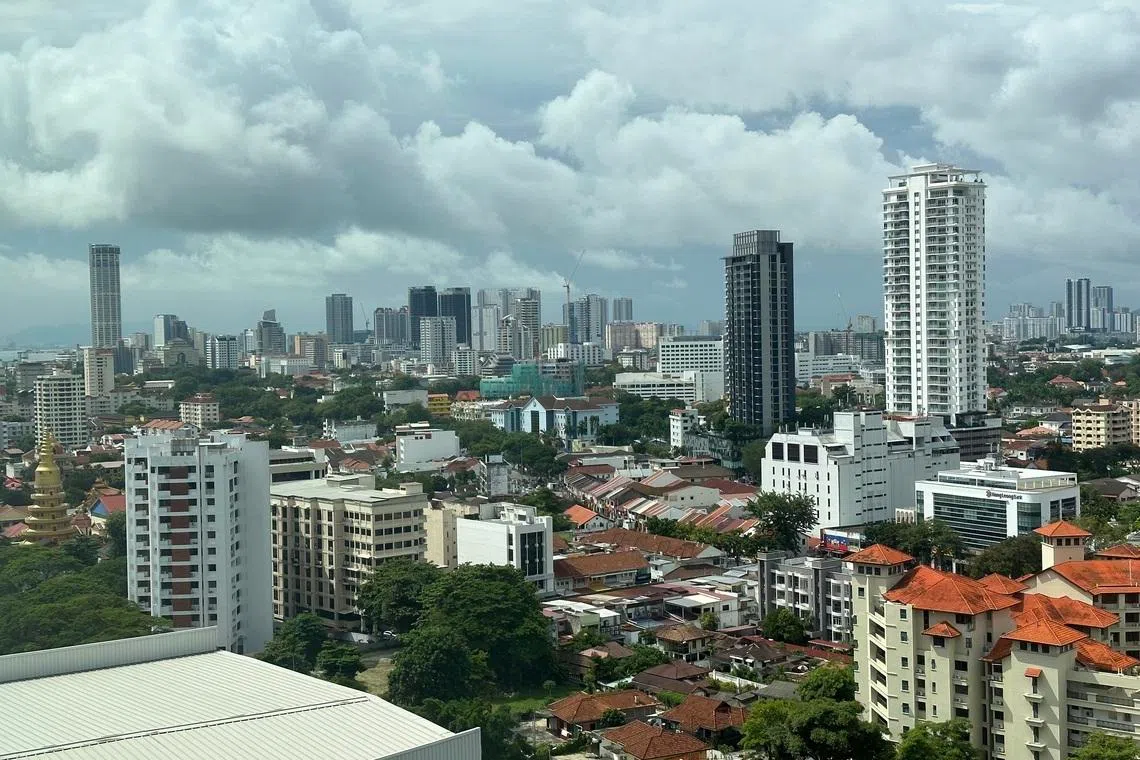
George Miranda, partner at law firm Miranda & Samuel and author of the book Property Law, told The Business Times that foreign buyers are effectively shopping in a different lane from locals in Malaysia’s residential market.
The brochure price, he said, should be treated only as a starting point.
State-level minimum purchase thresholds push foreign buyers towards higher-value properties, while consent rules and other restrictions further narrow the pool of homes available to them.
Under the National Land Code, any disposal of land to a foreign national requires state authority consent – a substantive requirement rather than a mere formality.
That gap has widened since January, when Malaysia imposed a flat stamp duty on residential property purchases by non-citizens and foreign-owned companies.
On a RM1.5 million property, that translates to RM120,000 in stamp duty on the transfer alone, compared with about RM44,000 under the tiered rates applicable to Malaysian citizens for the same transaction.
Once state consent fees, legal charges, valuation and registration are added, a foreign buyer’s total acquisition cost can run 8 to 11 per cent above the headline price, Miranda said.
“That RM1.5 million property may land closer to RM1.6 million in outlay.”
The asymmetry extends to the exit. Foreign buyers face a 30 per cent Real Property Gains Tax (RPGT) within the first five years of ownership. A RM300,000 gain in the third year would mean RM90,000 in tax before agent fees and other transaction costs are even factored in.
“When locals are buying at RM400,000, and you buy at RM1 million, you are paying more than double. When you want to sell, you are going to have problems because there are no buyers at that level.”
Faizul Ridzuan, founder of FAR Capital
Taken together, Miranda’s examples show how quickly the costs add up. A foreign buyer purchasing a RM1.5 million property, holding it for three years and selling at a RM300,000 profit could face about RM210,000 in combined stamp duty and RPGT, before agent fees and other transaction expenses.
The rate subsequently falls to 10 per cent after the fifth year, while Malaysians pay no RPGT after six years – a difference that materially alters the return profile for foreign owners.
Financing can change the equation further. Banks typically offer foreign buyers loan margins of 60 to 70 per cent, requiring more upfront capital and reducing the effect of leverage.
That turns the purchase from a simple currency play into a test of holding power. A weaker ringgit may make the entry price look appealing, but buyers still have to absorb a larger cash outlay, higher transaction costs and, in some locations, a thinner resale pool when they exit.
Miranda also flagged a timing risk. For stamp duty purposes, the key date is when the transfer instrument is executed, not when the sale-and-purchase agreement (SPA) is signed.
Buyers who signed SPAs in late 2025 may therefore need to check whether their transfer instruments fall under the new rate if they are executed from Jan 1, 2026.
Reading the tiers correctly
Faizul Ridzuan, the founder of FAR Capital – a property investment firm that negotiates bulk purchases of unsold developer stock – told BT that many Singapore-linked buyers apply Singapore price instincts to a market shaped by different income levels, buyer behaviour, liquidity and exit conditions.
His framework divides the market into three broad tiers:
- Tier 1 locations – including expatriate-heavy Mont Kiara and the well-connected Mid Valley commercial and retail district in Kuala Lumpur – are where local and foreign demand overlap, making resale liquidity more resilient.
- Tier 2 covers established upper-middle-class neighbourhoods – such as Taman Tun Dr Ismail, a mature residential suburb in the capital – popular with affluent local families, but where foreign demand is thinner.
- Tier 3 comprises outlying or more industrial-heavy corridors such as Semenyih and Rawang – areas farther from Kuala Lumpur’s core that have seen significant new housing supply in recent years.

The risk, he said, lies in paying a premium price for the wrong tier.
“When locals are buying at RM400,000, and you buy at RM1 million, you are paying more than double. When you want to sell, you are going to have problems because there are no buyers at that level.”
He added: “Buying a Tier 2 property at a Tier 1 price is exactly how people lose money.”
He said the key variable is not whether a property appears cheap after currency conversion, but whether the entry price leaves room for rental yield and eventual resale.
“If you pay RM1 million – thinking it is a discount – you still lose money,” he warned. “But if you enter at the right price point that the local market can actually support, you make money.”
Tale of two cities
Non-citizens remain a small part of Malaysia’s residential market. They account for about 1 per cent of residential transactions, based on the National Property Information Centre’s Property Market Report 2025.
But Ho Hon Sang, president of the Real Estate and Housing Developers’ Association Malaysia, said their economic weight is larger than that share suggests.
Singapore-linked buyers tend to focus on two Malaysian markets: Johor Bahru and Kuala Lumpur. However, the two markets behave differently, noted Adrian Yeoh, executive director of international project marketing at Knight Frank Property Hub.
Johor Bahru is the stronger volume market, supported by affordability, improving connectivity and the economic momentum surrounding the Johor-Singapore Special Economic Zone.
Kuala Lumpur, meanwhile, attracts more selective demand – concentrated in prime corridors such as Kuala Lumpur City Centre, Tun Razak Exchange and Bukit Bintang.
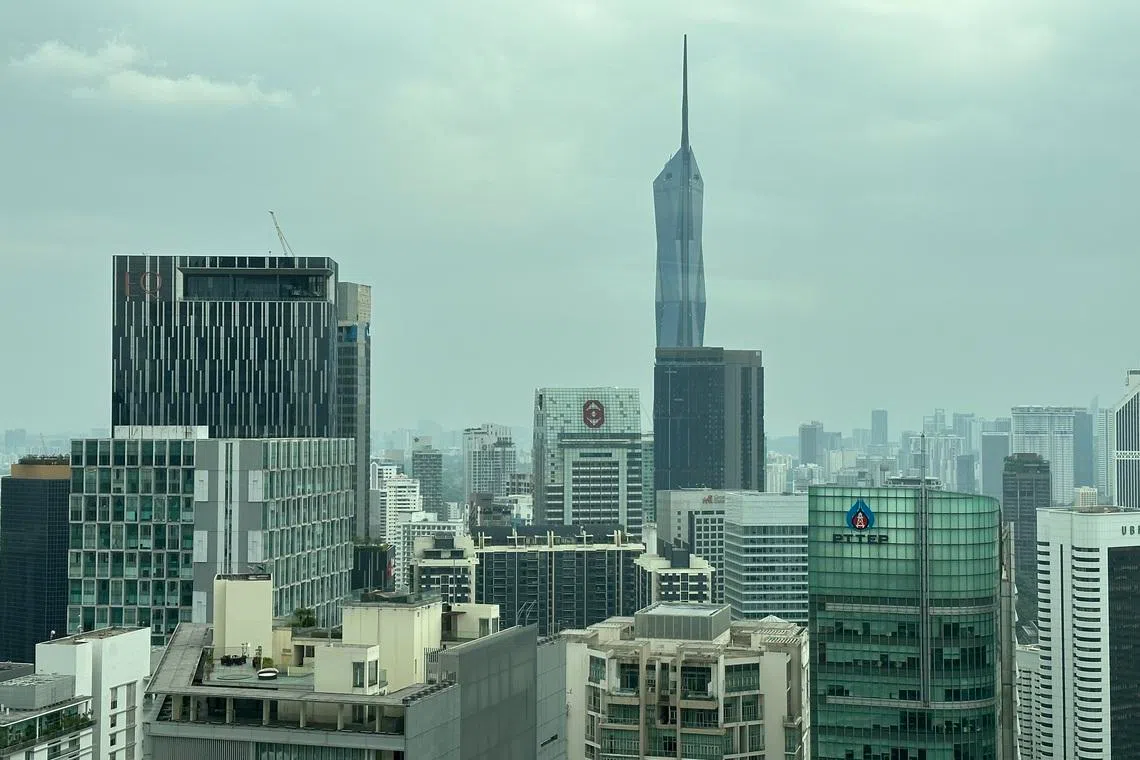
But Yeoh cautioned that currency-driven comparisons are no substitute for investment analysis.
The more relevant concern is whether a property is fairly priced within its local market, taking into account domestic demand, income levels, supply and exit liquidity.
Investor-heavy high-rise corridors – particularly serviced apartments and small office/home office units in supply-heavy parts of Kuala Lumpur and Johor Bahru – are where buyers most often overestimate liquidity.
“Liquidity is real, but it is location-specific, segment-specific and price-specific,” he said.
Infrastructure helps, but not everywhere
The cross-border housing story is no longer just about investors betting on Johor’s next property cycle.
More than 300,000 Malaysians commute daily between Johor and Singapore, a significant portion of whom currently rent in Singapore at high monthly costs. As connectivity improves, the case for owning in Johor while working in Singapore may become increasingly practical.
The Johor Bahru-Singapore Rapid Transit System Link is scheduled to commence operations in January 2027, with a travel time of around six minutes one way.
“This is not speculative demand,” Yeoh said. “It is an existing base of users responding to improved infrastructure and cost dynamics.”
What has changed the most is buyer intent, he noted. Earlier cycles were driven more by short-term transactions and flipping activity. Today’s buyers are more focused on long-term usability, location and fundamentals.
For Johor, that distinction matters. Infrastructure can support demand where there is already a real user base. But it does not automatically rescue projects priced or marketed mainly around speculative foreign buying.
For buyers who are willing to look beyond currency conversion and assess full entry, holding and exit costs, Malaysia remains a market with depth and legal clarity.
For those who are not, a weaker ringgit could open the door – though it does not guarantee a profitable exit.
TRENDING NOW

Stocks to watch: Clar, Seatrium, Sheng Siong, MPACT, NetLink NBN, Starhill Global Reit

Singapore government slaps loan curbs on individual private-hire car buyers

If Europe goes to war, the fallout will be felt in East Asia

DBS denies rumours of Indonesia unit merging with Bank Central Asia; analysts see sense in a deal

