Fitch cuts Indonesia outlook to negative on policy, fiscal concerns
The revision follows earlier warnings from MSCI and an outlook downgrade by Moody’s

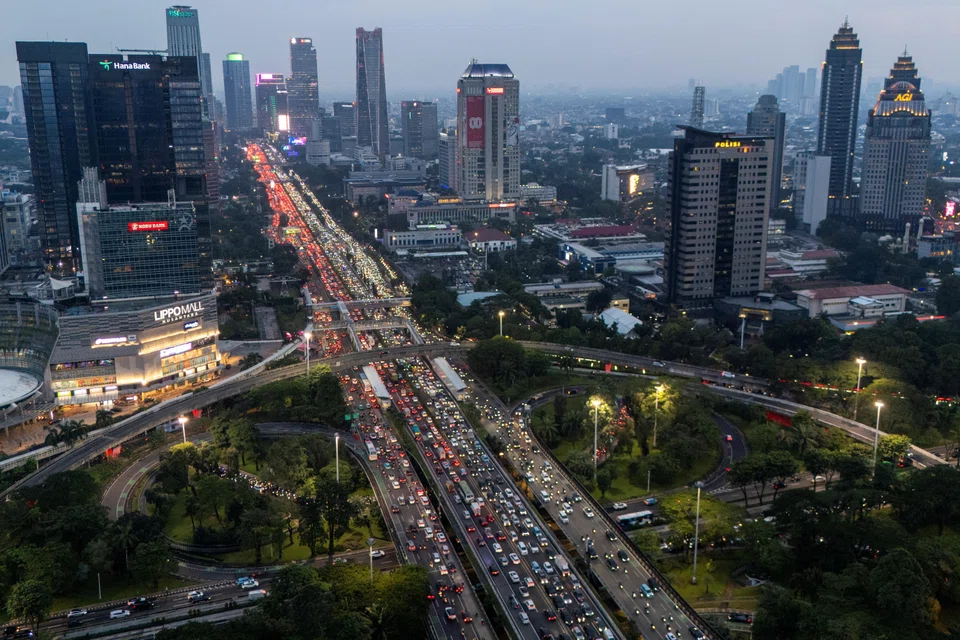
[JAKARTA] Fitch Ratings has cut Indonesia’s sovereign credit outlook to negative from stable, but affirmed its “BBB” long-term foreign currency rating.
The agency said on Wednesday (Mar 4) that the revision reflects rising policy uncertainty, and concerns over the consistency and credibility of policymaking amid greater centralisation.
The Fitch outlook revision follows earlier warnings from MSCI and a previous outlook downgrade by Moody’s, adding to growing scrutiny from global rating and index providers of Indonesia’s policy and fiscal outlook.
Fitch said the outlook revision reflects concerns that Indonesia’s policy mix could lose consistency and credibility amid a greater centralisation of the country’s decision-making authority.
“Increased risks are illustrated by the government’s inclusion of a review of the State Finance Law in its 2026 legislative priorities,” it said.
The agency expressed concern that revisions to the State Finance Law could loosen Indonesia’s longstanding fiscal framework, including the requirement that the nation’s budget deficit not exceed the statutory cap of 3 per cent of gross domestic product.
Fitch warned that such changes could weaken policy credibility and reduce the government’s ability to finance higher fiscal deficits without support from the central bank.
Indonesia’s government spending has gone up under President Prabowo Subianto, who has flagship programmes to finance, including the US$20 billion free meals scheme.
Ambitious spending not matched by stronger state revenue
However, the ambitious spending has not been matched by stronger state revenue: Last year’s tax collection reached only 87 per cent of the government’s target amount.

Fitch projects that Indonesia’s fiscal deficit will be at 2.9 per cent of GDP in 2026, unchanged from its 2025 estimate but above the government’s target of 2.7 per cent.
The higher projection reflects what Fitch described as “moderate state revenue performance”.
“This reflects our more conservative revenue assumptions based on slower growth projections and only a modest short-term impact from efforts to improve tax compliance,” it added.
On the spending side, Fitch expects efforts to boost economic growth and ease lingering social tensions in the wake of last year’s protests that pushed for higher social expenditure, including spending on the government’s free nutritious meals programme.
“Plans to front-load spending in the first half of 2026 could add risks to the fiscal deficit,” Fitch noted.
Despite these pressures, the agency projects a slight rise in general government debt to 41 per cent of GDP in 2026, well below the projected “BBB” median of 57.3 per cent.
“We expect the debt ratio to remain broadly stable over the medium term, reflecting our baseline assumption that the government will adhere to the fiscal deficit limit.”
Maintaining macroeconomic stability
Responding to Fitch’s report, Indonesia Ministry of Finance spokesperson Deni Surjantoro said the government remains committed to maintaining macroeconomic stability by upholding fiscal discipline in accordance with the mandate set out in law.
He added that the government will step up efforts to improve the business climate through de-bottlenecking measures and deregulation, aimed at boosting investment and accelerating economic growth.
CNBC Indonesia previously quoted Deputy Finance Minister Juda Agung as saying that a Fitch representative had met with Indonesian government officials on Feb 23 to discuss a review of the agency’s outlook.
Jakarta’s benchmark index ended Wednesday’s trading session 4.6 per cent lower, pressured by a broad sell-off in Asian equities triggered by escalating tensions in the Middle East.
Decoding Asia newsletter: your guide to navigating Asia in a new global order. Sign up here to get Decoding Asia newsletter. Delivered to your inbox. Free.
Copyright SPH Media. All rights reserved.