



Fragile Philippines battered by oil shock as Iran war hits Asia
The country also faces threats from a looming El Nino, which risks driving up food costs further
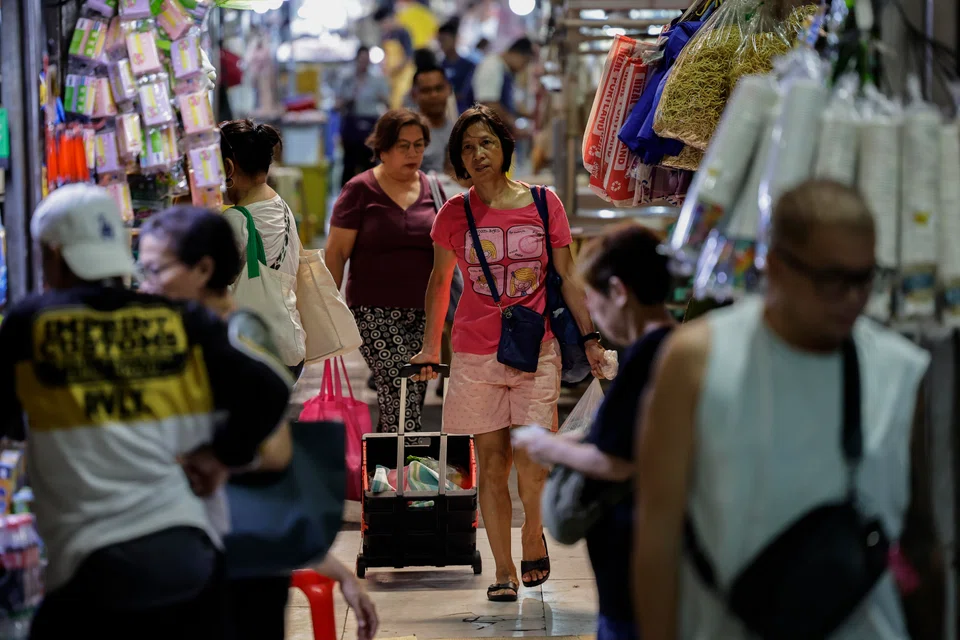
[MANILA] The Philippines is creaking under the weight of Iran war oil shock, with economic growth and consumption grinding to the weakest in more than a decade as inflation soars.
Economic data on Thursday (May 7) revealed how vulnerable the South-east Asian nation is versus its neighbours to the energy choke from the US-Iran standoff, particularly in a region that relies on the Middle East for two-thirds of its oil. Its economy expanded at 2.8 per cent last quarter, below estimates and the slowest pace outside the pandemic since the end of 2009, while household spending was the weakest since 2010.
With inflation running at the fastest in three years, President Ferdinand Marcos Jr and the central bank are left with few easy options to contain the damage. They must spend more to shield households, or tighten policy further after last month’s rate hike.
The country also faces threats from a looming El Nino, which risks driving up food costs further.
To be sure, the Philippines started this year in a weak position, as a massive corruption scandal related to flood-control projects dented confidence and slowed government spending.
“Our growth performance trails Vietnam, Indonesia and China among others in the region,” Economic Planning Secretary Arsenio Balisacan said at a briefing in Manila. “This outcome reflects the combined impact of significant domestic and global challenges.”
The biggest factor was the Middle East conflict, he said. The US-Israeli war on Iran has spiked oil prices globally, but the Philippines is acutely affected because it imports more than 90 per cent of its requirements from the region.
The peso pared gains after the data, while Philippine stocks remained around 2 per cent higher amid a regional rally.
Investment fell 3.3 per cent last quarter, while industrial production edged down 0.1 per cent, according to Thursday’s data. Consumer spending rose 3 per cent from a year earlier, while government expenditure gained 4.8 per cent.

The Philippines is most at risk in the region of stagflation – characterised by weak growth, high inflation and unemployment, according to Lavanya Venkateswaran, senior Asean economist at OCBC in Singapore.
The dismal figures come as the Philippines hosts leaders of the 11-member Association of South-east Asian Nations, which are seeking to bolster cooperation and regional resilience amid the economic fallout from the Iran war.
The region is facing a significant increase in fuel and energy costs, which will eventually feed into agricultural inputs, foods and basic commodities, the Philippines Foreign Affairs Secretary Theresa Lazaro said on Wednesday at the opening of the meetings.
The central bank has little room to support the economy because of peso weakness and surging consumer prices. Meanwhile, growth and investment have slowed dramatically since Marcos announced a probe into the misuse of flood-control funds last year. Gross domestic product for the year slumped to 4.4 per cent, the weakest pace in more than a decade outside the pandemic.
“The lower-than-expected GDP print in the first quarter shows fiscal stimulus is not enough to uplift economic growth, just like during the pandemic,” said Alvin Arogo, head of research and economist at Philippine National Bank. “As such, monetary tightening, which does not address the supply shock, could seriously put at risk the ability of the country’s growth recovery in the coming quarters.”
The corruption controversy continued to weigh on consumer, business and investor confidence in the first quarter, while delays in the passage of the budget slowed the rollout of critical programmes, Balisacan said.
“You can see that clearly in the pattern of consumption growth beginning in the third and fourth quarter, and how consumption growth was sharply slowing down while inflation was going down and interest policy rates were going down,” he said. “Those lingering effects are still felt today.”
The reading “continues to emphasise the double impact of lingering flood control issue and the biggest geopolitical conflict this year”, said Ruben Carlo Asuncion, chief economist at Union Bank of the Philippines. BLOOMBERG
Decoding Asia newsletter: your guide to navigating Asia in a new global order. Sign up here to get Decoding Asia newsletter. Delivered to your inbox. Free.
Share with us your feedback on BT's products and services
TRENDING NOW

LTA proposes combining car COE categories, adding rebate-surcharge system

StarHub to acquire MyRepublic’s mobile business amid ongoing telco consolidation

DBS, OCBC, UOB rout lops billions off STI as inflation, rate concerns spook investors

Grab CEO’s wife Chloe Tong on life with Anthony Tan and finding her purpose

