Fuel price hikes unlikely to spark immediate inflation in Malaysia: economists
Rising fuel prices are manageable now, but a prolonged oil shock could test the country’s fiscal buffer

[KUALA LUMPUR] Malaysia’s latest fuel price hikes are unlikely to trigger an immediate surge in consumer prices, but a prolonged disruption to global oil supply could eventually test the country’s fiscal buffers and inflation outlook, economists said.
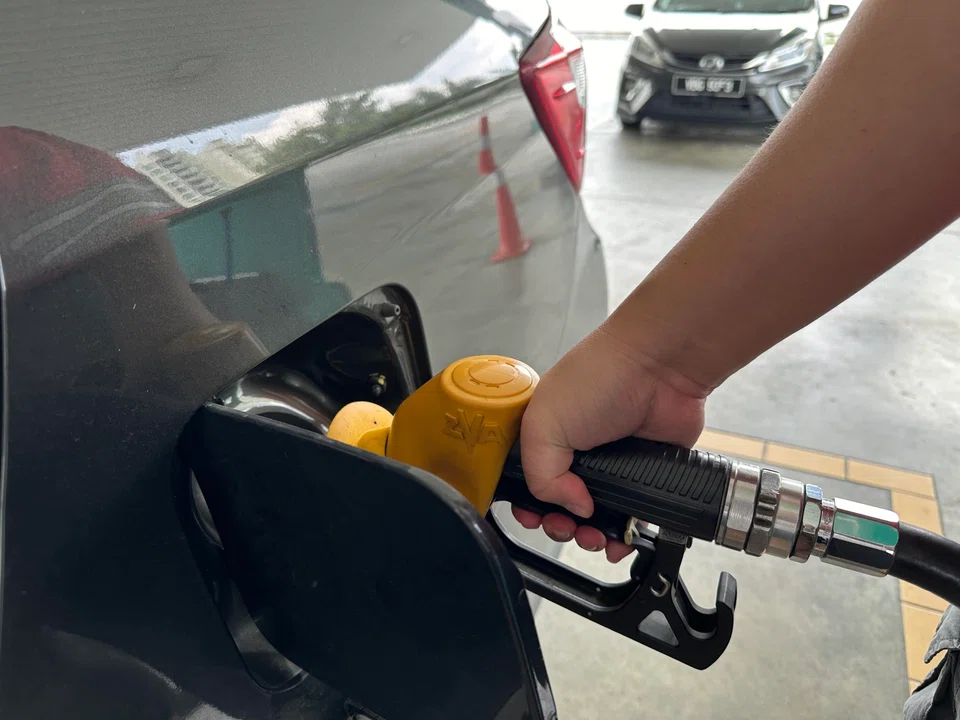
Malaysia on Wednesday (Mar 11) said that the retail price of RON97 petrol would rise by RM0.60 (S$0.19), or 18.5 per cent, to RM3.85 a litre from Thursday. This as the government adjusts domestic fuel prices following a sharp surge in global oil markets driven by escalating tensions in the Middle East.
The price of unsubsidised RON95 petrol will also increase by RM0.60 or more than 22 per cent to RM3.27 a litre. The rate for the first 300 litres of subsidised RON95 petrol for all Malaysians remains unchanged at RM1.99 a litre.
The price of diesel in Peninsular Malaysia, meanwhile, is up RM0.80 at RM3.92 a litre.
The announcement came hours after Prime Minister Anwar Ibrahim said Malaysia’s petroleum supplies remain sufficient to meet domestic demand until at least May, despite rising global oil prices.
Lee Heng Guie, executive director of the Socio-Economic Research Centre, said it is still too early to assess the full impact of the latest fuel price adjustments on consumer goods.
“For now, the situation remains largely status quo as most (businesses and consumers) are taking a wait-and-see approach to... how the situation unfolds,” he told The Business Times.
He noted that the move to raise RON97 prices was aimed mainly at plugging leakages in the subsidy system, such as cross-border arbitrage and the misuse of cheaper fuel.
He added that mitigation measures introduced by the government should help to cushion the immediate impact on households and businesses.
Under current policies, Malaysians can continue purchasing subsidised RON95 petrol at RM1.99 per litre for up to 300 litres a month – a level that Lee said is sufficient for most households. Government data shows that about 14 million users consume less than 100 litres of petrol a month on average.
For businesses, the government’s earlier fleet and diesel card programmes allowed eligible companies to purchase a quota of subsidised diesel at RM2.15 a litre. Allocations varied depending on approved quotas.
“At the moment, we should not see any immediate price hikes simply because of the higher pump prices,” Lee said. However, he warned that global supply disruptions could pose a more direct risk to prices if geopolitical tensions escalate.
“The more direct risk would come from any disruption to the Strait of Hormuz,” he said, noting that higher freight and insurance costs for goods passing through the key shipping route could eventually feed into consumer prices.
Meanwhile, Malaysian airline companies may suspend some flights if the Middle East war causes a sharp rise in fuel costs, which already account for nearly half of their expenses, Transport Minister Anthony Loke said in a Facebook post late on March 12, following consultations with airlines, airport operators, and fuel suppliers.
The ministry will coordinate measures to sustain local carriers, while airlines will share data for risk assessments and meet weekly to respond to the volatile crisis linked to the US-Israeli conflict with Iran.
Oil shock risks
Economists say Malaysia’s economic outlook remains stable for now, although risks could rise if disruptions to global energy supply persist.
UOB senior economist Julia Goh and economist Loke Siew Ting said in a report on Thursday: “With the conflict still under two weeks, we are maintaining our 2026 baseline outlook for Malaysia, including (gross domestic product) growth of 4.5 per cent and inflation of 2 per cent.”
But they also warned that prolonged disruptions, particularly involving Strait of Hormuz, could trigger wider global economic pressures.
“A prolonged shutdown of the Strait of Hormuz lasting more than a month could trigger multi-dimensional disruptions and potentially lead to global stagflation.”
UOB estimates that every US$10-per-barrel increase in Brent crude could raise Malaysia’s headline inflation by about 0.2 percentage point if current fuel subsidies remain unchanged.
However, if the government adjusts subsidised fuel prices or electricity tariffs in line with global energy prices, inflation could rise by between 0.6 and one percentage point for every US$10 increase in oil prices.
In addition, the bank predicts that a US$10 rise in Brent crude prices could reduce Malaysia’s external trade by about 0.7 percentage point. Combined with higher inflation and a weaker ringgit, GDP growth could slow by around 0.5 percentage point.
Beyond fuel price adjustments, Malaysia on Wednesday also announced discretionary spending cuts to sustain the RON95 subsidy.
The measures include restricting non-essential overseas travel for officials, cancelling Hari Raya open houses, and urging ministries, government-linked companies and government-linked investment firms to tighten spending.
Malaysia also increased the Budi Diesel cash aid from RM200 to RM300 per month. A Cabinet meeting scheduled for Mar 13 will review further fiscal options.
Inflation outlook
Separately, MBSB Research said energy prices are expected to rise as tensions involving Iran trigger a surge across global commodity markets.
Higher oil prices could ripple through transportation and manufacturing sectors, complicating the inflation outlook, the research house said.
However, it expects the impact to remain manageable if geopolitical tensions ease.
While headline inflation could experience a short-term spike, MBSB Research projects inflation to rise modestly to 1.8 per cent in 2026, from 1.4 per cent in 2025.
“This level of inflation remains low enough to support steady household spending and resilient domestic demand,” it added.
TRENDING NOW
Incidence of civil servants buying property near unannounced MRT stations ‘a concern’, but may not establish misconduct: PSD
Grab CEO’s wife Chloe Tong on life with Anthony Tan and finding her purpose
Income Insurance appoints former Manulife Singapore top man as new CEO
HDB reviewing ‘jumbo’ flat scheme after Telok Blangah unit listed for sale at S$2.18m