


Asean Business logo
SPONSORED BYUOB logo

Global energy shock tests Philippine lenders’ resilience

They are switching to a defensive stance as new central bank relief measures begin to bite
Summarise
    • BPI's NPL coverage ratio of 87.15% is lower than that of its peers but is balanced by its decision to set aside 5.5 billion pesos in new provisions.
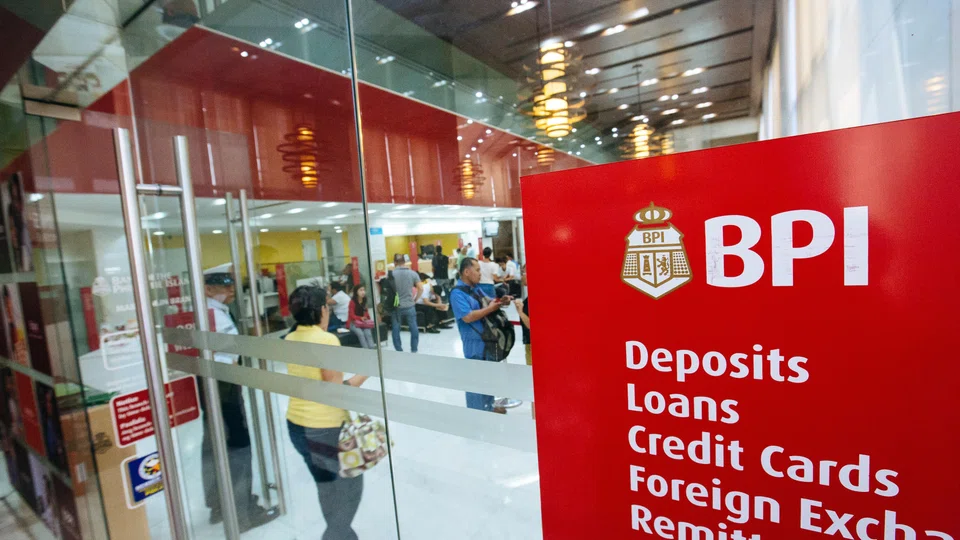
    • BPI's NPL coverage ratio of 87.15% is lower than that of its peers but is balanced by its decision to set aside 5.5 billion pesos in new provisions. PHOTO: BLOOMBERG
    Published Mon, May 18, 2026 · 04:30 PM

    [MANILA] After posting a strong start to 2026, the Philippines’ top lenders are bracing for a potential earnings hit as analysts warn that new energy crisis relief measures from the central bank could weigh on interest income.

    The scenario reveals a shared vulnerability across Asean, where soaring energy costs are increasingly viewed as a driver of credit risk.

    The first-quarter results of the country’s largest banks by assets – BDO Unibank, Bank of the Philippine Islands (BPI) and Metrobank – highlight deep capital reserves, but the impact of energy price shocks precipitated by geopolitical tension in the Middle East threatens to erode the margins that fuelled their record growth.

    Following the government’s declaration of a national energy crisis, the Bangko Sentral ng Pilipinas (BSP) in early April approved measures to prevent a spike in defaults among households and businesses facing higher utility and fuel costs.

    The resolution includes a loan repayment moratorium of up to six months for certain borrowers and up to 12 months for those in the agriculture sector.

    Banks may also exclude loans from being classified as “past due” or “non-performing” for up to a year to prevent an immediate technical deterioration in their balance sheets.

    Banks’ profitability could be hurt

    Analysts warn that the BSP’s crisis response might delay the recognition of bad loans and could cloud the true state of profitability.

    On paper, the measures would prevent a sharp rise in non-performing loans (NPLs), but the trade-off is a weaker earnings outlook, said Nikita Anand, a credit analyst for S&P Global Ratings.

    “Under our base case, NPLs should remain contained as the country navigates a state of emergency,” she said.

    However, she noted that the relief measures may “undermine bank profitability as net interest margins peak and credit losses remain elevated”.

    S&P forecasts that credit losses will be between 1 and 1.2 per cent in the next two years.

    In April, it revised the Philippines’ sovereign outlook from positive to stable, citing the Middle East conflict as a drag on domestic growth.

    BSP maintained that the banking sector’s direct exposures to tensions in the Gulf remain limited, with risks transmitted through “indirect channels such as higher oil prices, inflationary pressures, foreign exchange movements and tighter global financial conditions”.

    Lenders are relying on internal capital strength to absorb these shocks.

    “Banks’ strong capital and liquidity positions, diversified funding bases and proactive risk management practices provide cushions against these external spillovers, supporting overall system resilience amid heightened global uncertainty,” BSP said.

    Regional barometer

    The Philippine banking system is dominated by the “Big Three” private lenders, followed by state-owned Land Bank of the Philippines.

    Together, the four hold over 15 trillion pesos (S$310 billion), or more than 50 per cent of the industry’s total assets.

    Although they are titans in the Philippine economy, they remain niche players on the regional stage. With a focus on domestic markets, their earnings are almost entirely dependent on the health of the local economy.

    BDO, the Philippines’ largest lender with assets of about S$100 billion, typically ranks among the 15 to 20 largest banks in South-east Asia.

    For comparison, Singapore’s DBS, South-east Asia’s largest bank by assets, had total assets of S$897.5 billion as at end-2025.

    Capital buffers

    In Q1, the high NPL coverage ratios of BDO and Metrobank provided the lenders with enough reserves to cover bad loans more than 1.3 times over, allowing them to keep credit lines open and maintain steady lending standards.

    BDO also reported a 16 per cent increase in gross loans, reaching 3.8 trillion pesos, but it is factoring in potential asset-quality deterioration because of the geopolitical crisis.

    BPI’s NPL coverage ratio of 87.15 per cent was lower than that of its peers, but was balanced by its decision to set aside 5.5 billion pesos in new provisions.

    Meanwhile, Metrobank holds a substantial capital buffer with a loan-to-deposit ratio of 76.6 per cent.

    The banks’ share prices suggest investors are pricing in the long-term cost of the energy crisis.

    Metrobank closed on May 13 at 66.35 pesos, up 0.8 per cent and supported by a robust 7.54 per cent dividend yield, but it continues to trade at a conservative price-to-earnings ratio of 5.96 times.

    BPI ended the session at 88 pesos, 0.3 per cent higher. Having hit a new 52-week low of 88.05 pesos on May 8, the lender is struggling to regain momentum.

    BDO outperformed its peers, closing 3 per cent higher at 122 pesos. Investors appear to be rewarding its aggressive provisioning strategy, with the stock trading at a trailing price-to-earnings ratio of 7.5 times. Still, it is well below its 52-week high of 168 pesos, reflecting the broader energy-induced discount.

    “Foreign funds sell what they can move,” said investment research analyst Julian Tarrobago. “BDO and BPI move easily, so they got sold.” However, both lenders are “building reserves against a credit cycle that hasn’t yet arrived in their bad loan data”.

    BDO and BPI “built the wall before it rained”, Tarrobago added. “It hasn’t rained yet.”

    Targeted and transitory

    Overall, banks are expected to grant relief only when there is documented evidence that a borrower’s ability to pay has been weakened by the crisis, said Michael Ricafort, chief economist at Rizal Commercial Banking Corporation.

    Speaking to The Business Times, he said that lenders would consider sectors “most vulnerable to the spike in fuel prices”. However, interventions would remain targeted and transitory.

    “These relief measures are temporary in nature because, we hope, these challenges are also transitory,” he added. “In the meantime, they would help to tide over eligible borrowers.”

    Early signs of stress

    Ruben Carlo Asuncion, chief economist of Union Bank Philippines, believes that while some normalisation in NPLs is anticipated, the banking sector remains on solid footing. 

    “Unsecured consumer credit is the most cyclical part of the portfolio, so some normalisation in NPLs is expected,” he told BT. 

    “But we see this as a gradual rise rather than a sharp deterioration,” he pointed out, citing supportive labour market conditions and relatively low household leverage.

    “That said, we are seeing early signs of stress at the margin, such as higher roll rates in certain unsecured products, which argues for caution, but not for a systemic reassessment of consumer credit risk.”

    Broader industry data suggests a cooling credit environment.

    Loan expansion at universal and commercial banks grew at a slower pace of 9.3 per cent in January, from 9.6 per cent growth in December 2025, the latest available data from the central bank showed.

    By February, overdue loans reached a six-month high of 3.33 per cent, signalling rising pressure on borrowers even before the energy market volatility in March.



