Will the Philippines hit the brakes on a deregulated oil industry amid fuel pain?
With domestic pump prices continuing to rise, calls for state intervention are growing
[MANILA] The Philippine government is weighing changes to its landmark oil deregulation law to blunt future Middle East-driven price shocks, as analysts warned that the country is among South-east Asia’s most exposed due to its highly deregulated fuel market.
Global economic fallout from the US-Israel war on Iran has revived talks in the Philippines around the 1998 Oil Deregulation Act and its impact on domestic pump prices and overall inflation.
With the Philippines importing more than 90 per cent of its oil supply from the Middle East, it is exposed to supply chain disruptions and currency fluctuations.
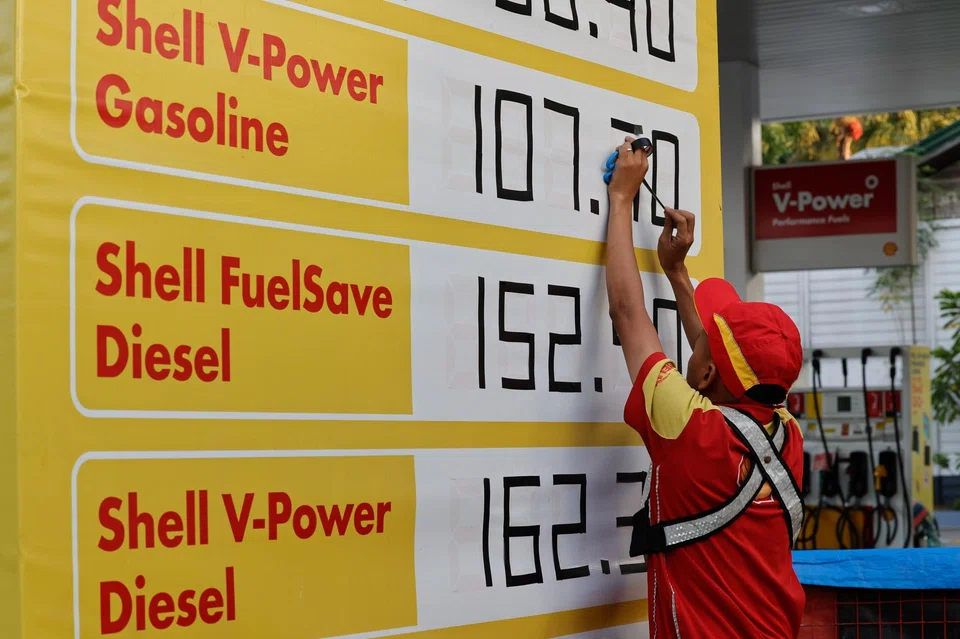
Declining oil reserves have sent the Philippines into a state of national energy emergency, and the ensuing price shock has been severe. Diesel prices have surged 81.6 per cent and petrol is up 54.2 per cent since the start of the Gulf conflict. Meanwhile, inflation is now at a 20-month high of 4.1 per cent.
Pressure is mounting for policymakers to revise – if not, repeal – the free market framework that underpins the country’s downstream oil industry.
Speaking to reporters in late March, President Ferdinand Marcos Jr said he is keen to amend the oil deregulation law, but warned that such a move would warrant “a long discussion”.
This week, however, the country’s energy secretary pushed for a “hybrid” regulatory regime to protect consumers from extreme volatility while balancing state intervention with a free market approach.
Market deregulation
Enacted to liberalise the Philippine oil industry, the oil deregulation law stripped the government of its authority to set fuel prices, regulate imports or cap the profit margins of local oil companies.
As a result, domestic fuel prices in the country are based entirely on international market forces, such as global supply, demand and foreign exchange rates.
Prior to deregulation, the government set fuel prices at a fixed rate and established an oil price stabilisation fund that subsidised price differences with the world market, even before they reached Filipino consumers. The fund was meant to absorb the shock from price volatility in the world market.
But forcing the state to subsidise domestic fuel costs created fiscal deficits whenever global prices soared. Deregulation later removed that buffer.
The case for government intervention
However, “deregulation only works when it’s good times”, Energy Secretary Sharon Garin said in a Senate hearing on Monday (Apr 13). In bad times, “there should be a degree of regulation on the part of the government”, she said.
Garin believes government intervention in a fuel crisis is not meant to limit profit or competition among oil companies, but to protect public interest and remain transparent about pricing.
The energy chief clarified that the goal of revisiting the oil deregulation law is not so much a return to heavy-handed state control as it is a policy revision tailored to current realities.
Noel Baga, a lawyer specialising in energy and a co-convenor of the Center for Energy Research and Policy, noted that deregulation is a reason that the Philippines has been the hardest hit by the fuel crisis among the countries in South-east Asia.
For the country’s economy to recover, the Philippine Congress will have to establish rules around price control, transparency and the unbundling of oil prices, he said.
While structural changes – such as amending policies and nationalising the oil industry – will take time, the government should be equipped to respond immediately to the crisis after having placed the country in a state of emergency.
“There is nothing in the oil deregulation law which prohibits the government from exercising its powers to impose price controls on oil during times of national emergencies,” Baga said, citing the country’s Price Act and the Disaster Risk Reduction and Management Act as legal grounds for immediate state intervention.
“The government must protect the Filipino people from high oil prices by imposing oil price controls now,” he added.
Abolition, not amendment
Momentum for state intervention is accelerating among policymakers. Senate president Vicente Sotto III has filed a Bill advocating the reversal of the oil deregulation act. “It is high time to give back to the state the authority to manage fuel prices,” he wrote in the Bill’s explanatory note.
“Now that our petroleum prices are directly impacted by the geopolitical tension in the Middle East, transparency, scrutiny and uniformity in pricing are needed more than ever,” he said.
Lawmakers from the Makabayan bloc, a group of party-lists representing marginalised sectors, have also filed legislation to repeal the law.
The proposal from ACT Teachers Partylist, Gabriela Women’s Party and Kabataan Partylist aims to restore state control through an independent Petroleum Price Regulatory Council, mandate the unbundling of oil prices to reveal exact profit margins, and halt price increases that breach regulated thresholds.
Since the enactment of the oil deregulation law, the retail pump price of diesel has soared nearly 1,500 per cent, rising from 8.10 pesos a litre in 1998 to 128.73 pesos (S$2.72) a litre this week – even after a price rollback of 20 pesos on Tuesday.
Mody Floranda, national president of Piston, a transport advocacy group that has opposed deregulation for years, warned that oil price volatility has trapped drivers in a cycle of poverty.
“What was promised as market efficiency has become a tool of exploitation,” he said. “Now, a single price hike can wipe out a week’s income.”
As Baga told BusinessWorld, in a deregulated oil industry, “every global price shock lands directly on Filipino consumers with no buffer”.
The fuel crisis has highlighted a stark divergence between Manila’s policy framework and that of its regional peers.
Irene Dela Cruz, a senior business analyst at Nomura Research Institute in Manila, noted how other South-east Asian nations are deploying aggressive demand-side controls, from shorter working weeks in Thailand to direct fuel rationing in Myanmar.
While the Philippines has also implemented measures to reduce fuel use, it remains acutely exposed on the supply side.
“Should the conflict in Iran continue, South-east Asian nations may need to prepare for completely shifting their supply chains or absorbing the full costs” of market disruptions, she added.