



Haze beckons as South-east Asia’s planters come under strain. A ‘Godzilla’ El Nino may just be the start
Indonesia’s move to control exports could increase oversight for haze prevention, says a think tank

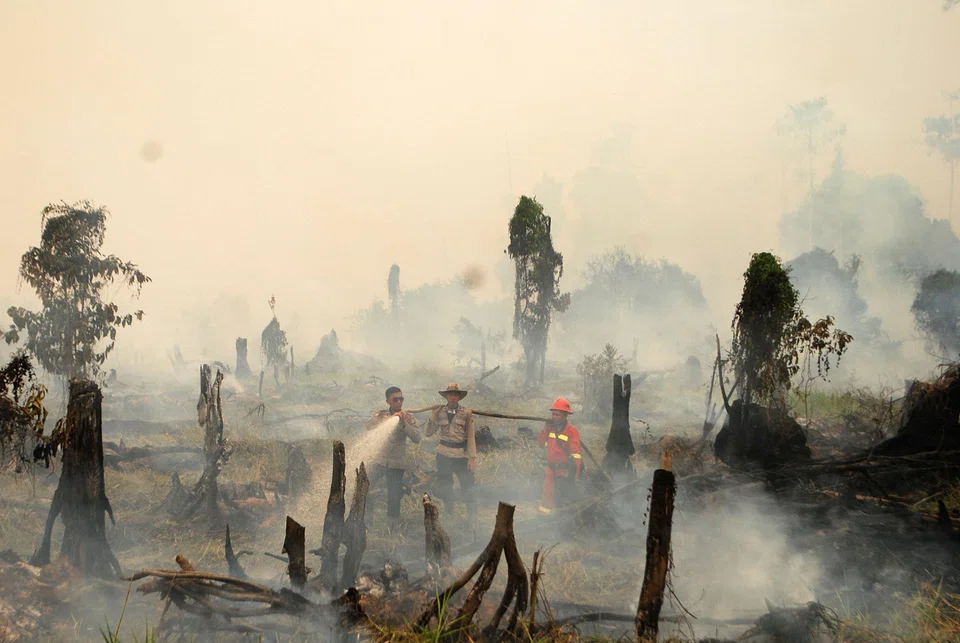
[SINGAPORE] A perfect storm of the regional dry season, an Indian Ocean weather pattern and a “Godzilla” El Nino has raised the likelihood of severe haze in 2026.
But market strains could pressure South-east Asia’s planters well beyond weather changes, a report by the Singapore Institute of International Affairs (SIIA) shows.
The think tank’s chairman, Associate Professor Simon Tay, said during a media briefing on Wednesday (Jun 24) that while weather conditions are the most immediate risk factor for a severe transboundary haze event in South-east Asia, new economic uncertainties have brought the longer-term sustainability of the region’s agricultural production into question – particularly in Indonesia.
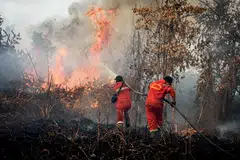
Aaron Choo, senior assistant director for special projects and sustainability at SIIA, explained that the risk of a severe haze event in the region this year will peak during the dry season of August and September. During this period, fires spread quickly, exacerbated by coinciding weather patterns of El Nino and the possibility of a “positive” Indian Ocean Dipole (IOD).
El Nino, a phenomenon that shapes weather and rainfall in the Pacific Ocean, is increasingly likely to be particularly strong in 2026, meteorological estimates show. Such an event is dubbed as a “Godzilla” or “super” El Nino.
Meanwhile, the IOD – a similar phenomenon in the Indian Ocean – could bring hotter and drier weather in the second half of 2026.
But natural phenomena are not the only forces acting on the region’s growers.
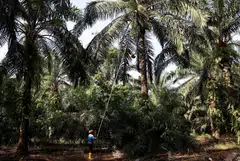
Market pressures have increasingly squeezed the margins for producers of agricultural commodities such as palm oil and rubber, which could prompt growers to turn to cost-cutting “slash-and-burn” methods of clearing land.
SIIA said the fires that cause haze are “predominantly man-made decisions about supply that respond to market demand”.
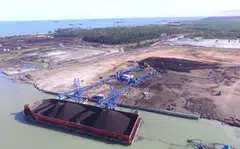
The closure of the Strait of Hormuz amid the US-Iran war is a key catalyst, having caused a jump in fertiliser prices and raising overall production costs for agricultural producers in the region by up to 30 per cent, the think tank noted.
It added that these price spikes are likely to persist for several months even if seaborne trade through the strait resumes.
“The fertiliser price spike comes on top of rising fuel costs that are also affecting farm operations like irrigation and transport,” said SIIA. “Yet, selling prices for food and commodities are not increasing proportionately.”
Demand-side pressures could also drive growers towards burning to clear land.
SIIA noted that demand for bioenergy had already been on the rise before the Strait of Hormuz’s closure, but energy shocks during the year have increasingly prompted countries in the region to strengthen biodiesel mandates.
Indonesia’s current B40 fuel blend mandate – 40 per cent of biofuel and 60 per cent petroleum diesel – is set to shift towards B50 from July.
Malaysia has announced plans to raise its B10 blend to B15, while Thailand is currently rolling out a B20 blend.
Prof Tay said that growers in Indonesia and other countries currently have enough capacity to support both food production and fuel demand, but as demand increases, the risk of unsustainable plantation expansion rises as well.
SIIA added in its report that there is “no guarantee” that current biofuel production can meet rising demand.
Regulatory oversight
Prof Tay noted that Indonesia’s President Prabowo Subianto has stepped up regulatory oversight of the country’s land-use sectors by investigating alleged environmental violations.
Meanwhile, a move to centralise control of commodity exports under a unit of sovereign wealth fund Danantara could be positive for haze prevention by granting the government greater visibility into supply chains and commodity flows.
“This may signal that the Prabowo administration is taking this problem seriously,” said Prof Tay.
But wider fiscal concerns are also stretching Prabowo’s administration thin, as the country works to keep its national deficit under the legally mandated limit of 3 per cent of gross domestic product.
SIIA noted that the country’s Ministry of Forestry and provincial governments have warned budgets for fire management are “under pressure amid cuts to public spending”.
Choo also pointed out that enforcement of fire and land-management standards in agricultural industries remains difficult.
While many major plantation companies operating in international markets have adopted industry-level commitments to sustainable farming, smaller companies operating on the national level may not be subject to the same regulatory oversight, he explained.
“It is hard to quantify how much of the haze is actually caused by (these companies),” Choo told The Business Times.
Prof Tay added that these companies can “operate in grey markets”, referring to commodities traded outside of a producer’s authorised distribution channels.
“They do not uniformly follow mandatory standards and do not have the same resources for fire prevention and firefighting as the major companies.”
SIIA said that at present levels, it remains unclear just how much economic pressures can increase the risk of fires in the medium term. Deforestation impacts caused by price shocks can take up to a year to materialise, Choo explained.
The think tank added that while there is “no indication that major agricultural producers are cutting back on fire prevention, economic pressures on the sector are mounting". “Care is needed to ensure these pressures do not lead to unsustainable expansion.”
Decoding Asia newsletter: your guide to navigating Asia in a new global order. Sign up here to get Decoding Asia newsletter. Delivered to your inbox. Free.
Copyright SPH Media. All rights reserved.
TRENDING NOW

Malaysian king buys stake in Singapore-listed mining firm expanding into rare earths

Grab CEO’s wife Chloe Tong on life with Anthony Tan and finding her purpose

Once staunchly pro-China, Malaysian Chinese businesses are now distancing themselves from Beijing

Longer wait times expected as S’pore healthcare institutions report system disruptions

