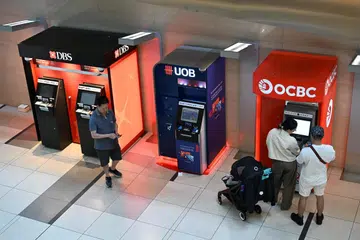
Higher rates, weaker spending: Is the Philippines entering stagflation?
A weakening peso, rising costs and shrinking investment are squeezing households and firms
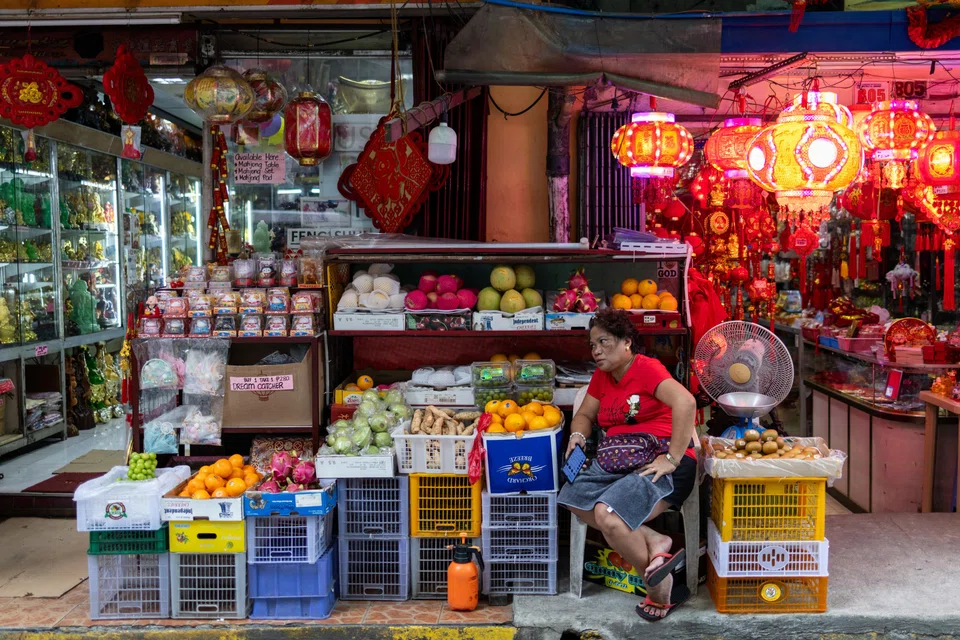

[MANILA] The Philippines is running out of room to manoeuvre – with inflation accelerating, growth slowing, and the central bank raising rates in an economy already losing steam.
Some economists argued that the country has already crossed the threshold into stagflation – the combination of persistently high inflation, weak or stagnant growth, and elevated unemployment. Others see a painful but less severe bout of “slowflation”.
What is not in dispute is that households are spending less, companies are investing less and the Bangko Sentral ng Pilipinas (BSP) is tightening into the weakness.
Inflation accelerated to 7.2 per cent in September, matching April’s three-year high, and is projected by BSP to settle within 7.1 to 8.1 per cent in October.
Meanwhile, the economy expanded by only 2.3 per cent in the second quarter, its fourth consecutive quarter of deceleration.
Signs of consumer strain are mounting. The peso’s domestic purchasing power remained at a record-low 73 centavos in September, data from the Philippine Statistics Authority showed. A basket of goods costing 100 pesos in 2018, the authority’s base year, now costs about 137 pesos (US$2.15).

Household spending slowed sharply to 2.8 per cent growth in Q2 2026, down from 5.2 per cent in Q2 2025.
Visa’s Spending Momentum Index, which tracks the health of consumer spending based on household purchases over time, also indicated that Filipino spending has shrunk for 11 consecutive quarters, the longest uninterrupted decline in the Asia-Pacific.
The corporate side of the economy is also weakening. Gross capital formation contracted by 9.2 per cent year on year in Q2.
BSP expects investment activity to remain moderate amid fragile business and consumer sentiment.
The pressure is now colliding with a sharper monetary response. On Oct 22, the central bank raised its benchmark rate by 50 basis points to 5.5 per cent, its fourth consecutive increase and a larger move than markets expected.
The question facing policymakers is whether tightening that is necessary to contain inflation could deepen the unfolding slowdown.
Stagflation – or something close?
The threat of stagflation has divided forecasters.
David G Fernandez, senior fellow at the Center for Financial and Monetary Economics, believes the Philippines has “crossed the line” into full stagflation.
“Growth could even be below the lowered forecasts and that inflation could be even higher than the higher forecasts that people have,” he said at an Oct 21 forum.
Adding to these warnings, Emmanuel Leyco, president and chief economist of the Credit Rating and Investor Services Philippines, cautioned that the country is “almost there” when it comes to hitting stagflation.
If current headwinds persist, the next few months will be bleak and full-year economic growth will likely be below 3 per cent, he warned, stressing that the convergence of a depreciating peso, persistent inflation and slowing output remains “the most problematic for the country”.
Former BSP deputy governor Diwa Guinigundo echoed a similar sentiment: If economic output “plateaus at 1 or 2 per cent, then you have something that may be described as stagnant”.
Other analysts are more cautious. Marian Monette Florendo-Obias, economist and research officer at Metropolitan Bank and Trust, argued that conditions only partially fulfil classic stagflation. She described the economy as being in “slowflation” instead: elevated inflation, positive but slowing growth, and a resilient labour market.
Unemployment stood at 5.3 per cent in August – improving from 6 per cent in July – as nearly 2.8 million Filipinos remain jobless. However, 5.9 million employed Filipinos are underemployed, seeking more hours or better-paying work.
Former BSP governor and current Monetary Board member Benjamin Diokno called the domestic scenario “stagflation-lite”. In his view, the Philippines continues to generate economic growth and keep unemployment under control.
The policy remedy is uncomfortable either way: Raising rates could restrain inflation, but risk further weakening the economy.
BSP said its most recent hike was intended to “contain second-round effects and firmly anchor inflation expectations”.
BSP governor Eli Remolona explained that the Monetary Board acted with “a bit of a sense of urgency” after its inflation outlook deteriorated.
BSP is not primarily trying to defend the peso. Remolona has long maintained that the central bank does not use monetary policy to support a particular exchange-rate level. But the peso’s sustained decline complicates the inflation outlook by raising the cost of imported fuel, food and electricity.
Closing at 63.74 against the dollar on Oct 30 – just shy of its record low of 64.17 set on Oct 27 – the currency has depreciated nearly 11 per cent since the onset of the US-Iran conflict on Feb 28. The decline has continued despite the central bank’s rate rise, suggesting the limits of monetary policy in shielding the economy from external shocks.
DBS noted that the peso risks sliding towards 65 per dollar if it holds above 64, driven by foreign outflows and mounting investor anxiety over the combination of high inflation and slowing economic momentum.
Decoding Asia newsletter: your guide to navigating Asia in a new global order. Sign up here to get Decoding Asia newsletter. Delivered to your inbox. Free.
Share with us your feedback on BT's products and services