



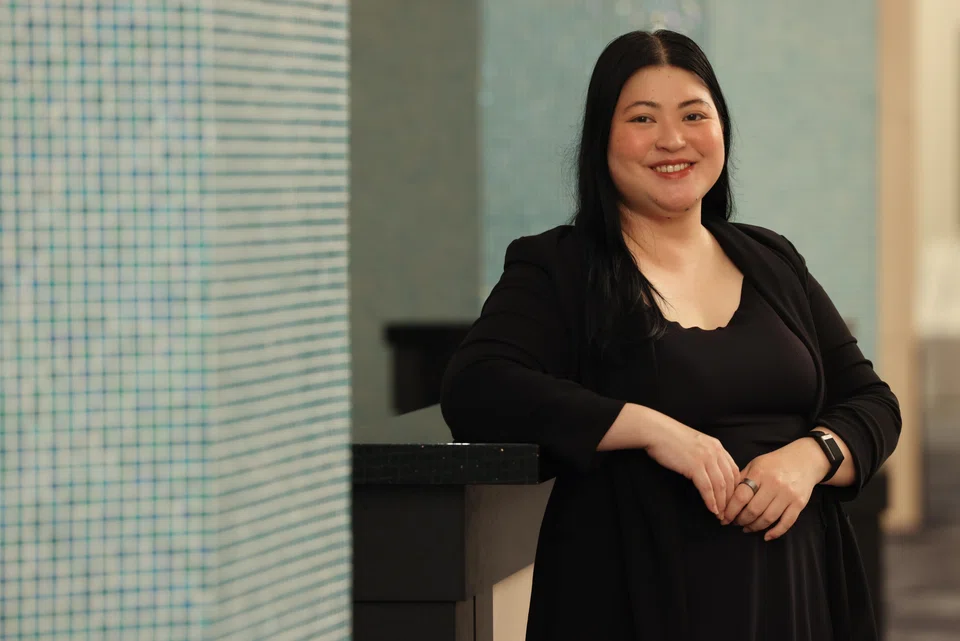
‘I don’t care what my title is’: MedPark’s Proud Patanavanich runs a hospital where patients, physicians precede profits
The Thai private hospital expects to break even this year

The strategies and stories that shape today’s leaders.
[SINGAPORE] The year before Proud Patanavanich was born, her physician father banded together with several doctor friends to set up the first private hospital in Samut Sakhon, a coastal province in Thailand roughly 1.2 times the size of Singapore.
The province was, in 1989, growing into its shoes as a major industrial hub. Factory injuries were a common occurrence, but workers often found themselves strapped for cash. Against this backdrop, Mahachai Hospital adopted a treat-first-pay-later policy.
Two decades after its inception, Proud had a chance encounter with a stranger, who said he had heard of the institution, despite living some 800 km up north in Chiang Mai. He called it a “good hospital (with) good people”, she recalled, adding that the meeting, in hindsight, cemented her eventual entry to the family business four years later.
Aside from its 97-bed, six-storey facility in Samut Sakhon, Mahachai Hospital’s operations span six other subsidiary hospitals, including MedPark Hospital in Bangkok, where Proud is assistant chief executive.

“Our philosophy has always been to put the patient first,” the 36-year-old told The Business Times in an interview. “If your patient experience is in the toilet, no marketing spend is going to help because the real marketing for a hospital is the trust (it builds) and (by) word of mouth.”
Today, the group has a market capitalisation of around three billion baht (US$91 million) as at mid-August, having started out with an initial registered capital of eight million baht in 1989.
It posted a 15.8 per cent jump in net profit to 49.1 million baht for its second quarter ended Jun 30, from 42.4 million baht in the year-ago period. Revenue grew 2.2 per cent to 1.6 billion baht for the three months ended Jun 30.
Her father, Pongpat Patanavanich, who turns 76 in October, is the chairman of the executive board at Mahachai Hospital and serves as the managing director of MedPark.
Accidental beginnings
Proud is an only child, but joining the family business was never at the forefront of her mind.
Upon graduating with a double major in economics and Chinese, Proud took on marketing and recruitment stints for three years. She took a career break in 2015, with the intention to pursue a Master of Business Administration. During this time, she began helping out at Mahachai Hospital with IT projects – and has never looked back.
In 2019, Proud went to the US for a five-month non-clinical observership at Mayo Clinic. Upon her return, she joined the co-founding team of Mahachai’s youngest subsidiary hospital, MedPark.
She told BT: “I decided that I wasn’t going to be responsible for marketing; I was going to focus purely on patient experience and the journey.”

With her service-design team, Proud handpicked everything from the beverages and shampoo brand to the textiles used for patient gowns, blankets and pillows, she told BT.
Similar attention was paid to the hospital staff’s experience.
Proud redesigned the nurses’ uniforms, swopping out the traditional white dresses – which were made of stiff fabric weighing up to a kilogram and worn with unforgiving shoes and a hat that required nurses to do their hair – for moisture-wicking scrubs.
To afford patients the best care, hospital staff must be well taken care of and engaged, she said.
As the team expanded into innovation, the hospital brought in developers who created tools to improve customer experience. Her team says that, among other innovations, it built the first hospital mobile application in Thailand that confirms doctor appointments in real time.
Doctors, not directors
One of the factors that sets MedPark apart is that it is physician-owned, in that a quarter-share of the hospital is set aside for a handpicked panel of its doctors who also hold leadership positions, said Proud.
Mahachai Hospital has a 42 per cent controlling interest in MedPark, while the remaining 33 per cent is held by a number of private Thai shareholders.

“The whole belief is that doctors should be deciding what’s best for their patients, (which) is not always the most profitable,” she explained. “We’re still a business, and we have to make money, but we can choose what is best for the patient and sustainable for the business.”
Physician excellence will continue to be one of MedPark’s growth priorities in the years ahead, Proud emphasised.
The way she sees it, great doctors are key to a hospital’s success. “The product of a hospital is a doctor – not packages, not surgeries,” she said.
Proud told BT that the initial capital injection into MedPark was seven billion baht. She expects the hospital to break even this year.
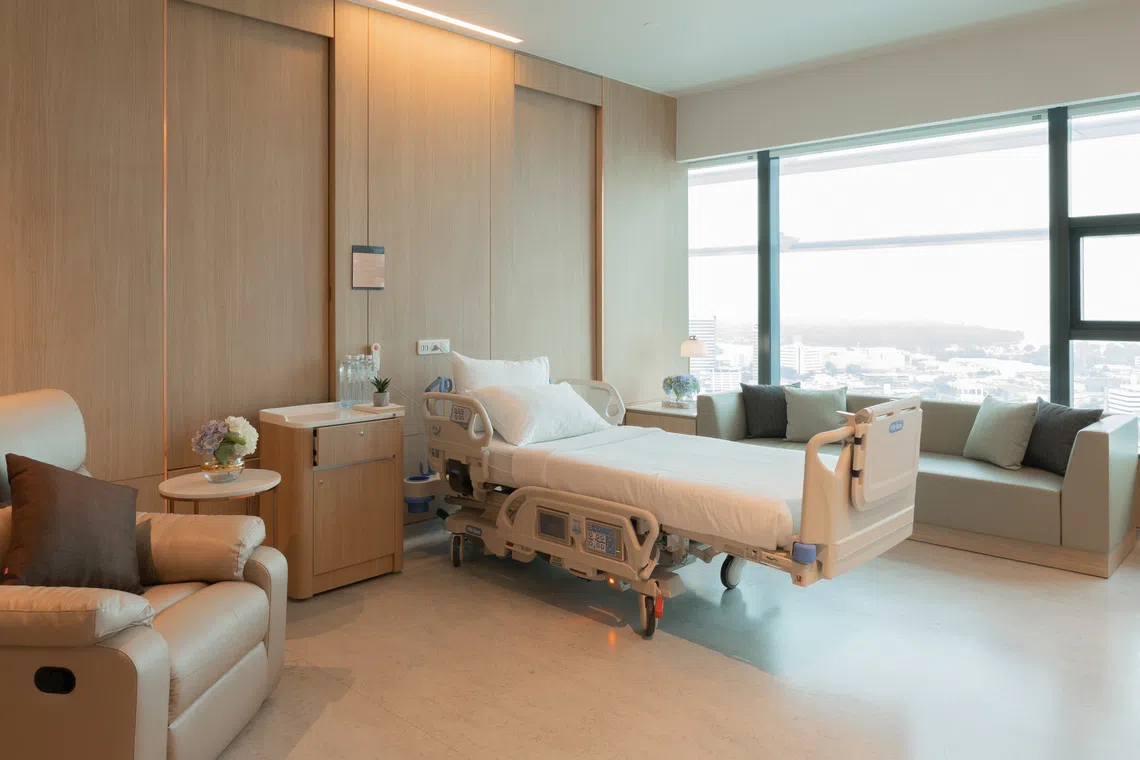
Located in the heart of Bangkok, MedPark officially opened in October 2020. The 550-bed private hospital occupies a 25-storey building on a site spanning 90,000 square metres.
By Thais, for Thais
MedPark has no foreign investors by design, she told BT.
“We want to keep it local, and we don’t want any surprises,” explained Proud. “It’s the same with our patient profile. A lot of the top-notch hospitals sometimes aim for foreigners and international patients, but, for us, we try to focus also on Thai patients and expats living in Thailand.”
Foreigners make up some 30 per cent of MedPark’s total patient volumes today, dominated by people from Myanmar, Bangladesh, the UK and the US. The private hospital currently serves a daily average of 700 to 800 outpatients, and aims to grow the figure to 1,000 by mid-2027.
Because of the kingdom’s global reputation as a leading destination for medical tourism, Thai patients may feel overlooked by domestic healthcare institutions, noted Proud. “Sometimes (local hospitals) forget their own people, but we want to be there for them.”
Crowned South-east Asia’s largest medical tourism revenue contributor, Thailand – where tourism accounts for more than one-eighth of its gross domestic product – consistently draws millions of foreign visitors year after year.
Leadership, on her terms
Asked if she would eventually hold the reins, Proud replied that she doubts her father will ever stop working and that she is focused on doing more for the hospital network.
She told BT that the early years of her career were defined by the burden of self-expectation; she constantly questioned how much she would be able to achieve by when, the speed at which key milestones in the family business were breached and her succession timeline.
Admitting that she had been a tough boss and an even tougher client, Proud shared: “I’ve always been the youngest leader everywhere, and, at the beginning of my career, I had to put on a look and act a certain way so I would be more intimidating or respected.”
But her perspective has since changed: Proud’s only ambition now is to create the best hospital in Thailand and across Asia.
“I don’t care what my title is,” she said. “I just want it to be a place that patients feel is very helpful and the best hospital for them, and I want the staff to feel like this is a place they want to work at – those are my only two goals.”
Three questions with Proud Patanavanich, MedPark Hospital’s assistant CEO
Q: Was there a pivotal moment in your career or personal life that changed your approach to leadership?
My ex-boss once told me that if you want to be loved, you can’t be a leader. I’ve always disagreed with that; yet, at the beginning of my career, I was a tough boss and harsh client. One day, I read a quote which said modern leadership can be brilliant, creative and kind. It made me change myself. I decided I didn’t want to be part of the problem, and, if I valued authenticity, I will be a kind and intelligent leader.
Q: What is one piece of “unconventional wisdom” you swear by, but which most business schools would tell you is wrong?
Many business schools and textbooks will tell you that you need to be extremely strategic and laser-focused on your target product or audience. In real practice, you need to be flexible and adaptable, and be able to create a big enough of a funnel (that is, reach more people and create more interest) to create more conversions. Especially when your business is new, you must prioritise growth over getting the exact type of client you want. Spend less time on paper and go make your sales.
Q: When you feel burnout creeping in, what is your non-business-related “panic button” activity or routine that reliably resets your focus?
Sleep is the exact thing that will fix it. I may spend the entire weekend catching up on sleep and not leaving the home at all. It helps me decompress from all the chaos. Second thing that truly heals my soul is my team. If I can be honest, most of my time is spent constantly building a team that is capable and dependable. When I think of them, I know I can rely on them. They have my back and I have theirs.
TRENDING NOW

Britain’s mansion tax shows the difficulty of targeting wealth

Once staunchly pro-China, Malaysian Chinese businesses are now distancing themselves from Beijing

The only common thing in S-E Asia is that we all eat rice: Cisco’s Asean president

Singapore data centre operator DayOne opts for US IPO at likely US$20 billion valuation

