



IMF, World Bank tout ‘Bangkok Blueprint’ against digital fraud
Asia accounted for 67 per cent of global fraud losses in 2024
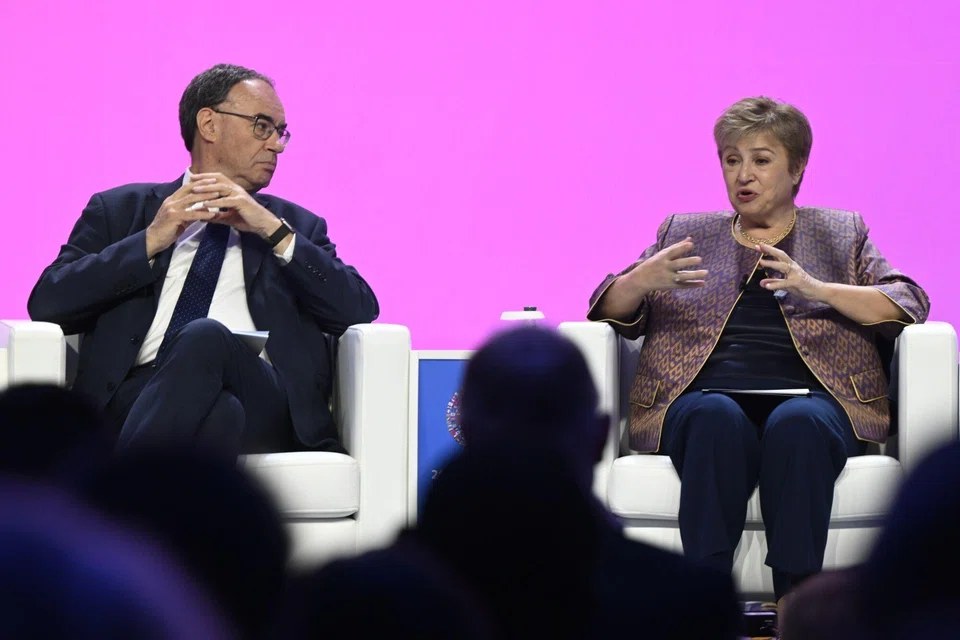
[BANGKOK] The International Monetary Fund (IMF) and World Bank unveiled a global roadmap to fight online financial fraud as increasingly sophisticated scams undermine confidence in digital finance.
The “Bangkok Blueprint” – developed in coordination with the Bank of Thailand and released during the institutions’ annual meetings on Wednesday (Oct 14) in Bangkok – sets out 12 policy considerations to help countries identify vulnerabilities and develop comprehensive and coordinated responses, Thai central bank chief Vitai Ratanakorn said.
“The framework calls for a whole-of-ecosystem response, stronger cross-border cooperation, and sharing practical experience to inform evolving global standard setting,” Vitai said during the report launch, adding that it drew experiences from Hong Kong, Malaysia, Singapore and Thailand.
Asia accounted for 67 per cent of global fraud losses in 2024, he said.
Scam operations have been proliferating across South-east Asia in recent years, particularly in border regions adjacent to Thailand, which has become a transit hub for human trafficking linked to scam compounds.
The initiative comes as Thailand’s efforts to crack down on scam operations have uncovered sophisticated ways in which proceeds of cyberfraud become a major part of broader illicit financial flow, Vitai said.
Fraud losses exceeded 43 billion baht (US$1.28 billion) in 2024, before falling to 32 billion baht in 2025. “Coordinated action can make a meaningful difference,” said Vitai, under whose leadership the central bank has taken a more active role in tracing and blocking illicit money flows.
Globally, cyber events in the financial sector have increased 10-fold over the past decade, while cyber-enabled fraud cases have roughly tripled, according to an infographic accompanying the blueprint.
The figures likely understate the scale of the problem because of significant underreporting and often rudimentary reporting systems.
SEE ALSO




Some 90 per cent of the 165 jurisdictions assessed by the Bangkok Blueprint consider fraud a major money-laundering threat.
“When we started discussing the blueprint, we did believe it was important,” IMF managing director Kristalina Georgieva said during the session. “And then we came to Bangkok, with AI putting the potential of digital fraud on steroids, and that is now even more important.”
The framework spans legal foundations, fraud prevention and enforcement, domestic and international cooperation and consumer protection.
It emphasises clear accountability and timely coordination across financial services, social media, digital platforms, e-commerce and telecommunications networks.
The institutions said that while digital finance has widened access and improved efficiency, it’s also enabled fraud to spread faster and become more sophisticated.
“Fraud has no borders,” Thailand Finance Minister Ekniti Nitithanprapas said. “So our response should be cross borders as well.” BLOOMBERG
Decoding Asia newsletter: your guide to navigating Asia in a new global order. Sign up here to get Decoding Asia newsletter. Delivered to your inbox. Free.
Share with us your feedback on BT's products and services
TRENDING NOW

Once staunchly pro-China, Malaysian Chinese businesses are now distancing themselves from Beijing

Looking beyond looming CEO succession, should UOB potentially pursue a transformative merger?

Could stablecoins be the future of money?

Grab CEO’s wife Chloe Tong on life with Anthony Tan and finding her purpose

