



Indonesia clears way to open IDX ownership, paves way for Danantara to take stake
Indonesia moves towards the demutualised exchange model, in the steps of regional peers such as Singapore

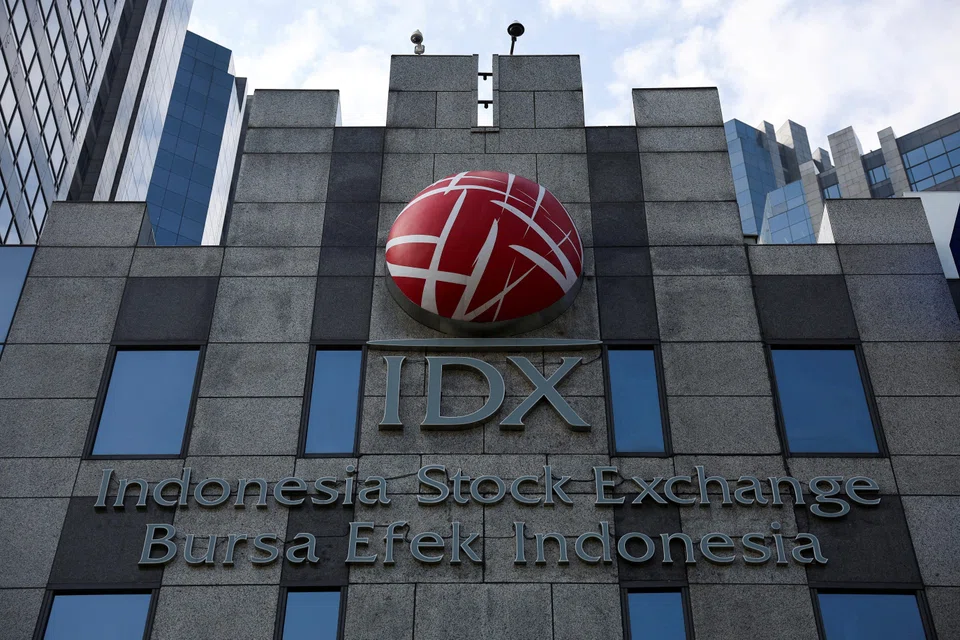
[JAKARTA] Indonesia’s financial regulator has issued a long-awaited rule that paves the way for public ownership of the country’s stock exchange.
With this development, the state investment agency Danantara could become a major shareholder of the Indonesia Stock Exchange (IDX), as Jakarta seeks to strengthen the bourse’s governance and transparency amid scrutiny by global investors and index providers.
The Financial Services Authority (OJK) on Monday (Sep 21) issued the regulation governing share ownership in the IDX following its planned demutualisation. Demutualisation turns the exchange from a member-owned body into a shareholder-owned one.
OJK said in a statement: “The demutualisation will proceed while preserving the IDX’s independence, market integrity and OJK’s regulatory and supervisory functions.”
The rule allows ownership of the exchange to be opened to parties beyond its current members, and will move the IDX from its status as a mutual structure controlled by securities companies to a shareholder-owned entity.
The bourse now has 90 securities companies registered as exchange owners and trading participants.
The regulation caps direct or indirect ownership of the exchange at 5 per cent. Stakes above that threshold require OJK’s approval, and no shareholder may ultimately control more than half the exchange.
OJK has yet to clarify how new shares will be offered, including whether the process will involve an initial public offering.
Besides Danantara, the regulation also opens the door for Bank Indonesia and the Finance Ministry to take stakes in the exchange under its new ownership structure.
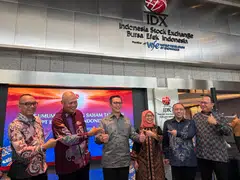
Danantara officials have expressed interest several times in acquiring a significant stake in the exchange under the new structure.
Documents from an August meeting between the IDX and its shareholders indicate that the state investment agency could hold 40.12 per cent of the exchange after the demutualisation, Indonesian media has reported.
The exact size and structure of Danantara’s investment have not been finalised. Danantara said in August that it was still coordinating with OJK and the IDX and preparing its investment plan.
The OJK said opening up ownership of the exchange is part of Indonesia’s broader capital-market reform aimed at improving transparency, governance and investor confidence.
Following the regional playbook
Indonesia’s move follows those by other major South-east Asian markets, including those in Singapore, Malaysia and the Philippines, which have demutualised their exchanges and opened ownership to a broader group of investors while retaining their regulatory functions.
President Prabowo Subianto said in his state of the nation address in August that demutualising the stock exchange was a key priority for regulators, in the push to bring Indonesia’s capital market closer to global standards and strengthen its position in international markets.
Dedi Dinarto, associate director at strategic advisory firm FGS Global, said demutualisation would enable the IDX to operate as a commercially driven exchange and compete with regional peers.
“However, investors would still expect Indonesia to push through broader structural reforms addressing free float, concentrated ownership, transparency and liquidity to restore their confidence,” he told The Business Times.
Dinarto said that while the new OJK framework provides safeguards against excessive influence by any single shareholder, the ultimate test would be in how rigorously those safeguards are enforced in practice.
The reforms follow growing scrutiny of Indonesia’s equity market by international investors at a time when the country’s stocks and currency have come under pressure.
Indonesia’s benchmark Jakarta Composite Index has fallen about 26 per cent so far this year, making it one of the region’s weakest-performing major equity markets.
Global investors and index providers have raised concerns about the accessibility and transparency of Indonesia’s equity market. Trading was temporarily halted in early 2026 after a sharp sell-off triggered the exchange’s circuit breaker.
Four pro-transparency measures have already been implemented. These are greater disclosure of shareholders with stakes above 1 per cent, more detailed investor classifications, disclosure of high shareholder concentration and an increase in the minimum free-float requirement to 15 per cent.
Decoding Asia newsletter: your guide to navigating Asia in a new global order. Sign up here to get Decoding Asia newsletter. Delivered to your inbox. Free.
Copyright SPH Media. All rights reserved.
TRENDING NOW
Can a first-time homebuyer couple earning S$18,000 a month afford a new EC unit?

He built the Vingroup empire. Now South-east Asia’s richest man is handing some key roles to his sons

Asia needs new energy security architecture

Chagee, Mixue and Luckin won the market. Sustaining their edge is the harder part

