



Indonesia exports slide 2.3% in October, trade surplus narrows to US$2.4b
Slowing China demand and falling commodities weigh on Indonesia’s exports
 Add BT as a preferred source
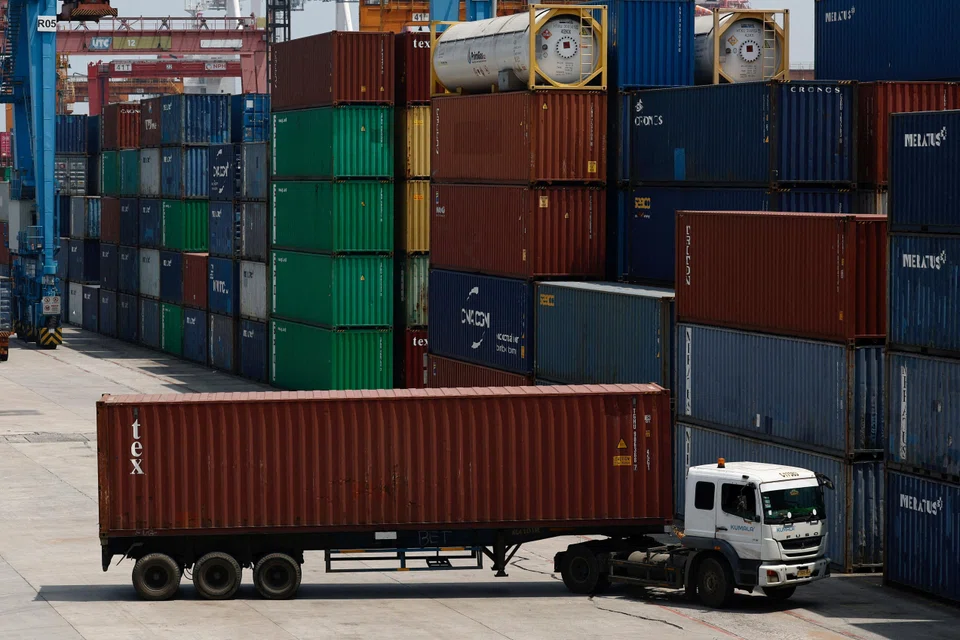
[JAKARTA] Indonesia’s exports contracted in October, undoing the robust gains of the previous month, amid weakening demand from China, the country’s biggest buyer, and slowing commodity shipments.
Exports fell 2.31 per cent year on year in October, compared with an 11.41 per cent increase in September, data from the statistics agency showed on Monday (Dec 1). The figure also missed economists’ expectations, with a Reuters poll forecasting 3.38 per cent growth.
South-east Asia’s biggest economy saw mining shipments, such as copper ore and coal, plunge by over 30 per cent annually amid weakening global prices.
Economists attributed the decline in shipments to China’s softening economy, a major factor given it is Indonesia’s top destination for mining products, as well as continued adjustment following the 19 per cent reciprocal tariffs introduced in August.
Permata Bank chief economist Josua Pardede said the decline in shipments was expected as exporters had accelerated deliveries ahead of the tariff adjustments earlier in the year. He expected the moderation to be temporary.
“Export growth will normalise after front-loading ahead of the reciprocal tariffs in August, but the adjustment should be gradual,” he said. “Steady demand from major trading partners for crude palm oil, iron and steel, and electrical machinery will continue to support exports.”
He added that the impact of the trade war had eased as the United States adopted “a more open approach to negotiations”, while Indonesia’s widening network of trade agreements and deeper integration into global supply chains should provide additional tailwinds.
Ongoing efforts to secure zero-tariff access for key export products also present upside risks, Pardede said.
Meanwhile, imports posted a 1.15 per cent annual contraction, reversing a 7.17 per cent rise in September, dragged down by a high comparison base from last year. On a monthly basis, however, imports rebounded 7.4 per cent, supported by stronger industrial activity.

The weaker export performance caused Indonesia’s trade surplus to narrow sharply to US$2.4 billion in October, down from US$4.34 billion in September. It is also below the US$3.72 billion forecast in a Reuters poll of economists.
Despite the slowdown, the country has maintained a trade surplus for 66 consecutive months, supported by sustained global demand for its natural resources, including palm oil, coal and gold.
From January to October, the surplus reached US$35.88 billion, higher than the US$24.89 billion recorded in the same period last year.
Easing
Separately, Indonesia’s annual inflation slowed to 2.72 per cent in November, coming in just below Bloomberg’s median forecast of 2.77 per cent. The deceleration was mainly driven by easing gold-price inflation, the statistics agency said.
On a monthly basis, the consumer price index rose 0.17 per cent, moderating from a 0.28 per cent increase in October. Core inflation remained steady at 2.36 per cent year on year, still influenced by elevated gold prices and reflecting subdued domestic demand.
Bank Mandiri analysts expected inflation to rise moderately in the coming months due to the government’s pro-growth measures but remain below 3 per cent, enabling Bank Indonesia (BI) to sustain a supportive policy stance.
The bank expected inflation to stay within BI’s 1.5 to 3.5 per cent target range, allowing the central bank to maintain an accommodative stance for its medium and long-term agenda, it said in a note.
Although BI signalled a temporary shift towards stability during its November policy meeting amid pressure on the rupiah, Bank Mandiri analysts anticipated the stance will ease once global financial conditions stabilise, potentially paving the way for further rate cuts in 2026. Still, the bank cautioned that near-term easing is limited due to currency volatility.
BI faces a delicate balancing act: stabilising the rupiah – the second worst-performing currency in Asia – while supporting economic growth.
The measures come at a pivotal moment for South-east Asia’s largest economy, which is navigating a slowdown in global demand, softer commodity prices, and more constrained household spending.
Economic growth moderated to 5.04 per cent in Q3, slightly down from 5.12 per cent in Q2, reflecting the broader external and domestic pressures.
To lift growth above 5.4 per cent, the government rolled out a 30 trillion rupiah (S$2.3 billion) stimulus package for Q4 2025, including year-end travel discounts of up to 20 per cent on trains, airlines and sea transport.
Economists said the transport subsidies should help temper year-end price pressures. Permata Bank’s Pardede forecast headline inflation will finish the year between 2 and 2.5 per cent, up from 1.57 per cent at the end of 2024.
Decoding Asia newsletter: your guide to navigating Asia in a new global order. Sign up here to get Decoding Asia newsletter. Delivered to your inbox. Free.
Copyright SPH Media. All rights reserved.
TRENDING NOW

‘I felt like dying’: Thai Singha beer scion speaks up after disclosure of alleged sexual abuse
CDL, Hong Realty outbid 3 other bidders with S$542.4 million offer at S$1,865 psf ppr for Peck Hay plot

Private equity giant Carlyle can grow bigger but needs to stay on its toes: co-founder David Rubenstein

Evergrande’s liquidation prompts some PwC partners to shield assets, contemplate divorce

