
Indonesia races to reform US$500 billion stock market to avert MSCI downgrade
Crackdown on market manipulation, opaque ownership seen as positive, but reform momentum is key

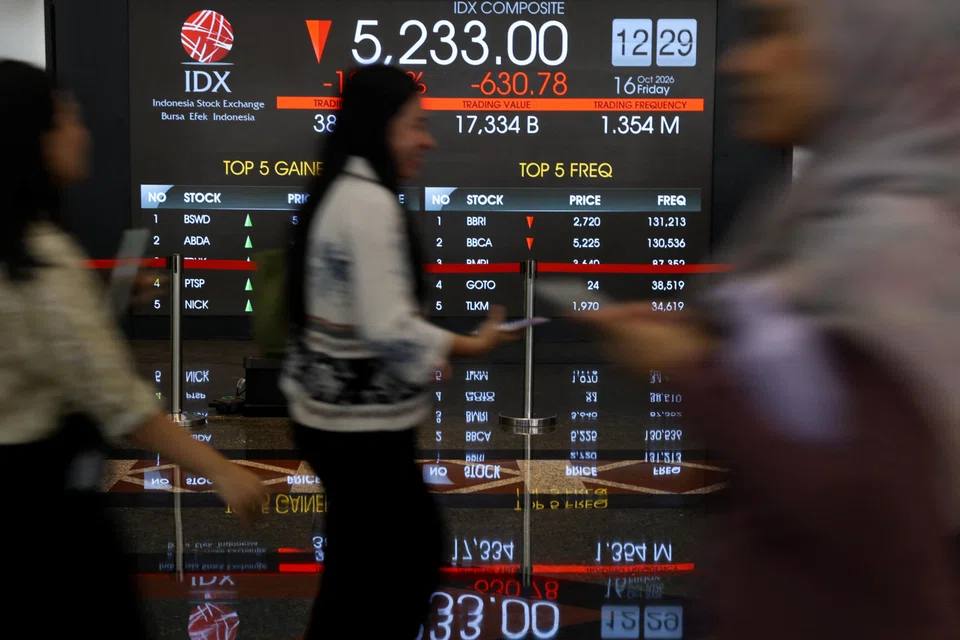
[JAKARTA] Indonesia is stepping up its crackdown on stock market manipulation as it seeks to avert a potentially costly downgrade by global index provider MSCI and restore investor confidence.
It has also introduced a sweeping overhaul of market transparency, tightening free-float requirements, exposing concentrated shareholdings and intensifying surveillance of suspicious trading.
Market observers said that tougher sanctions, alongside broader reforms, are steps in the right direction as South-east Asia’s largest economy comes under mounting pressure to overhaul its US$500 billion capital market ahead of MSCI’s consultation conclusion in April 2027.
The stakes are high. Oxford Economics estimated that a downgrade to a standalone market could force passive funds tracking MSCI’s emerging markets indices to sell between US$3.7 billion and US$10.3 billion in Indonesian equities.
Indonesian authorities have spent much of the year responding to MSCI’s concerns through a series of capital market reforms, including clamping down oncompanies and individuals involved in market violations.
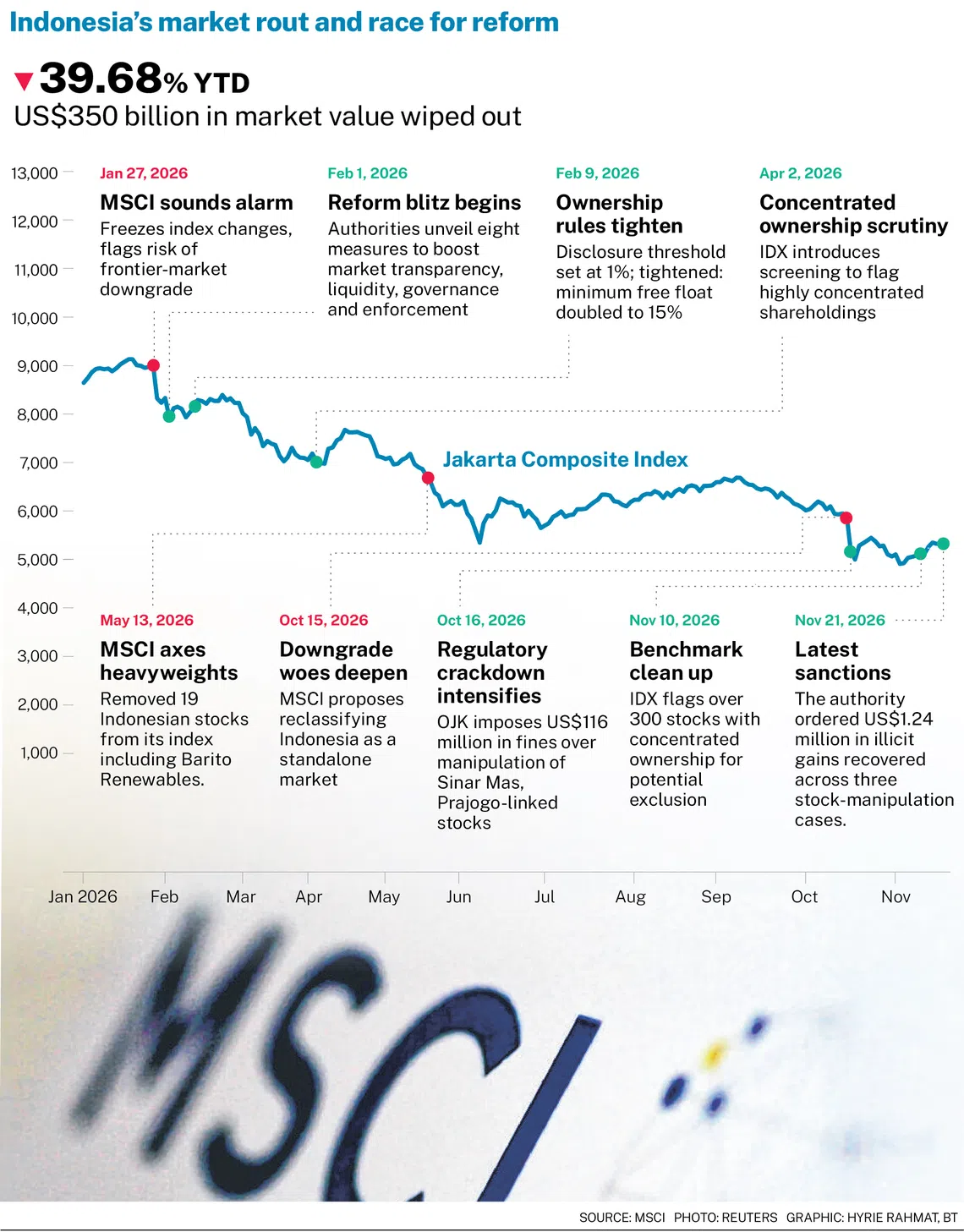
On Nov 21, the regulator announced sanctions in 10 capital market violation cases, ordering the return of 23.8 billion rupiah (US$1.2 million) in illicit gains from three cases involving the manipulation of shares in Grand House Mulia, Saraswanti Anugerah Makmur and Suryamas Dutamakmur.

Several individuals involved in the cases were barred from participating in Indonesia’s capital markets, derivatives and carbon exchange sectors for between three and 10 years.
The latest crackdown follows a string of high-profile enforcement moves, including a combined US$116 million in sanctions against Sinar Mas-linked and Prajogo Pangestu-linked entities over alleged share manipulation and coordinated trading.
While market observers welcomed the tougher regulatory stance, they said the credibility of the reforms ultimately hinges on whether authorities will hold those behind the market manipulation accountable. Indonesia also needs to step on recent measures rolled out to address longstanding gaps, including opaque share ownership structures.
Henry Wibowo, co-founder and director of Alphagate Capital, said:We need to see stronger enforcement, including criminal prosecution where wrongdoing is proven, meaningful penalties and consistent disciplinary action by regulators and the government.”
He added: “Investors need assurance that market manipulation would not be tolerated, regardless of who was involved.”
A sweeping crackdown by Indonesia’s Financial Services Authority (OJK) on market misconduct has led to more than 971 parties being sanctioned and fines totalling about 2.5 trillion rupiah. It has completed 41 case examinations, while another 122 cases remain under enforcement proceedings.
Beyond market manipulation
At the heart of MSCI’s concerns is whether Indonesian share prices accurately reflect market demand and whether investors have sufficient visibility into who ultimately owns the stock they trade.
In a January consultation note, the index provider raised concerns over opaque shareholding structures among Indonesian-listed companies, raising questions over their ultimate beneficial ownership – and how many of their shares were genuinely available for public trading.
Analysts said MSCI’s concerns also point to the risks posed by concentrated share ownership, where even relatively small trades can disproportionately move stock prices when shares are held by a handful of investors.
The issue is particularly pertinent in Indonesia, where family-owned conglomerates play a prominent role. An estimated 60 to 70 per cent of companies listed on the Indonesia Stock Exchange (IDX) are controlled by families.
To plug gaps in ownership transparency, Indonesia has tightened reporting requirements for beneficial owners behind shareholders holding at least 10 per cent of a listed company’s shares. This would allow regulators to trace who ultimately controls major stakes, including through corporate structures and intermediaries.
It has also introduced a High Shareholding Concentration (HSC) framework, which flags stocks where ownership is so concentrated that relatively few shares may be available for public trading.
With effect from Nov 10, Indonesia also removed stocks flagged for high shareholding concentration from its benchmark index. This was intended to make the benchmark more representative of genuinely tradable stocks, preventing companies with tightly concentrated ownership from having an outsized influence on index movements.
An uphill task
Despite the sweeping wave of reforms, Indonesia appears to have not convinced MSCI that these are meaningful improvements for its equity market.
In October, MSCI warned that progress remained insufficient and inconsistent, and that the economy was at risk of being downgraded from emerging to standalone market status.
Against that backdrop, the market rout has deepened, with the Jakarta Composite Index now down nearly 40 per cent year to date, making it one of Asia’s worst-performing benchmarks.
The significant capital outflows have also exacerbated the pressure on the already battered rupiah, which has weakened nearly 9 per cent this year.
Hasan Fawzi, OJK’s capital markets supervisor, said in a statement on Tuesday (Nov 24) that the authority has been in talks with MSCI since the index provider announced its review on Oct 15.
He added that OJK has also stepped up outreach to global investors through various forums. “Communication continues to be carried out to explain to investors the developments and acceleration of Indonesia’s capital market reforms,” he said.
A recent media report suggested that MSCI’s CEO Henry Fernandez displayed willingness to consider alternatives to the proposed downgrade during talks with Indonesia President Prabowo Subianto. But hopes were dashed when MSCI issued a clarification on Tuesday, stating that consultation on the proposed downgrade was still ongoing.
Analysts at Jakarta-based brokerage Kiwoom Sekuritas Indonesia warned that the country still faces a downgrade threat if structural reforms failed to convince global investors, though some of that risk was already priced in.
Willbert Arifin, an equity analyst at Mirae Asset Sekuritas, said that Indonesia faces a bigger challenge compared with previous MSCI consultations which typically revolved around market accessibility or size, often stemming from capital controls, foreign exchange shortages or thin liquidity. Such issues could be addressed through more tangible improvements, he pointed out.
Indonesia’s concerns, however, centre on ownership transparency and trading conduct, which are harder to resolve through regulatory changes alone. “The ultimate test will be whether the reforms lead to sustained changes in market behaviour,” he added.
Sana Ur Rehman, financial market analyst at EBC Financial, said investor confidence is likely to recover unevenly, given the varying governance standards and liquidity profiles of Indonesia’s listed companies. “Foreign investors will return at different speeds, but a sustained record of reliable information and enforcement actions would make it easier for investment committees to approve greater exposure,” he said.
Time to bargain hunt?
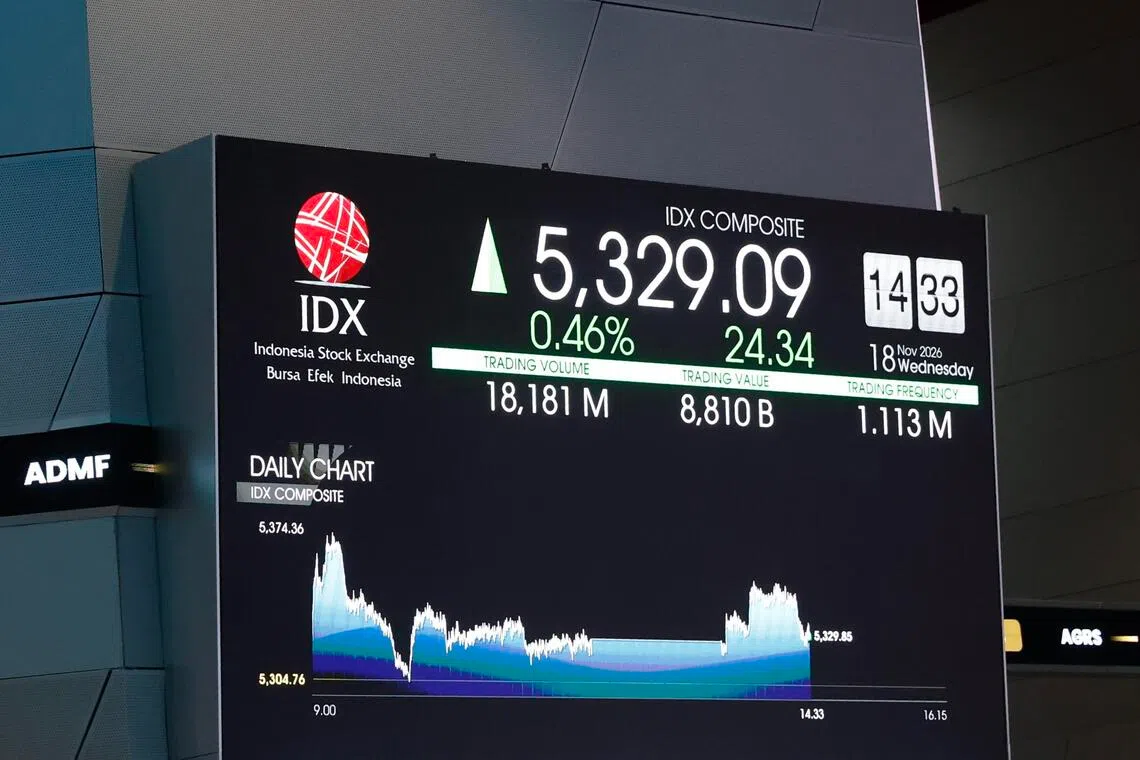
Some analysts see Indonesia’s sharp correction as an opportunity for investors to pick up fundamentally strong stocks at cheaper valuations.
Sana sees opportunities emerging in stockswith prices that have fallen disproportionately to their underlying earnings prospects. EBC said the market’s valuation discount remains partly justified by governance concerns, opaque share ownership and the risk of further benchmark-driven outflows.
With equities trading at around seven times forward earnings, Wibowo of Alphagate Capital said Indonesian stocks were becoming increasingly attractive, particularly companies with solid earnings and sound governance.
He believes the potential upside could be substantial if Indonesia succeeds in addressing MSCI’s concerns.
A credible resolution could pave the way for valuations to rebound towards 10 to 11 times forward earnings,” he added. “We see this as an attractive opportunity for selective long-term investors, with governance reforms being the key to a sustainable market recovery.”
Decoding Asia newsletter: your guide to navigating Asia in a new global order. Sign up here to get Decoding Asia newsletter. Delivered to your inbox. Free.
Copyright SPH Media. All rights reserved.