MSCI’s warning does not define Indonesia’s economy
The review serves as a governance test rather than an economic verdict
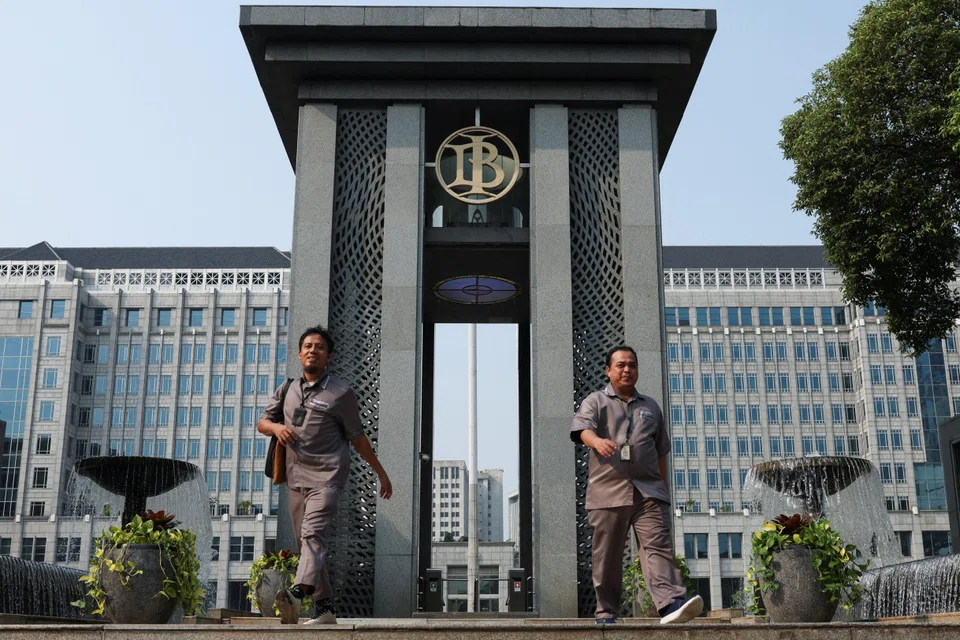
THE prospect of Indonesia being reclassified by MSCI from an emerging to a standalone market has understandably unsettled investors. Equity prices came under pressure, concerns over foreign capital outflows intensified, and Jakarta’s regulators faced renewed scrutiny.
Yet, the market reaction has also exposed a tendency to treat a stock index decision as a comprehensive verdict on Indonesia’s economy. That interpretation goes too far.
MSCI is questioning the investability and governance of Indonesia’s equity market, not declaring that South-east Asia’s largest economy has lost its capacity to grow.
Its concerns focus on opaque shareholding structures, suspected coordinated trading, uncertain effective free float and insufficient evidence of enforcement. These are serious deficiencies, but they belong primarily to the architecture of the capital market.
An index provider measures market accessibility, liquidity and transparency. It does not measure the full strength of household consumption, manufacturing output, bank lending, investment projects or fiscal capacity.
Passive funds may rebalance mechanically when index classifications change, but companies building factories and supply chains make decisions based on much longer economic horizons.

Indonesia should therefore avoid both denial and panic. Dismissing the warning would waste an opportunity to improve market integrity. Treating it as evidence of economic collapse would be equally misleading.
The real question is whether Indonesia can use external pressure to bring the quality of its capital market closer to the resilience of its broader economy.
Market governance must catch up
MSCI has given Jakarta a demanding but achievable reform agenda.
SEE ALSO




The measures already announced include stronger disclosure of shareholders owning more than 1 per cent, more detailed investor classifications, reporting on highly concentrated ownership and a road map towards a minimum free-float requirement of 15 per cent.
The country’s independent financial services authority, Otoritas Jasa Keuangan, or OJK, has also committed to eight reform initiatives covering transparency, liquidity, enforcement, governance and market deepening.
The problem ahead is the credibility of implementation. Global investors need evidence that ultimate ownership can be identified, even when shares are held through layered structures.
Trading surveillance must detect coordinated transactions, while sanctions must be timely and sufficiently meaningful to deter manipulation. A higher free-float threshold will have little value if supposedly public shares remain under the influence of affiliated parties.
The MSCI consultation should thus be viewed as a governance test. If Jakarta responds with verifiable data and consistent enforcement, the present pressure could improve price discovery, broaden institutional participation and reduce the risk premium attached to Indonesian equities.
Market reform would also benefit domestic investors.
Indonesia’s macroeconomic story
While Indonesia’s capital-market governance needs improvement, the country’s macroeconomic indicators tell a more resilient story.
Bank Indonesia kept its policy rate at 5.75 per cent in October 2026, seeking to protect rupiah stability while preserving growth momentum.
Consumer inflation stood at 3.28 per cent year on year in September, remaining within the central bank’s target corridor of 2.5 per cent, give or take one percentage point.
Indonesia also retained a substantial external buffer, with foreign-exchange reserves of US$146.3 billion at the end of September, equivalent to 5.3 months of imports, well above the international benchmark.
Although equities experienced foreign outflows, overall portfolio investment recorded a net inflow of US$660 million in the fourth quarter to Oct 19, supported by inflows into government securities and Bank Indonesia rupiah securities.
The real economy does not look like a system in retreat. The Bank Indonesia Prompt Manufacturing Index continues to be above the 50 per cent expansion threshold.
Business activity also remained positive; industrial capacity utilisation reached 73.75 per cent while businesses reported improvements in liquidity and profitability, with continued access to credit.
These indicators reflect productive activity that cannot be captured by movements in an equity benchmark alone.
The banking system offers another layer of resilience. Bank lending expanded by 13.26 per cent year on year in September, with investment loans growing by 23.2 per cent. The banking industry’s capital adequacy ratio stood at 24.1 per cent in August, while gross non-performing loans remained at 2.11 per cent.
This combination of credit expansion, strong capital and controlled asset-quality risk does not suggest a financial system overwhelmed by stock-market volatility.
Bank Indonesia has also maintained an important balance between stability and growth, with a policy mix of foreign-exchange intervention, hedging incentives and accommodative macroprudential measures.
By early October, banks had received 458.5 trillion rupiah (US$25.3 billion) in incentives through the Macroprudential Liquidity Incentive Policy. The objective is to ensure that temporary portfolio turbulence does not restrict financing for productive sectors.
Testing Indonesia’s readiness to compete for global capital
International investors should also distinguish passive portfolio flows from productive long-term capital.
Index-tracking funds react to methodological rules. Foreign direct investors assess consumer demand, industrial ecosystems, infrastructure, mineral processing and long-term returns.
Indonesia realised 1,010.6 trillion rupiah in investment in the first half of 2026, an increase of 7.2 per cent from 2025. The investment created almost 1.45 million direct jobs.
These figures do not minimise weaknesses in Indonesia’s stock market. Greater transparency, genuinely dispersed ownership and decisive enforcement are essential if public equities are to finance Indonesia’s next stage of development.
The MSCI warning is therefore neither irrelevant nor definitive. It identifies a market credibility problem that Indonesia must address, but it does not erase controlled inflation, strong banking capital, expanding manufacturing, substantial foreign-exchange reserves and continuing investment.
Indonesia now has an opportunity to close the gap between macroeconomic resilience and market credibility. It should seize it.
The writer is staff at the rupiah currency management implementation unit at the Jember Representative Office of East Java, Bank Indonesia. Views expressed belong to the writer and do not necessarily reflect those of the institution.
Decoding Asia newsletter: your guide to navigating Asia in a new global order. Sign up here to get Decoding Asia newsletter. Delivered to your inbox. Free.
Share with us your feedback on BT's products and services