



Indonesia’s Danantara shifts to investment phase, targets 7% returns
Some early gains could emerge from investments in bonds and equities, says a key executive

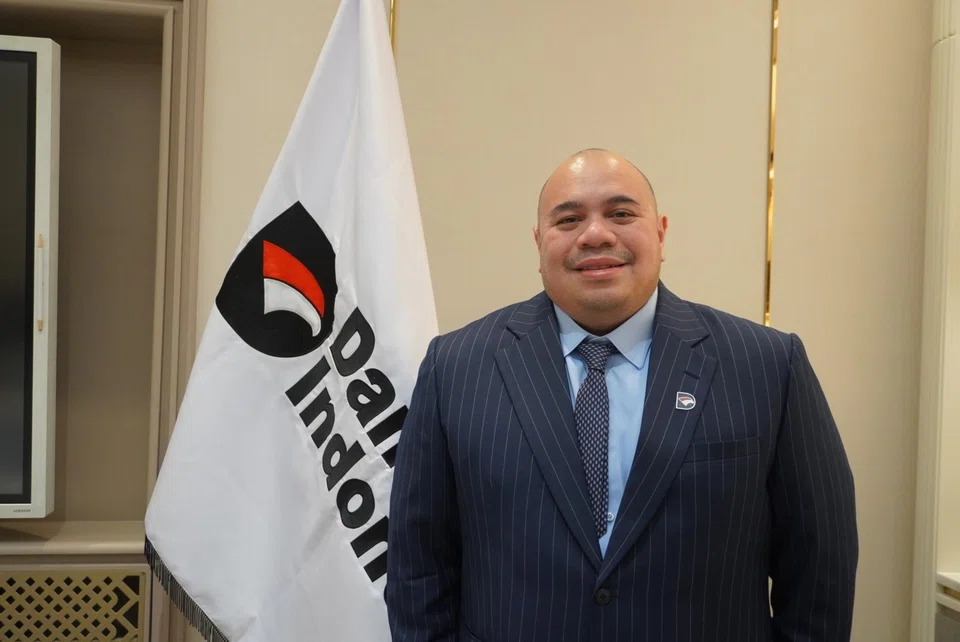
[JAKARTA] Indonesia’s sovereign wealth fund Danantara is entering a new phase of capital deployment after spending its first year building governance and institutional structures, with the fund targeting at least a 7 per cent return on investments, its chief investment officer said.
In an interview with The Business Times, Pandu Sjahrir said the fund is entering what he described as a “year of deployment”, after laying the groundwork needed to operate as a long-term state investor.
He added that the past year for the fund was largely focused on establishing governance, recruiting talent and building operational systems.
The 7 per cent return target – publicly set by President Prabowo Subianto – serves as a minimum hurdle rate for Danantara’s investment decisions, although the fund internally aims for double-digit returns where possible.
“So if a project doesn’t meet that return, then we just don’t do it,” Sjahrir said.
Established in February 2025, Danantara was mandated to oversee more than 1,000 state-owned enterprises, with total assets under management estimated at US$900 billion.
Prabowo has positioned the fund as a key investment vehicle to channel state capital into strategic sectors, with the aim of supporting Indonesia’s long-term development ambitions, including the government’s target of achieving economic growth of up to 8 per cent.
Early gains
Some early gains could appear sooner through public market investments such as bonds and equities, but Sjahrir said the fund’s overall performance should be judged over a longer horizon.
“You might see the first indication of returns next year from public market investments,” he said. “But really, you can only judge us properly maybe five years from now.”
Sjahrir noted that Indonesia’s abundant natural resources, particularly in sectors such as nickel and other critical minerals, provide opportunities to generate strong returns.
“Indonesia is blessed with real assets,” he said. “From an investor’s perspective today, fixed assets and real assets are extremely valuable.”
The challenge, he added, lies in converting those natural advantages into commercially viable investments that attract global capital and technological expertise.
US$14 billion investment push
Danantara plans to deploy around US$14 billion this year across strategic sectors, with investments spanning both public markets and private assets.
Key areas of focus include energy security, downstream resource processing, food security, infrastructure, financial services and the energy transition.
Investing in downstream industries also aligns with Indonesia’s broader effort to increase the value added from its mineral resources, including nickel, which is widely used in electric vehicle batteries.
Danantara recently announced a US$200 million investment in Indonesian petrochemical producer Chandra Asri, to support the development of a chlor-alkali and ethylene dichloride plant. The facility is expected to produce caustic soda, a chemical commonly used in industrial processes, including alumina refining.
Another initiative by the fund involves US$5.6 billion worth of waste-to-energy projects being developed in partnership with state utility Perusahaan Listrik Negara.
Sjahrir said the programme has attracted strong interest from private-sector participants, with about 200 bidders, including several Chinese companies, competing for the first four projects.
Authorities are preparing to launch tenders for an additional six waste-to-energy facilities after Ramadan.
The projects form part of the government’s broader push to expand renewable and alternative energy sources while addressing Indonesia’s growing waste management challenges.
Winning back investor confidence
After a year leading Danantara’s investment arm, Sjahrir, a former venture capitalist, acknowledged that Indonesia faces a “trust deficit” among some investors, particularly in the wake of warnings from MSCI and global rating agencies regarding Indonesia’s policy environment.
The 46-year-old emphasised the importance of transparency and balance in Indonesia’s stock market after the recent MSCI warning about market transparency and investability.
Indonesia’s retail investors dominate the market, accounting for over 60 per cent of trading activity, while institutional investors make up about 40 per cent.
This imbalance has raised concerns among institutional players, who have called for more transparency and better liquidity in stocks with strong fundamentals.
The Indonesian government and financial authorities are undertaking reforms at the stock exchange following MSCI’s warning, which triggered a two-day trading halt in late January.
One agenda under discussion is Danantara’s acquisition of a stake in the Indonesia Stock Exchange (IDX) as part of its planned demutualisation. Sjahrir said the sovereign wealth fund is expected to pursue a “significant minority” shareholding.
“The success of this plan will be measured by foreign participation in the market and overall market credibility,” he said.
“I want the IDX to aim high. If it succeeds, IDX could become one of the top exchanges globally, right after China and India.”
Sjahrir said the fund is actively investing in Indonesian equities with strong fundamentals to help restore investor confidence. For its public market investments this year, Danantara plans to deploy capital through third-party fund managers, rather than investing directly.
Raising the bar on governance
In its first year, Danantara navigated the challenges of building a sovereign wealth fund from the ground up.
“One of the biggest lessons for us in the first year was communication,” said Sjahrir. “In the first six months, many stakeholders were talking about Danantara, but we weren’t speaking enough ourselves.”
The fund has faced scrutiny from market observers, who have raised questions about governance and transparency, including calls for an independent audit.
Sjahrir said a comprehensive audit of the fund is expected later this year, though the process will take time given the scale of the organisation and its extensive portfolio of state-owned enterprises.
“We will produce the report this year, most likely toward the end of the third or fourth quarter,” he said, noting the complexity involved in consolidating reports from the entities under Danantara’s oversight.
TRENDING NOW

Once staunchly pro-China, Malaysian Chinese businesses are now distancing themselves from Beijing

Looking beyond looming CEO succession, should UOB potentially pursue a transformative merger?

Could stablecoins be the future of money?

Grab CEO’s wife Chloe Tong on life with Anthony Tan and finding her purpose

