



Indonesia’s weakening markets and economy have a personality problem – Prabowo’s
The mercurial president has spooked businesses and placed retired military men in charge of various companies
AND so, Bank Indonesia has just announced an emergency rate increase of 25 basis points, a back-to-back hike that has left the benchmark rate at 5.5 per cent. The aggressive move is meant to signal further hawkishness to come if markets do not come to heel.
The central bank explained in a written statement that the off-cycle increase was prompted by a “more-than-expected” weakening of the rupiah, and a further step in stabilising the exchange rate amid the war in West Asia and heightened global turmoil. DBS Research says it expects another 50-basis-point increase between the second and third quarters to take the benchmark to 6 per cent.
Credit Perry Warjiyo, the vastly experienced central bank governor, for his reflexes. In June, the Indonesian currency hit lows worse than those seen during the dismal days of the 1997 to 1999 Asian financial crisis, trading in the upper 18,100 range to the US dollar. Stocks have taken a hammering as well.
So, the rate hike was necessary in the larger interest of protecting the currency, despite the pain it will doubtless cause in borrowing costs to businesses already hurting from sharp increases in factor prices because of the war, and the relentless influx of cheap manufactured goods from China that’s hollowing out industries in West Java and elsewhere.
At least initially, the message seems to have landed in the right place, with the USD/IDR cross dipping to 17,931 – below the psychological level of 18,000 – before it rose again after Iran closed the Strait of Hormuz.
To be sure, the weak currency story is not unique to Indonesia but mirrors many emerging markets in Asia, including what once was briskly expanding Philippines, Vietnam and India. Even an advanced Asian economy such as South Korea hasn’t been spared its ravages. However, as the largest economy in our South-East Asian neighbourhood, Indonesia has a special salience. Indeed, when this column warned in March that it was time for Indonesia and India to “brace, brace, brace...”, I had not anticipated that Indonesia’s markets would deteriorate so rapidly or this much.
(India is hurting badly as well, although the full impact on Mumbai’s financial markets will manifest when companies start reporting second-quarter earnings in July.)
On the surface, Indonesia would appear to have been punished more excessively than circumstances warrant. It is still growing at a good pace – first-quarter growth, for instance, came in at a strong 5.61 per cent annualised, albeit pushed by a boost in front-loaded government spending. And despite recent dips, it still has comfortable foreign exchange reserves: about US$144 billion (S$185 billion) currently, down from US$156.5 billion at end-2025.
As for stocks, few doubt that some of the slide is caused by investors withdrawing funds in order to invest in the ultra-hot AI and AI-related sectors such as chips and data centres. The MSCI Emerging Market Index’s top 10 is now dominated almost entirely by Taiwanese and South Korean chipmakers and Chinese tech giants. Anxiety about missing out on likely fast pickings from the trio of mammoth initial public offerings led by SpaceX that are coming to market imminently has also pulled more money in that direction, sucking away funds from emerging markets.
SEE ALSO




And yet, Indonesia is undeniably suffering more than any other big emerging market you could think of, and people are beginning to question why. Too often, the answers are coming to rest around the personality and preferences of President Prabowo Subianto.
Prabowo queers the pitch
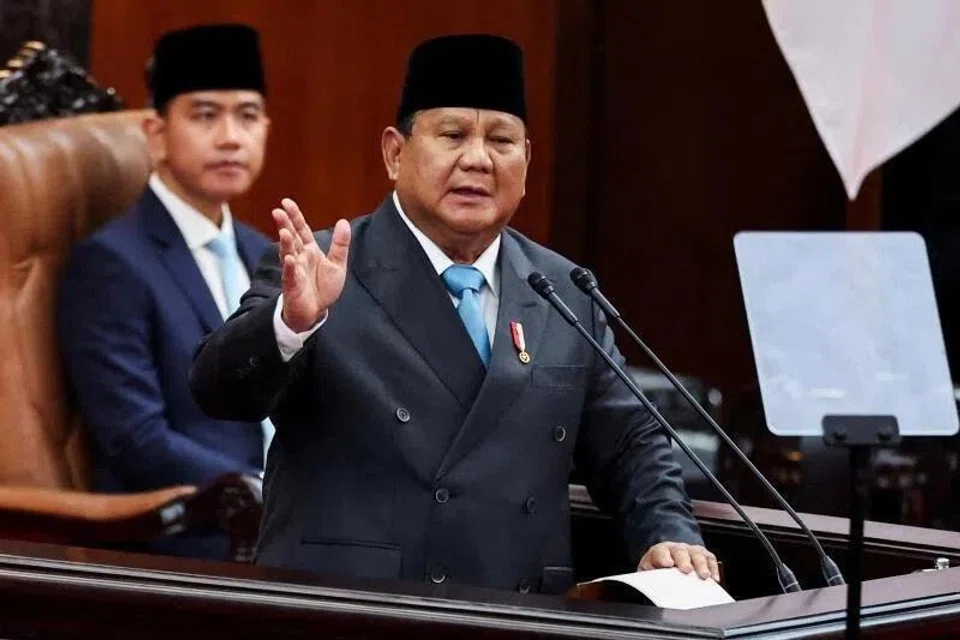
Mercurial and flammable, prone to announcing ambitious programmes and unrealistic goals – an economy clocking 8 per cent growth by 2029, for instance – and seemingly incapable of accepting negative feedback, Prabowo looms over Indonesia’s fortunes.
This is adding challenges to an already challenging environment where, by the president’s own admission, the middle class has been shrinking in recent years as incomes drop.
For instance, Indonesia produces half the world’s palm oil, a sector dominated by businessmen of Chinese ethnicity. The government’s recent move to centralise exports of the commodity under a state entity, Danantara Sumberdaya Indonesia, was possibly well-intentioned: to boost forex inflows by checking under-invoicing and the retention of profits overseas. However, it has come across in many quarters as an act decidedly hostile to the interests of the ethnic Chinese within the Indonesian business community. The authorities are now rowing back on the controversial proposal after buyers and exporters raised concerns, but the damage may have been done.
“Industry owners will always find the means to move their money out if that is what they wish to do,” a senior business figure in Jakarta tells me. “The government’s motives may have been good, but the actions came across as signalling prejudice, and it has affected the business climate. People are muttering that the Indonesian military was always suspicious of the Chinese, and Prabowo has never been able to shed his military mindset.”
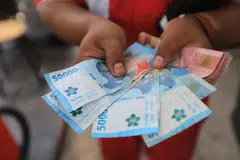
Other measures to protect the rupiah – for instance, capping at US$25,000 monthly the amount of dollars individuals can purchase without supporting documentation such as invoices and student fee bills – ended up radiating the state’s nervousness about the currency.
That’s led many to figure it is best they exit the rupiah before it slides further, buying up stronger currencies as a precaution. One Jakarta businessman who has lately turned pessimistic about Indonesia tells me he is steadily buying US dollars at the permissible monthly rate, and expects to leave the country when his rupiah stock is fully depleted in a few months.
These measures came in the wake of previous developments that continue to weigh on investor sentiments. Respected finance minister Sri Mulyani Indrawati’s departure from the Cabinet in September 2025 is a lingering bad memory, and many of Prabowo’s actions since taking office in 2024 have suggested that he is determined to restore the military to the core of national life.
Retired military men have been steadily taking up key positions in various companies. For instance, Glenny Kairupan, who runs the national airline Garuda Indonesia, is a retired general, having replaced a CEO who had been appointed less than a year earlier. Kairupan, 77, was Prabowo’s batchmate at the Indonesian Military Academy and briefly an army helicopter pilot.
Likewise, the current top executives of Danantara, the investment holding company for state-owned enterprises, are strongly connected with the team that ran Prabowo’s election campaign, another move on his part to centralise power. Thomas Djiwandono, the deputy governor of the governing board of the central bank, is a nephew of Prabowo who previously held the post of deputy finance minister in his uncle’s Cabinet.
Meanwhile, although Prabowo seems fit enough, speculation about his health has risen in recent months alongside talk of a sense of drift. Some 17 ambassadors-designate, including envoys from South Korea, the Philippines and Sri Lanka, were kept waiting for months before they got to present credentials to the President this week.
An economy in need of a reset
All that has cast a cloud over Asean’s biggest nation and economy. Adding to concerns about fiscal priorities shifting from hard infrastructure to populism, the war and the currency crisis only brought things to a head. And so, even as Indonesia’s financial markets may be less reflective of the state of the real economy than, say, other big Asian economies such as India’s, the sharp slide in the rupiah will doubtless feed through to its detriment.
And it starts with inflation, always a politically sensitive matter. From pharmaceuticals – about 90 per cent of active pharmaceutical ingredients are imported – to the rising costs of imported raw materials such as plastic pellets and synthetic fibres that have skyrocketed and aggravated layoffs in West Java, the pain is growing from the weak currency and the fallout of the West Asian war.
To be sure, the government has shown it is stirring to life on some of the issues on which it has been most criticised, such as the school meals programme that is such a drag on the exchequer. It has paused the expansion of the programme and reduced the frequency of meals to five a week. This week, prices of the popular unsubsidised fuel oils were raised even as the government retained subsidies on the most widely used oil products.
Running a far-flung, complex nation like Indonesia is no easy task, and not every decision can be made on the basis of pure economic or fiscal theory or with an eye on market sentiment. Practical considerations, such as how a policy change might affect the weakest sections of society, do matter, especially in poorer societies. Even so, one cannot escape the power that markets possess. On Jan 28, a month before the war on Iran started, a warning from MSCI that it may downgrade Indonesia from “emerging” to “frontier” market status triggered a slump in Indonesian stocks. Things have only worsened on the macroeconomic front.
The rate hikes are a start. But Prabowo needs to do more. A closer look at the meals scheme that is sending state finances out of whack, for instance, and not just a reshuffle of the executives running the programme. An adjustment to the price of subsidised fuel to moderate demand is necessary, if nothing else but to crimp imports and ease pressure on the trade balance.
Above all, he needs to assure markets that experts and entrepreneurs, not his old-boy herd, will control the commanding heights of the Indonesian economy.
If that happens, then in a few months, when the tsunami of investors rushing towards AI turns, as it inevitably must, Indonesia would be better positioned to reap the reward. THE STRAITS TIMES
Decoding Asia newsletter: your guide to navigating Asia in a new global order. Sign up here to get Decoding Asia newsletter. Delivered to your inbox. Free.
Share with us your feedback on BT's products and services
TRENDING NOW

ComfortDelGro appoints two new independent directors

Once staunchly pro-China, Malaysian Chinese businesses are now distancing themselves from Beijing

NoonTalk needs continued financial support from CEO Dasmond Koh, auditors warn

DP Architects sets the benchmark for sustainability disclosure and design

