Beyond manufacturing: Vietnam’s ‘Doi Moi 2.0’ opens up new investment options and challenges
Businesses in the country are adopting a ‘move-and-adjust strategy’ amid fluid global developments

[SINGAPORE] Mention Vietnam within a business context and most would reference the key role it plays in global manufacturing.
The South-east Asian country has been a key beneficiary of the “China Plus One” strategy, which has arguably accelerated since 2020. But it has its sights on being much more than a manufacturing hub, as evidenced by the recent wave of sweeping legislative reforms.
Dubbed by some as “Doi Moi 2.0”, interpreted as renewal, this top-down overhaul led by General Secretary To Lam signals a serious national ambition: 10 per cent annual gross domestic product growth until 2030, with the aim of making Vietnam a high-income, developed country by 2045.
A record 51 new laws were passed in December 2025, aimed at cutting bureaucracy and pushing for faster policy execution.
While the pace slowed in the first quarter of 2026 as the government entered an implementation phase and focused on leadership transition, analysts such as Michael Wan, a senior currency analyst at MUFG, expect the accelerated pace of decision-making to continue, noting that the policy changes have been “meaningful”.
Foreign investment shifts
Seck Yee Chung, a senior partner and co-head of the Vietnam offices for Baker McKenzie, noted that Vietnam’s reform efforts have not gone unnoticed by the international business community.
“Foreign direct investment (FDI) has continued to grow, with notable increases in sectors such as manufacturing, logistics, renewable energy and technology,” he said.
He noted that there is growing interest from American, Japanese and South Korean investors, particularly in green technologies and supply chain diversification.
YCH Group, a Singapore-based supply-chain solutions company, recently announced plans to expand its operations in southern Vietnam, citing improved regulatory transparency and infrastructure development as decisive factors, said Seck.
Singapore firms are also actively exploring opportunities in real estate, finance and digital services, he noted, adding that “the flavour of corporate entrants is shifting from traditional manufacturing to more knowledge-intensive industries”.
These flows are aligned with Vietnam’s focus on higher-value-added activities.
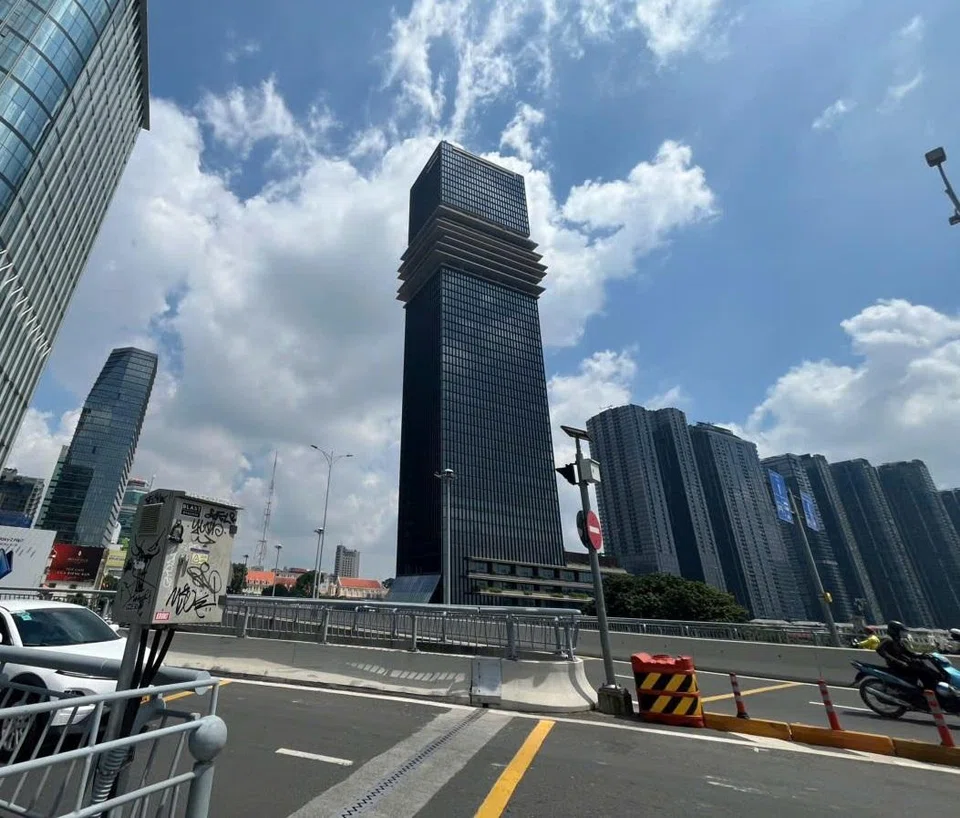
The financial services sector received a boost with the launch of the Vietnam International Finance Centre; the Da Nang centre was inaugurated in January followed by the official launch of the Ho Chi Minh City hub in February.
UOB is the first foreign bank to break ground on a new regional headquarters in the Ho Chi Minh City hub.
Meanwhile, the interest in real estate has shifted significantly towards industrial parks and green infrastructure.
Sembcorp Development was an early pioneer in this field. The Vietnam-Singapore Industrial Park, established in 1996, is a landmark project representing a joint cooperation initiative between both governments.
Today, eco-industrial parks and green infrastructure in industrial areas have stricter environmental criteria, and incentives are being designed to encourage clean-technology adoption and emission reductions, said G Jayakrishnan, executive director for South-east Asia at Enterprise Singapore (EnterpriseSG).
“This creates opportunities across multiple industry vehicles.”
For example, in July 2025, Vietnam National Petroleum Group and Keppel signed a memorandum of intent to promote the research and deployment of sustainable aviation fuel solutions in Vietnam.
Supported by EnterpriseSG, Keppel’s early development into sustainable energy projects will allow the company to build its track record of developing and operating sustainable infrastructure projects and capture the growing demand for sustainable fuels in the region.
It helps that the Singapore brand is well-regarded and enjoys a good reputation in Vietnam, “associated with quality management, good governance and leading edge technology”, said Jayakrishnan.
Tan Quee Peng, president of the Singapore Chamber of Commerce Vietnam, said that of the more than 200 company members within the chamber, there has been a growing representation from high-value sectors such as digital services, green energy and advanced manufacturing.
“This mirrors Vietnam’s transition up the value chain and aligns well with Singapore companies’ strengths.”
Navigating regulatory challenges
Despite the clear governmental direction, the market is not yet in a full-throttle expansion phase.
Businesses have largely adopted, in Tan’s words, a “move-and-adjust strategy”, as they move forward with “careful attention to execution risks and regulatory developments, especially with the recent fluid developments elsewhere in the world”.
Although new legislation such as the Law on Investment and Land Law have streamlined processes – one central feature of these laws is the shift from a pre-approval process to a post-inspection regime – implementation remains a challenge at the local level.
Baker McKenzie’s Seck, who has been based in Vietnam for more than 25 years, noted that bureaucratic bottlenecks persist as local agencies adopt a cautious approach.
“The government has responded to implementation issues by introducing further amendments and clarifications – especially regarding the Land Law – to provide more clarity, decrease bottleneck issues, address ambiguities and ensure reforms are practical and effective.”
He added: “However, as the pace of adaptation among local officials and agencies remains stagnant due to the ‘wait-and-see’ approach, and businesses continue to seek guidance on how new rules will be applied in practice, the real test will be whether these reforms can deliver sustained improvements in ease of doing business over the next few years.”
MUFG’s Wan pointed out that this issue is not new in Vietnam.
“My hope, and I think, still reasonable expectation, is that these will be addressed in a pragmatic fashion… (and that) over time, there will be accelerated efforts made to address the implementation issues as problems surface.”
This, coupled with geopolitical uncertainty, is making its impact felt. The cautious sentiment was reflected in recent FDI numbers.
In January, 349 newly registered FDI projects were approved, up 15.7 per cent year on year. However, total registered capital as at Jan 31 dropped 40.6 per cent to US$2.6 billion.
“This is lower than the average for registered capital in the 2021-to-2024 period, especially for capital adjustments and M&A (mergers and acquisitions),” Seck pointed out.
“All in all, FDI investment outlook in Vietnam has not weakened, but is entering a cautious phase. With continued uncertain development in geopolitical instability, this cautious approach may become the trend of 2026.”
Inside Asean examines the structural shifts and emerging drivers shaping the region’s evolving economy. Get more insights into Vietnam here.
Decoding Asia newsletter: your guide to navigating Asia in a new global order. Sign up here to get Decoding Asia newsletter. Delivered to your inbox. Free.
Copyright SPH Media. All rights reserved.
TRENDING NOW
Grab CEO’s wife Chloe Tong on life with Anthony Tan and finding her purpose
HDB reviewing ‘jumbo’ flat scheme after Telok Blangah unit listed for sale at S$2.18m
He built the Vingroup empire. Now South-east Asia’s richest man is handing some key roles to his sons
Singapore judge raises doubts iron ore trader Radiant World is owed US$1 billion