Iskandar Malaysia at 20: the investment came but where are the better jobs?
The region beat its RM383 billion target in 2023. Can it lift pay, build skills and keep more value in Johor?
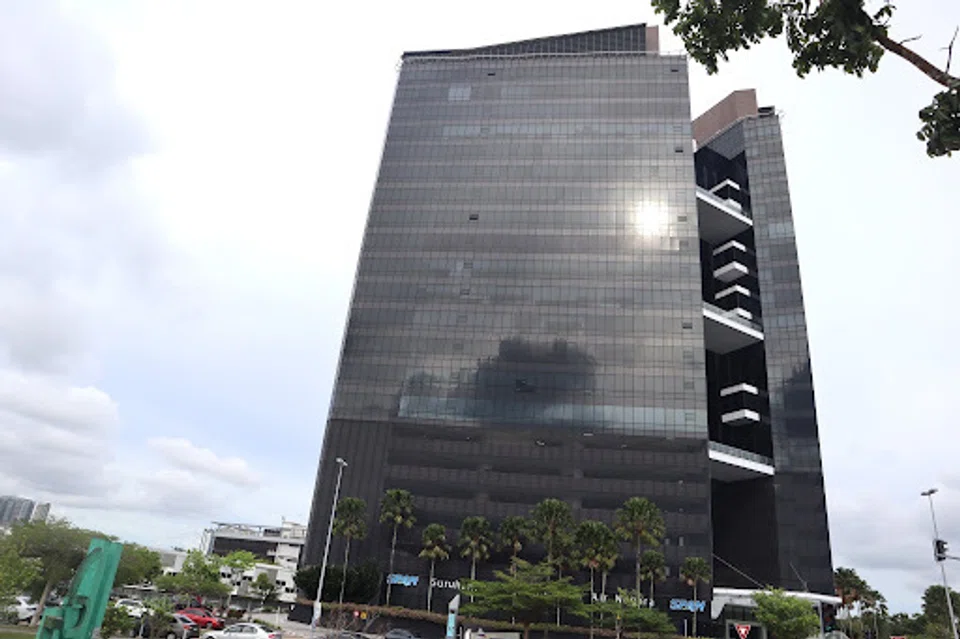

[JOHOR BAHRU] After studying and working in Kuala Lumpur, Lee Chee Lip returned to Johor in 2020 to join corporate services provider Vistra as a business analysis manager in Medini, Iskandar Puteri.
He is now a director, who analyses data to spot trends, and helps Vistra’s global leadership use those findings to make business decisions. “Being based in Medini has allowed me to build a career with international reach without having to leave Johor,” he said.
The Singapore-headquartered group’s office in Malaysia’s southern region too has grown.
What began as a 12-person team in January 2017 supporting Vistra’s business and clients is now one of the group’s four global service delivery hubs, employing 424 people, all of them Malaysian, according to Vistra’s director of regional financial controlling for South-east Asia, Evelyn Lee.
Vistra – which provides corporate services such as accounting, tax, payroll, compliance and fund services to clients worldwide – has been part of Malaysia’s southern growth corridor project, Iskandar Malaysia, for a decade, or half of the project’s 20-year existence.
The group offers one example of the career paths Iskandar Malaysia set out to create.
The Iskandar region has generated more than one million jobs, since its launch in November 2006, said the Iskandar Regional Development Authority last month.
It has drawn RM525 billion (US$129.5 billion) in cumulative investment, exceeding its original RM383 billion target. The next phase is zeroing in on building local talent and generating high-skilled jobs.

Nasser Ismail, founder of JS-SEZ Monitor, said: “The real measure of success is not simply investments, but the quality of employment and how much economic value stays within the local economy.”
While building new roads, connectivity and utilities have transformed southern Johor’s investment proposition, more is left to be done. Iskandar’s early development leaned on real estate – sometimes even ahead of economic activity needed to sustain it.
The focus now is on transforming the region into a high-income, high-productivity economy, which remains unfinished business, he said.
Johor’s economy grew 8 per cent in 2025, the fastest among Malaysian states and higher than the national growth of 5.2 per cent, according to the Department of Statistics Malaysia. Much of this growth was led by the booming data centre industry.
In the first nine months of 2026, Johor led all states in approved investments at nearly RM100 billion, of which two-thirds were in services, based on recent data from the Malaysian Investment Development Authority.
But capital-intensive investments can generate substantial economic activity without necessarily creating proportionately large numbers of permanent, high-paying local jobs, Nasser said.
Yet, Johor’s median monthly pay rose just 4.1 per cent to RM2,688, the fourth-slowest increase among the 13 states. Melaka and Negeri Sembilan both overtook Johor on median pay, while its gap with the national median widened to RM252 from RM211.
Can local suppliers take advantage of JS-SEZ?
Separately, the Johor-Singapore Special Economic Zone (JS-SEZ) will test whether more local suppliers can turn new business into skilled jobs.
Softronix began as a one-person software business in Johor Bahru in 2011. Managing director Lai Mee Chian handled the account of a Singapore-headquartered manufacturer himself until 2018, when the customer’s expansion prompted him to hire a technical consultant to support it and other clients.
The firm grew from four employees in 2024 to 12 in 2026. All are based in Johor, and eight are technical consultants.
For Johor’s smaller suppliers, the gains will depend in part on whether they can finance the work they win, said Nasser. “Winning contracts means little if smaller businesses cannot afford to deliver them,” he said.
At the inaugural meeting of the Johor-Singapore Cooperation Ministerial Committee on Nov 2, which replaced the joint ministerial committee for Iskandar Malaysia, both governments reported RM88.8 billion in approved JS-SEZ investments from January 2025 to June 2026.
About 45 per cent had been implemented, and those projects were associated with 12,796 of the 28,755 potential jobs across all approved projects.
On Nov 19, Johor Menteri Besar Onn Hafiz Ghazi said Johor and Singapore would contribute RM110,000 each to a Johor-Singapore Talent and Skill Gap Study, to identify the skills employers in the zone need and help local training institutions prepare Johoreans for those jobs.
Nasser noted that jobs associated with projects are not necessarily filled. He wants future reporting to separate approved, implemented and commercially operating projects, alongside jobs filled, salary levels and procurement for Malaysian small and medium-sized enterprises.