



Johor-Batam truck ferry service still in limbo as Indonesia eyes mid-2027 launch
It would link Bintang 99 Persada Port in Batam with Tanjung Belungkor in Johor, across 27 nautical miles
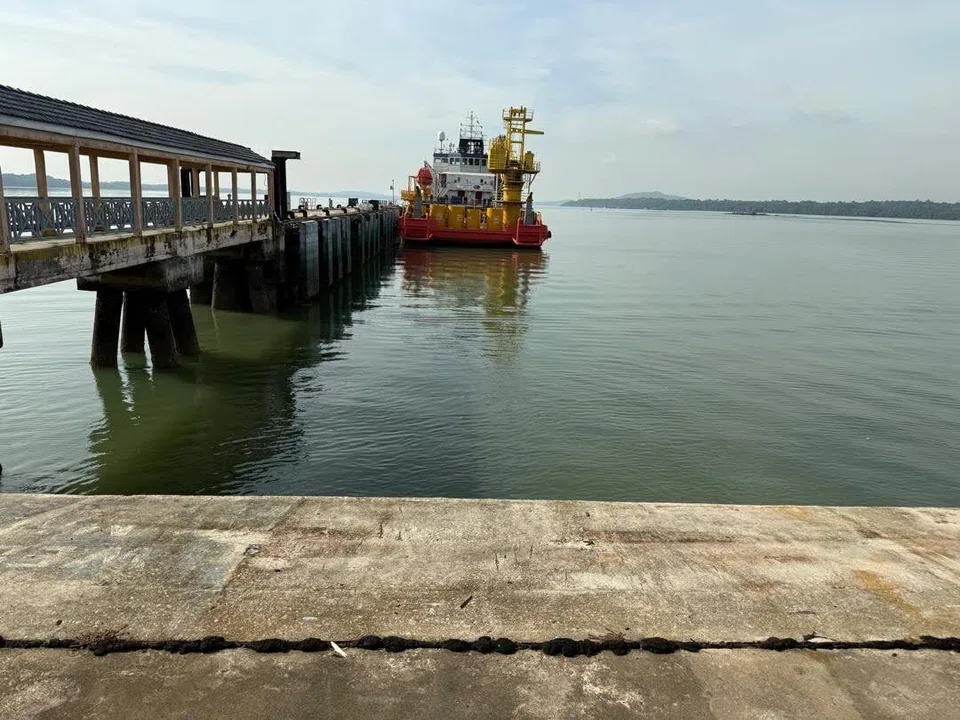

[JOHOR BAHRU] Indonesia wants to launch a direct truck-and-cargo ferry between Batam and Johor by mid-2027, opening a new logistics link between the two manufacturing hubs, but Malaysia says the proposal has yet to be finalised.
Malaysia’s Ministry of Transport (MOT) told The Business Times that certain considerations still require attention before the proposed service can move ahead.
“At present, the proposal has not yet been finalised, as several policy, technical, operational and regulatory priorities and considerations require further attention,” MOT told BT regarding the proposed roll-on/roll-off (RoRo) truck-and-cargo ferry service between Tanjung Belungkor in Johor and Batam, Indonesia.
The proposed route would link Bintang 99 Persada Port in Batam with Tanjung Belungkor in Johor, across about 27 nautical miles.
The service could make freight movements faster and cheaper by reducing repeated loading and unloading at ports, particularly for electronics, food and cold-chain cargo.
The Malaysian ministry said the two governments discussed the proposal on Mar 11, 2025, after which MOT sent the Indonesian authorities a formal letter setting out Malaysia’s position and seeking further feedback.
“MOT will continue to facilitate discussions and coordination with relevant parties should there be any further need or developments in the future,” the ministry added.
Meanwhile, state-owned ferry operator ASDP Indonesia Ferry is publicly targeting a mid-2027 start for the service.
“We hope the Batam-Johor RoRo service can begin operating in the middle of next year,” ASDP director of operations and transformation Rio Lasse said this month. He added that implementation would require collaboration on regulations, infrastructure and the alignment of cross-border processes.
“The real challenge is not the ferry. It is creating a border process in which the goods, the truck or trailer and the driver are all cleared in unison,” Jonathan Koh, managing director of Singapore-based consultancy Trade Facilitation, told BT.
Viable project – on paper
A study commissioned by BP Batam – the government agency that manages and develops Batam’s free-trade zone – and conducted by Universitas Gadjah Mada’s Center for Transportation and Logistics Studies (Pustral UGM), found the proposed service financially feasible after assessing the route’s market, legal, technical, operational and financial viability.
The study also found that regulatory, operational, security and infrastructure issues would need to be resolved before the service could begin.
When contacted by BT, BP Batam said it was consulting the unit responsible for the feasibility study before responding to questions about the assumptions underpinning it.
ASDP estimated initial freight potential at fewer than 50 trucks, with capacity to be expanded gradually as demand grows. It also highlighted the need for sufficient cargo in both directions.
Johor-Indonesia Business Chamber president Samuel Tan told BT the feasibility study estimated a payback period of about seven years.
Getting trucks across the border
Before trucks or trailers can move freely between Johor and Batam, Malaysia and Indonesia would have to reconcile differences in vehicle weight limits, safety standards, insurance, driver licensing and liability, Tan said.
“The most complex is likely to be the regulation of cross-border vehicle movements itself,” he said, adding that this cuts across transport rules, customs, immigration, quarantine, road enforcement, security and legal liability.
Trade Facilitation’s Koh said the two countries would also need agreements on recognising vehicle registrations, driving licences and insurance, as well as procedures for allowing foreign trucks or trailers to enter temporarily.
Customs and port systems would ideally be linked so cargo declarations, permits and vehicle information could be processed before a ferry departs, he added.
A drop-and-pull workaround
Tan and Koh said a “drop-and-pull” model could provide a practical starting point without requiring foreign prime movers and drivers to operate across the border.
Under such an arrangement, a loaded trailer is dropped at one terminal and collected by a locally registered tractor after crossing the strait.
Tan said this could avoid some of the complications involving foreign drivers and prime movers, while allowing both countries to test customs, insurance, vehicle checks and enforcement procedures.
But Koh cautioned that it would not remove customs requirements – goods would still require declarations, permits, risk assessment and, where necessary, inspection and quarantine clearance.
Rules would also be needed to govern the transfer of custody and liability when a trailer changes tractor and operator, he added.
Will shippers use it?
Praveen Gregory, chief executive of DHL Global Forwarding Singapore, Malaysia and Indonesia, said the route could serve manufacturers operating across the Singapore-Johor-Batam corridor as well as smaller shippers moving consolidated cargo.
Regulatory readiness alone would not determine whether logistics providers and cargo owners would adopt the route, he said. The biggest gains may come from reducing supply chain complexity rather than simply shortening transit times.
Cargo between Johor and Batam can involve additional handling, transhipment, cross-docking or routing through Singapore.
Gregory estimated that a daily round trip carrying about 25 to 35 trucks per sailing could provide a viable starting point, with volumes eventually building towards 45 to 55 trucks.
Freight would also need to move in both directions, although volume alone would not determine adoption, he said.
“Cargo owners can generally plan around distance and cost; what they struggle to plan around is uncertainty,” he said.
Where Singapore fits
Gregory said a direct Batam-Johor RoRo service could divert some cargo that currently moves through Singapore, particularly shipments travelling solely between Johor and Batam.
However, Singapore would continue to play a broader role as a regional commercial and logistics hub, including in procurement, supply chain planning, trade finance, customs compliance and connections to global air and ocean networks, he said.
“It is unlikely for us to expect any significant shift in cargo flows until the service is fully operational and has demonstrated consistent performance and reliability over time,” Gregory added.
A successful link could also spur demand in eastern Johor for warehouses, cold-storage facilities and sites where trailers can be transferred between local trucks, Johor-Indonesia Business Chamber’s Tan said.
TRENDING NOW

Government to bring forward raising of retirement age, give employers more financial support to create flexi-load jobs

Indonesia stocks suffer worst plunge in nearly 30 years as MSCI proposes standalone status

If Europe goes to war, the fallout will be felt in East Asia
Natural gas to stay for the long haul beyond 2050: Singapore International Energy Week panellists

