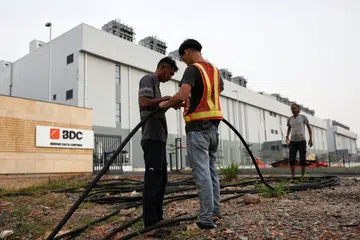
Johor leads as Malaysia’s approved investments hit record RM426.7 billion in 2025
Singapore and China are the top foreign investors, combining to reach RM116.3 billion in approved investments

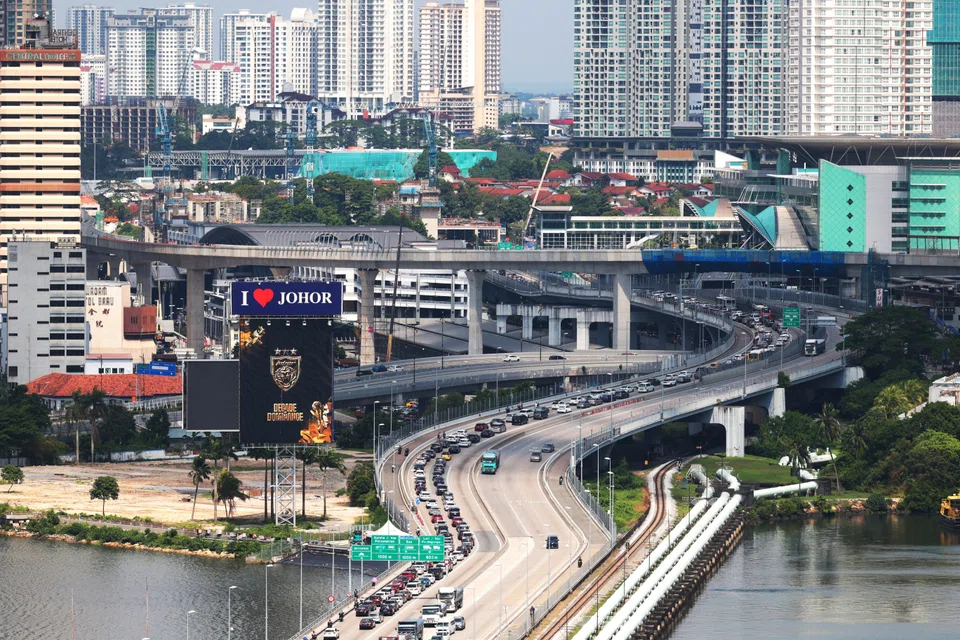
[KUALA LUMPUR] Johor has emerged as Malaysia’s fastest-rising investment hub, attracting RM110 billion (S$35.5 billion) in approved investments in 2025 as the Johor-Singapore Special Economic Zone (JS-SEZ) draws manufacturing and digital infrastructure projects to the southern corridor.
These inflows helped propel Malaysia to a record RM426.7 billion in total approved investments last year, 11 per cent higher than 2024’s RM384.4 billion, based on Malaysian Investment Development Authority data released Friday (Mar 6).
The approvals span 8,390 projects across the services, manufacturing and primary sectors, and are expected to generate nearly 245,000 new jobs.
Presenting the country’s investment performance, Deputy Minister of Investment, Trade and Industry Sim Tze Tzin said the figures reflect both sustained domestic confidence and growing interest from foreign investors.
Domestic investments accounted for RM219.6 billion, or 51.5 per cent of total approvals.
“When Malaysian companies choose to reinvest and expand at home, it signals something deeper than economic calculation. It signals belief in our institutions, in our direction, in our future,” he said.
Foreign investments rose 20.9 per cent to RM207.1 billion, led by Singapore and China with RM58.3 billion and RM58 billion, respectively.
This was followed by the US with RM15.1 billion, while Japan (RM7.6 billion) and Hong Kong (RM7.1 billion) rounded out the top five.
Johor, Selangor and Kuala Lumpur leading
Johor led all states with the RM110 billion in approved investments – more than double the previous year’s RM48.5 billion – surpassing Johor Chief Minister Onn Hafiz Ghazi’s RM100 billion target.
SEE ALSO

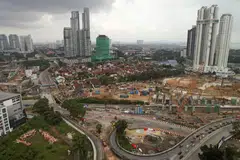
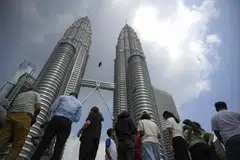
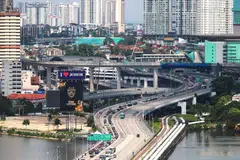
Sim attributed the southern state’s stellar performance to its robust industrial base, particularly in manufacturing and tech-related sectors, combined with the transformative momentum from JS-SEZ.
Selangor, in second place, recorded RM83.9 billion, followed by Kuala Lumpur (RM63.3 billion), Pulau Pinang (RM32.9 billion) and Kedah (RM27.8 billion). These top five states accounted for 74.5 per cent of total approved investments.
Meanwhile, Terengganu, Perlis, Kelantan, Sabah and Sarawak together attracted RM66 billion across 941 projects.
Largest contributor: AI and data centres
Malaysia’s services sector led investment growth, securing RM281.3 billion in approved investments – 65.9 per cent of the total – across over 7,000 projects that are expected to create more than 130,000 jobs.
Domestic sources contributed 63 per cent (RM177.2 billion), while foreign investment accounted for 37 per cent (RM104.1 billion), up 28.7 per cent year on year.
Within the sector, the information and communication sub-sector stood out with RM152.9 billion in approved investments, driven largely by artificial intelligence (AI) infrastructure, big data, data centres and cloud computing.
These investments are expected to play a key role in Malaysia’s ambition to become an “AI nation” by 2030, said Sim.
He noted that globally, data centres have become one of the fastest-growing segments of greenfield investment.
According to the United Nations Conference on Trade and Development, data centres attracted more than one-fifth of global greenfield project value in 2025, with investments exceeding US$270 billion.
While France, the United States and South Korea led as host countries for these data centres, Malaysia was identified alongside Brazil, India and Thailand as emerging destinations drawing large-scale digital infrastructure investments.
One example is Racks Central Group’s planned data-centre campus in Pasir Gudang, Johor, with an estimated investment value of up to RM26.6 billion.
The facility is expected to support up to 510 megawatts of computing capacity and cater to artificial intelligence-driven and high-density computing workloads.
Manufacturing sector remains robust
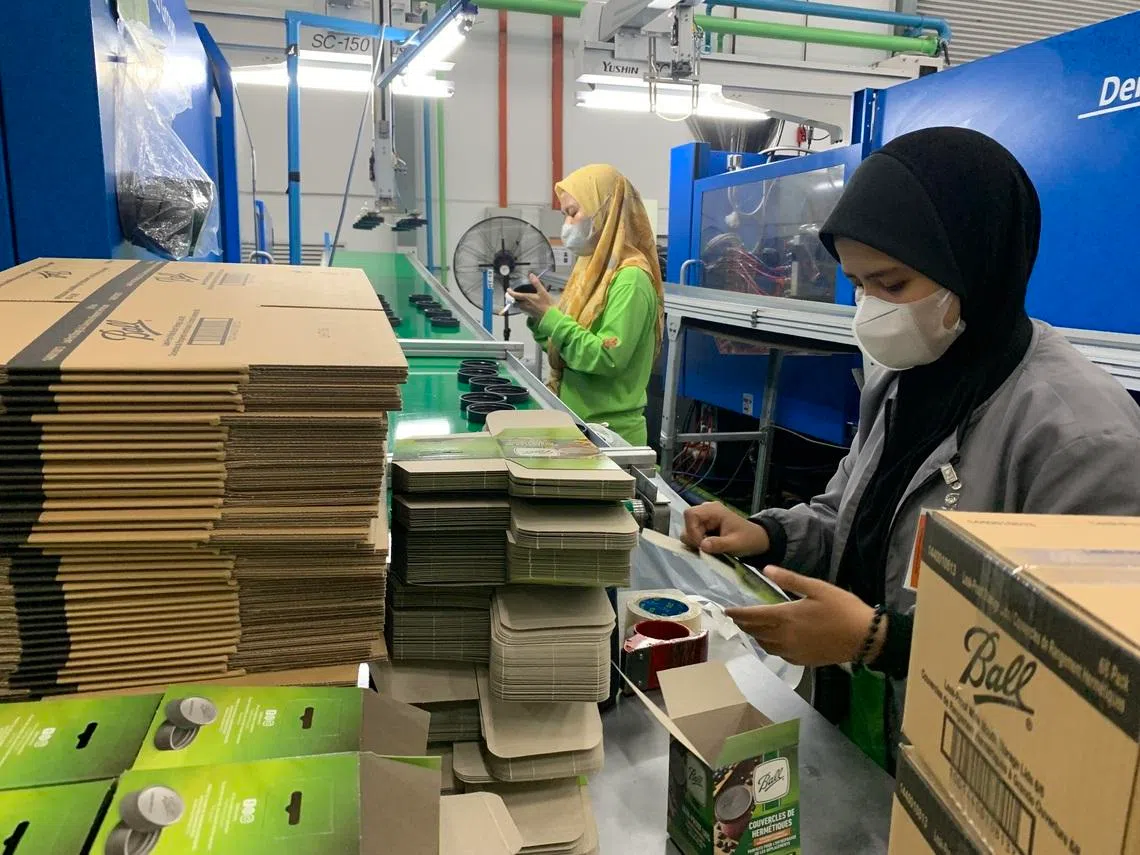
Malaysia’s manufacturing sector also posted a strong performance, securing RM131.3 billion in approved investments – 30.8 per cent of the total – across 1,354 projects that are expected to generate nearly 110,000 new jobs.
Foreign investments accounted for RM100.6 billion (76.6 per cent), while domestic investments contributed around RM30.7 billion (23.4 per cent).
The electrical and electronics subsector continued to make up the largest portion of investments in manufacturing – at RM28.5 billion.
Other leading industries include chemicals and chemical products, transport equipment, basic metal products, and machinery and equipment.
Sim noted that these investments are projected to generate 109,950 new jobs, with 82.3 per cent earmarked for Malaysians. Nearly half of these positions (46.3 per cent) fall within managerial and technical categories, indicating a continued shift towards higher-skilled employment.
Malaysia is moving up the value chain, attracting investments that are increasingly sophisticated and globally integrated, while also prioritising technical expertise, he said.
Meanwhile, projects approved in 2025 have already achieved a 62.2 per cent implementation rate, a strong trajectory given that many investments typically require 18 to 24 months from approval to operation.
Lingering external risks
Still, Sim cautioned that the global investment landscape remains uncertain.
Trade policy tensions and geopolitical conflicts, particularly in the Middle East, continue to weigh on global investment sentiment, while investors are expected to remain cautious on greenfield projects.
Nevertheless, South-east Asia’s growth should continue outpacing the global average as supply chains continue to reconfigure and regional economies expand.
Commenting on the impact of the Middle East war on Malaysia’s economy, Sim noted that the country’s direct exposure to the region’s conflict remains limited.
In 2025, trade with Iran was under 1 per cent of total trade, totalling RM2.45 billion, with exports at RM2.17 billion.
“Malaysia also has limited exposure in terms of liquefied natural gas trade with Iran, as the country produces both oil and natural gas domestically,” he added.
Decoding Asia newsletter: your guide to navigating Asia in a new global order. Sign up here to get Decoding Asia newsletter. Delivered to your inbox. Free.
Copyright SPH Media. All rights reserved.