



Johor-Singapore SEZ to ‘anchor’ industrial properties in Malaysia: Maybank
However, there is a risk of oversupply in Johor’s high-rise residential segment

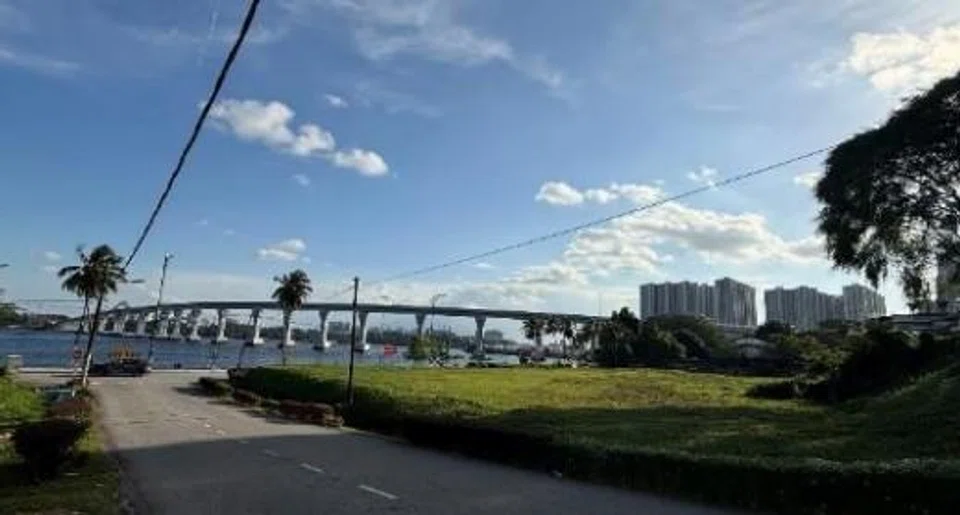
[SINGAPORE] The upcoming Johor-Singapore Special Economic Zone (JS-SEZ) is expected to anchor the growth of industrial properties in Malaysia, with the segment set to remain the “key growth driver” of the country’s property sector, Maybank Securities analyst Wong Wei Sum wrote in a report on Thursday (Jan 8).
The Johor-Singapore Rapid Transit System (RTS), which should be operational by the end of 2026, as well as the potential listing of Malaysian property developer SP Setia by next year, could also renew interest in Johor-exposed stocks, she added.
The RTS Link is said to be able to transport up to 10,000 travellers an hour in each direction.
Nevertheless, the Maybank analyst maintains a “neutral” rating on Malaysia’s property sector, as she believes that the positives of JS-SEZ and the RTS have largely been priced in.
Rising competition
Wong said industrial parks have emerged as a key growth segment in Malaysia’s property market since the Covid-19 pandemic.
Their growth is, among other reasons, due to the sharp rise in e-commerce and logistics demand since the pandemic, stronger foreign investment inflows into Malaysia amid trade tensions between the US and China, as well as supply-chain reconfiguration.
Demand for data centres has also lifted sentiment towards the industrial segment, said Wong.
However, competition is intensifying within the industrial space.
“A broader set of players is entering the space, including traditional developers, plantation land owners and state governments under initiatives such as the 13th Malaysia Plan,” said the Maybank analyst, referring to Malaysia’s socio-economic roadmap for 2026 to 2030.
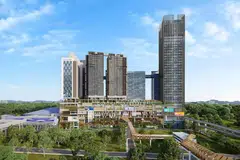

Wong believes that the JS-SEZ will continue to lead industrial development in the region, due to its government-to-government backing.
The Malaysia Vision Valley (MVV), an economic development zone in Negeri Sembilan, and the Kulim district in Kedah are also gaining traction as lower-cost industrial zone alternatives to Kuala Lumpur and Selangor and Penang, respectively.
The analyst favours property developers with proven industrial park track records; these include Eco World Development (JS-SEZ, MVV), Sime Darby Property (MVV, Selangor) and AME Development (JS-SEZ, Penang).
Clearer growth trajectory
The JS-SEZ is also expected to be “firmly in focus” among investors over the medium term due to the “twin catalysts” of the launch of the RTS and the potential listing of SP Setia.
Wong described the RTS as a “major step-change” in cross-border connectivity between Johor and Singapore in that it has a structural role in further integrating labour markets, consumption patterns and business activities across the border.
“Commercial and high-rise properties near RTS stations, with pricing exceeding RM1,200 (S$379.32) per square foot (psf), have already begun to re-rate in anticipation of higher footfall, improved connectivity and rising commercial intensity,” she wrote in a note.
A report in December 2025 noted that the price of land around Johor Bahru station has surged from around RM700 psf in 2022 to between RM1,000 and RM1,500 psf.
Based on Wong’s recent site visit to Johor, on-the-ground activity appears robust, too.

“We also observed previously stalled or abandoned projects – such as Greenland’s Jade Palace, which has been taken over by MB World Group and is now named MBW Bay – being revived,” she said. “(This was) alongside active construction across multiple parts of the city, pointing to improving confidence among developers and buyers.”
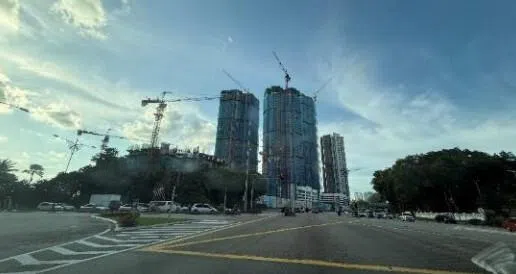
The observations reinforce Wong’s positive view on JS-SEZ, with “improving urban vibrancy and a clearer growth trajectory” than in prior years.
Risk of oversupply in high-rise residential segment
However, the analyst is “cautious” on the high-rise residential segment in Malaysia over the medium term.
“With a significant pipeline of new launches between 2024 and 2025 around the RTS station, there is a risk of oversupply emerging in 2028 to 2030 if incoming units struggle to secure tenants or if rental and subsale expectations fall short,” she wrote in her Thursday report.
While owner-occupier demand and cross-border interest remain supportive in the near term, how sustainable absorption and occupancy rates are will depend on job creation, inter and intra-state migration, rental affordability and the depth of the tenant pool post-RTS.
To the analyst, there is better relative potential in commercial properties, particularly shop lots, as Johor’s city centre remains dominated by older, mature retail stock.
“Improved connectivity and higher pedestrian flow should benefit well-positioned commercial assets in newer growth areas such as Mount Austin, Southkey and Eco Botanic, where supply is more constrained – compared to high-rise apartments – and replacement demand is clearer, in our view,” said Wong.
Decoding Asia newsletter: your guide to navigating Asia in a new global order. Sign up here to get Decoding Asia newsletter. Delivered to your inbox. Free.
Copyright SPH Media. All rights reserved.
TRENDING NOW

Once staunchly pro-China, Malaysian Chinese businesses are now distancing themselves from Beijing

Looking beyond looming CEO succession, should UOB potentially pursue a transformative merger?

Could stablecoins be the future of money?

Grab CEO’s wife Chloe Tong on life with Anthony Tan and finding her purpose

